If you own surplus circuit breakers in the Donaldsonville area of Louisiana, a clear equipment record is the fastest way to begin a buyer review. Circuit breakers range from molded-case and insulated-case devices to low- and medium-voltage drawout units. A breaker is not identified by ampere size alone; the frame, trip unit, poles, voltage, interrupting rating, and mounting style all matter.
What to identify
Create one line per device or a clearly defined matching group. Record manufacturer, series, catalog number, frame, sensor or trip unit, poles, ampere setting or rating as marked, voltage, interrupting rating, frequency, terminals, accessories, drawout position, and cradle or mounting hardware. Note shunt trips, undervoltage releases, auxiliary contacts, motor operators, interlocks, and arc chutes where visible. Separate loose breakers from compartments, cubicles, or panel interiors. Never claim calibration, interrupting capability, or compatibility solely because two devices share a brand or frame size. For loose breakers, the rear interface and accessory package can be as important as the front label.
Configuration and compatibility
The buyer may be reviewing replacement devices, a matched group, or a larger lineup. State which and preserve the context: panel, switchboard, switchgear cell, MCC bucket, or loose inventory. Condition notes should cover cracked cases, missing escutcheons, damaged terminals, corrosion, stored hardware, handle position, and unreadable labels. The seller is not expected to test a breaker. A quote remains subject to review of the exact markings and photographs.
Photo and nameplate checklist
Photograph the front, side label, nameplate or catalog marking, terminals, rear or drawout interface when already safely visible, and all accessories. Group photos are acceptable only when each device can be counted and distinguished. Do not cycle a mechanism, remove a cover, or expose live parts for the listing. If a qualified professional supplied prior records, include them with their scope and date rather than presenting them as a current warranty.
Organize the lot for review
When offering circuit breakers, tell us whether the equipment is a single piece, a complete assembly, or a mixed lot. Identify any parts that belong together and any pieces that are being offered separately. Share the Louisiana pickup location and any known constraints on access. The buyer handles qualified electrical disconnects and the complete removal and logistics scope—crane, rigging, loading, freight, and hauling—so the seller only needs to provide accurate equipment information and get paid. The review starts with the equipment that is actually available, its marked identification, and its visible condition.
Start with the marked identity
Use the exact manufacturer, series, catalog number, serial or lineup identifier when available, and every readable rating on the nameplate. Describe what is visible and separate it from information supplied by an owner or prior record. Include all voltage classes when known, from low-voltage equipment through medium-voltage assemblies, without treating a nominal class as proof of application suitability. If a field is unreadable, say so. A careful unknown is more useful than a confident guess.
Describe condition and completeness
Explain whether the lot is installed, stored, removed, partial, or mixed, while avoiding claims about operating condition that have not been documented. List doors, covers, barriers, breakers, buckets, meters, relays, controllers, bus joints, transition pieces, hardware, manuals, and loose accessories. Note corrosion, water marks, impact, paint loss, modifications, missing labels, cut wiring, and packaging. The buyer can review an incomplete lot, but the quote must reflect what is actually included. No seller testing is required for the initial inquiry.
Photos that make review practical
Send a wide view, readable nameplates, dimensional references, device labels, accessory groups, and close-ups of visible damage. Do not remove covers, operate mechanisms, reach into compartments, expose live parts, or create a staged energized photograph. The buyer handles the complete removal and logistics scope, including qualified-professional electrical isolation and disconnects, crane, rigging, loading, freight, and hauling; no seller disconnection, removal, rigging, or handling is required. Remove confidential addresses, customer names, security details, and sensitive facility diagrams from any public image.
Freight and safe handling
Tell the buyer where the lot is staged, whether sections are separated, approximate dimensions, approximate weight only when documented, loading limitations, dock or ground-level information, and any known access constraints. The buyer handles crane, rigging, qualified-professional electrical disconnects, loading, freight, and hauling from the seller's site, subject to review of the lot and practical access requirements. Heavy, energized, or connected equipment must remain untouched until qualified professionals safely isolate it; no seller testing, disconnection, removal, rigging, handling, or freight arrangement is required.
Requesting the offer
Send the page subject, equipment label, nameplate transcription, photo set, quantity, condition notes, completeness list, and freight location. Include a contact method and identify whether the equipment is owned by the person making the inquiry or requires another party’s approval. The buyer buys used and surplus equipment; this is not a marketplace where the buyer is selling replacement gear. A cash offer and upfront payment can be arranged after the equipment and transaction details are reviewed. Any quote is subject to review and is not a guaranteed price, acceptance of unsafe access, or certification of suitability.
What happens next
After the initial information is received, the buyer can ask focused questions about a rating, missing component, section count, or loading condition. Keep the original photographs and nameplate notes together so revisions do not erase uncertainty. The buyer coordinates qualified professionals for any electrical isolation or disconnect work and handles the crane, rigging, removal, loading, freight, and hauling; do not improvise electrical work. Once the lot, condition, ownership, and access requirements are understood, the buyer can confirm the offer terms, payment arrangement, and the complete logistics scope in writing.
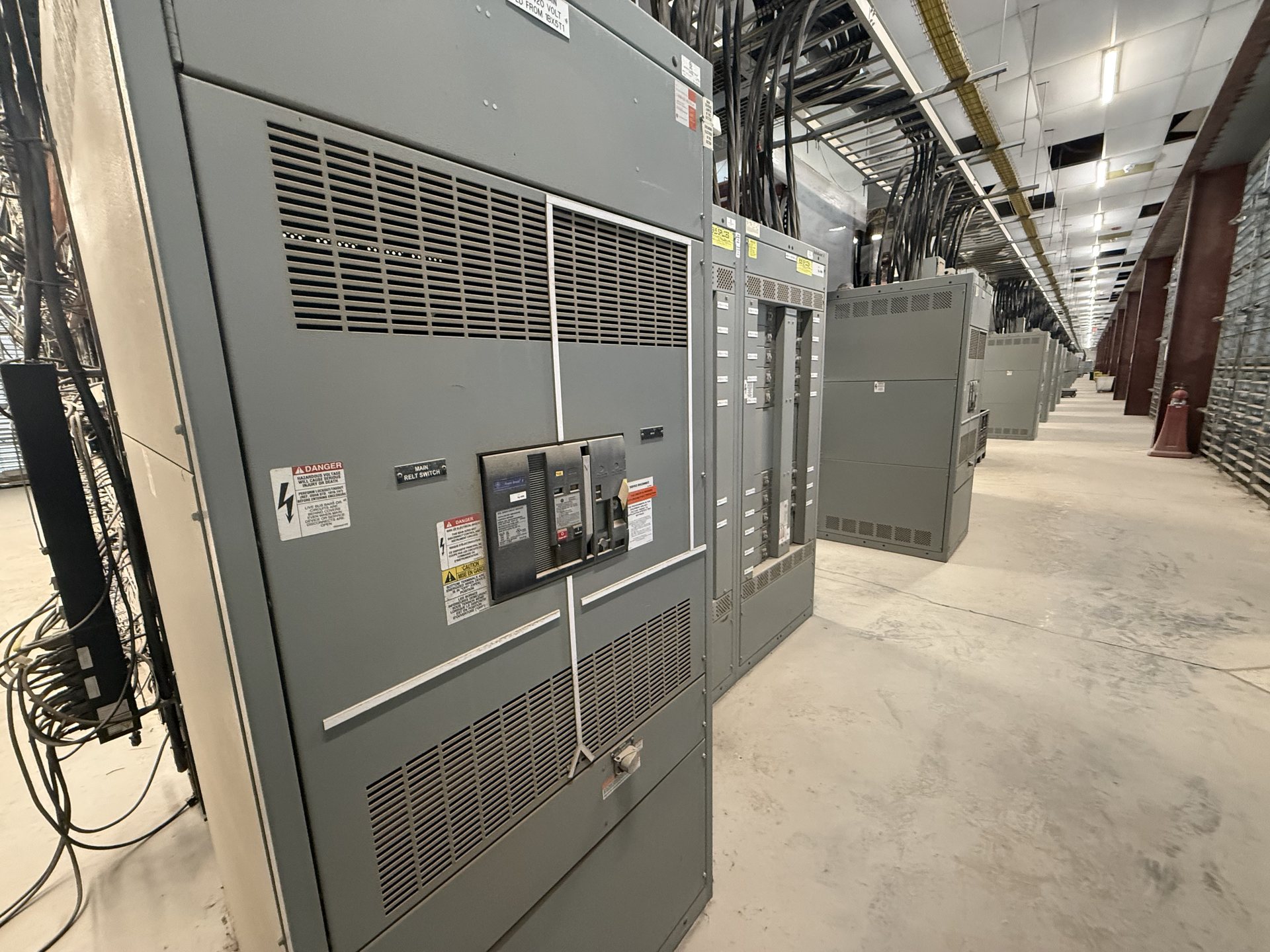
Buyer notes
Send the facts that move the review forward.
Include the nameplate, lineup or device photos, approximate quantity, visible condition and where the equipment is located. We buy equipment; we do not sell replacement gear or represent a test result that has not been provided.
Start with the nameplate
Request a quote
Tell us what you have. We buy switchgear from decommissioned data centers, shut-down power plants and other facilities. Crane, rigging, disconnects, loading, freight and hauling are on us. You do nothing but get paid.