A clear submission makes cutler-hammer easier to review. The Cutler-Hammer name can help organize an inquiry, but the name alone does not identify a complete assembly, a compatible replacement, or its condition.
Start with the equipment you have
The Cutler-Hammer name can help organize an inquiry, but the name alone does not identify a complete assembly, a compatible replacement, or its condition. Our business buys used, surplus and decommissioned electrical distribution equipment in Louisiana, including switchgear from decommissioned data centers and shut-down power plants. We handle all rigging and logistics with qualified professionals: crane, rigging, disconnects, loading, freight, and hauling are on us. Start by describing the actual equipment, the quantity, its present location, and safe access information. We review each inquiry before making an offer, and you do not need to test, disconnect, remove, load, or transport equipment for us.
Describe the equipment
For Cutler-Hammer, start with the exact nameplate, catalog or model number, series information, and visible configuration. A brand can appear across distribution, protection, transfer, or motor-control equipment, while generations and accessories can differ. Record the equipment category, frame or section identifiers, ratings, dimensions, and included parts instead of inferring a match from the logo alone. Useful records include the manufacturer name as marked, model or catalog number, serial or asset identifier when appropriate, voltage class, amperage, phase, frequency, interrupting or withstand information when shown, enclosure style, dimensions, approximate weight, and the number of sections or devices. If a field is unreadable or unknown, say so rather than filling it in. Keep the exact spelling and legacy markings visible in the record, and separate a manufacturer identifier from a seller's compatibility assumption. Include close views of labels as well as a full view.
Nameplate and photo checklist
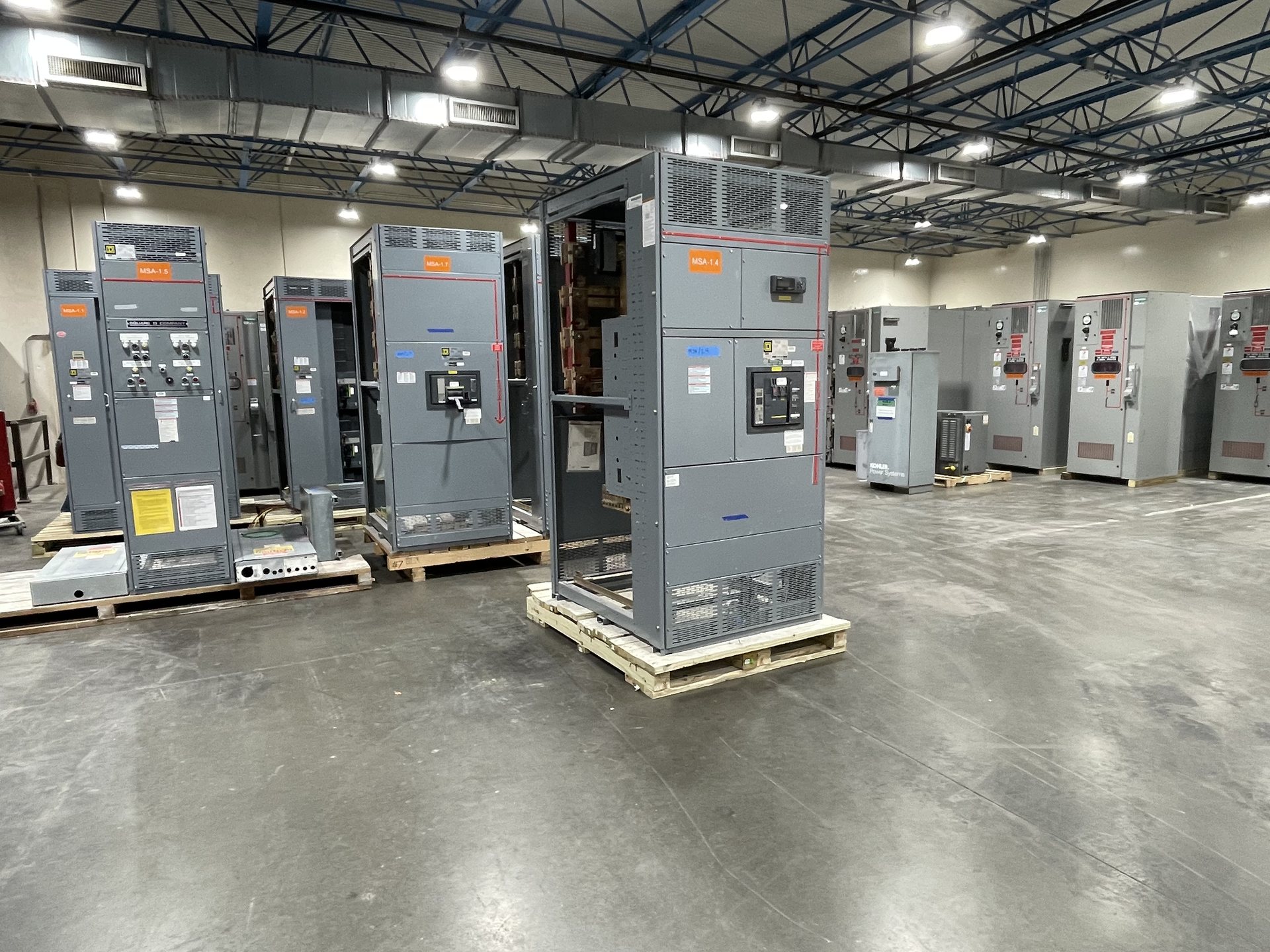
Begin with a readable nameplate photograph, then add a straight-on image of the full assembly and several detail views. Show doors, compartments, breakers, buckets, busway joints, controllers, labels, and included accessories when safely visible. A ruler or known dimension can help communicate scale. Do not expose confidential addresses, customer names, security details, or energized interiors.
Condition and completeness
Describe observed condition in plain terms: stored, dusty, weathered, dented, painted, incomplete, disassembled, or otherwise marked. Point out missing covers, doors, breakers, buckets, hardware, wiring, manuals, keys, and fittings. If the interior was not inspected, say that. Do not claim operational status, calibration, insulation condition, or test results unless a supplied record actually documents it.
Documentation that helps
Helpful paperwork can include a section schedule, breaker list, accessory list, dimensional sketch, and notes about how items are grouped. Do not add unsupported claims about certification, ownership, service history, or compliance. A clean list of known facts and open questions is a useful starting point.
Safe preparation and freight
Electrical work, isolation, disconnection, lifting, loading, and removal must be handled by qualified professionals under the site's procedures. The buyer handles the physical recovery and logistics for equipment from decommissioned data centers and shut-down power plants: crane service, rigging, disconnects, loading, freight, and hauling are on us. The seller is not asked to perform hazardous testing, disconnect equipment, provide lifting gear, hire a carrier, or improvise removal. Once the equipment and access details are reviewed, we coordinate the authorized plan; the seller's only transaction obligation is to get paid under the agreed terms.
Offer and payment process
The business buys used and surplus gear and does not sell equipment. Submit the label, heading or item description, quantity, nameplate details, photos, condition notes, completeness, documentation, and access information for review. A cash offer may be made after the available facts are considered. Offers remain subject to review; they are not a guaranteed price, acceptance, test result, or statement of future use. If accepted, we handle the crane, rigging, disconnects, loading, freight, and hauling through qualified professionals, and payment is made upfront according to the agreed transaction terms. The seller does not arrange or pay third parties for recovery.
Next step
Start with a concise message about the cutler-hammer lot and attach the clearest available images. Include what is known, what is missing, and what remains uncertain. A reviewer can then ask focused follow-up questions about identifiers, ratings, condition, completeness, access, or logistics. No seller testing or removal is required: an honest note such as “not verified” is more useful than an invented detail. The practical next step is to send the information for buyer review and wait for our confirmation; do not move, disconnect, lift, or load the equipment yourself.
Buyer notes
Send the facts that move the review forward.
Include the nameplate, lineup or device photos, approximate quantity, visible condition and where the equipment is located. We buy equipment; we do not sell replacement gear or represent a test result that has not been provided.
Start with the nameplate
Request a quote
Tell us what you have. We buy switchgear from decommissioned data centers, shut-down power plants and other facilities. Crane, rigging, disconnects, loading, freight and hauling are on us. You do nothing but get paid.