Surplus electrical switchgear in Morgan City deserves an item-by-item description rather than a vague inventory label. Equipment might be sitting in a facility, warehouse, or project inventory. A useful submission separates visible facts from anything still unknown, so the buyer can review the equipment without requiring the seller to make unsupported claims.
Build a useful equipment record
Start with the identity of each assembly. Write down the manufacturer, series or model, catalog number, serial number when readable, section count, and any nameplate markings. For switchgear, record the lineup arrangement, section dimensions, bus and voltage markings, interrupting information, breaker details, and visible accessories. Do not infer a voltage, ampere rating, compatibility, or condition from appearance alone. If a plate is faded, say that it is unreadable and include a close image rather than filling in the blank. A lineup that looks similar to another one may still have a different bus arrangement, breaker family, controller, or internal configuration. If several sections belong together, list them in order and mark which pieces are confirmed as one lineup.
Provide images that answer practical questions
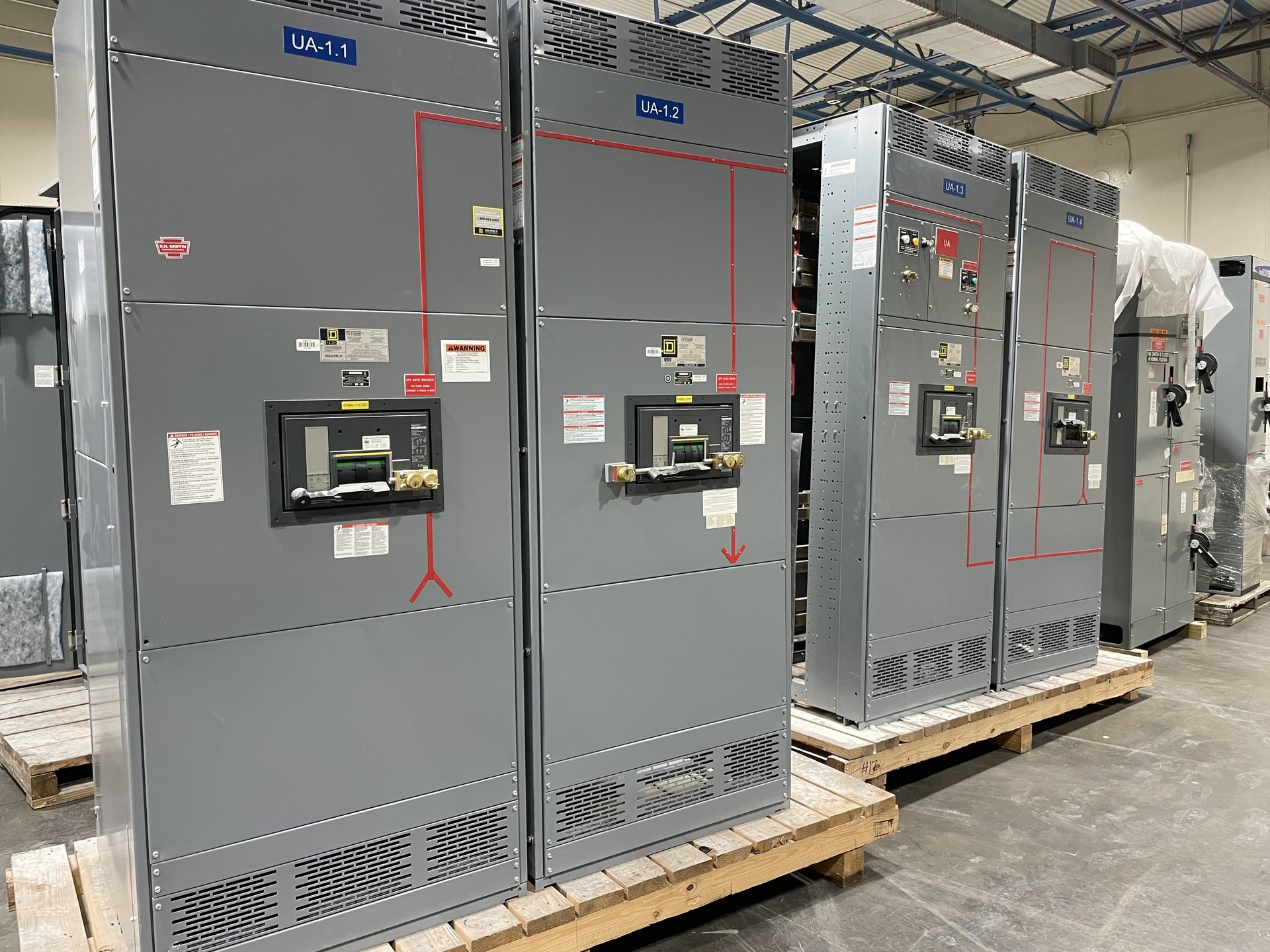
Images should help someone understand scale, identity, and completeness without asking anyone to disturb the equipment. Photograph the full front, rear when safely accessible, both ends, nameplates, doors, compartments, labels, breaker faces, controllers, meters, and loose accessories. Include a wider view that shows how sections relate to one another, then use close views for markings that would be lost in the wide shot. A ruler or a known dimension can help communicate size, but it is not a substitute for a measured footprint when that measurement is available. Keep the image set honest: show dirt, oxidation, dents, missing covers, stored parts, and blocked views instead of presenting only the best angle. No photo should require energized access, opening a hazardous compartment, or moving a heavy component.
List what is present and what is unknown
Describe condition and completeness in separate notes. Say whether the electrical switchgear is stored, installed, partially dismantled, or already separated into sections, while avoiding a claim that it has been tested unless documentation actually exists. List included breakers, buckets, fuses, relays, terminals, bus joints, trim, hardware, drawings, manuals, and spare parts; identify anything believed missing. A non-working, untested, weathered, or incomplete item can still merit review when the description is candid. The buyer's quote depends on review of the specific equipment and the information supplied, so a straightforward unknown is more helpful than an optimistic assumption.
Share site and loading information
Freight planning begins with access information, while the buyer handles the physical work required for an accepted transaction. Note the pickup address at the level needed for coordination, loading-door dimensions, dock or ground access, available clearances, approximate section dimensions and weights if documented, and whether the lot is staged together. Mention stairs, narrow turns, overhead constraints, or restricted receiving hours when those facts are known. The buyer arranges and pays for qualified professionals to manage electrical disconnects, crane service, rigging, removal, loading, freight, and hauling; the seller does not arrange or perform that work. Do not disconnect, open, drag, lift, test, or prepare energized equipment yourself. The seller may share available information during the quote review, but the buyer's qualified team controls the physical work and logistics, leaving the seller to get paid rather than coordinate a removal project.
How the offer and payment review works
The review process is simple to describe. Send the equipment identity, the image set, a count of sections or loose pieces, condition notes, and the pickup context. Explain whether the lot consists of a single unit, a complete lineup or several groups of equipment. The buyer reviews those details and can respond with a cash offer for the specific lot. Quote value depends on the equipment, configuration, completeness, marketability, and logistics review; this page does not promise a price. Payment is made upfront for an accepted sale, with the exact arrangement confirmed before freight is coordinated.
Make a mixed inventory easy to review
Mixed lots are worth presenting clearly rather than splitting them into an artificially perfect story. Put complete lineups, loose breakers, spare buckets, controls, bus sections, and unidentified parts into separate lines, even when they came from the same project. Matching quantities and visible model markings help the buyer decide whether components belong together. If another voltage class is present, label it plainly; the buyer considers all voltage classes, subject to review of the particular items. Explain which pieces are included, which are available separately, and which are only shown for context. That structure lets a seller ask for one offer on the whole lot while preserving useful detail for each component.
Close with a careful handoff
Safety and accuracy should govern the final handoff. The seller does not need to perform electrical testing, disconnection, dismantling, component removal, rigging, crane work, loading, freight, or hauling merely to prepare a listing or complete the sale. A seller may share records already on hand, but should not create a test claim from a visual inspection or attempt electrical work. After acceptance, the buyer arranges qualified electrical professionals and the appropriate rigging and logistics team to control isolation, disconnection, removal, lifting, loading, and transport. The buyer manages the physical handoff and related logistics; the seller does not coordinate a removal project and simply receives payment under the confirmed sale terms. A careful record gives the buyer a realistic basis for evaluating electrical switchgear offered from Morgan City.
Buyer notes
Send the facts that move the review forward.
Include the nameplate, lineup or device photos, approximate quantity, visible condition and where the equipment is located. We buy equipment; we do not sell replacement gear or represent a test result that has not been provided.
Start with the nameplate
Request a quote
Tell us what you have. We buy switchgear from decommissioned data centers, shut-down power plants and other facilities. Crane, rigging, disconnects, loading, freight and hauling are on us. You do nothing but get paid.