To prepare surplus electrical equipment in Acadia Parish for review, start with a clear inventory: identify each assembly, count major sections or devices, and record the markings and visible condition. Switchgear, switchboards, motor control centers, panelboards, busway, breakers, automatic transfer switches and unit substations differ in configuration and handling needs, so a useful description goes beyond a general label. You do not need to test equipment or arrange its removal.
Build an inventory by equipment type
List each distinct asset separately rather than combining everything as “electrical gear.” Note whether an item is switchgear, a switchboard, an MCC, a panelboard, busway, an ATS, a breaker or a unit substation. For lineups, record the number of sections and any attached or associated equipment; for loose breakers or accessories, count individual pieces where practical. Include quantity, manufacturer as marked, model or catalog number, voltage class, amperage and phase when visible. If a marking is unreadable or absent, say so instead of estimating. A structured list helps a buyer distinguish comparable items and identify what information still needs review.
Capture configuration and distinguishing details
Equipment with similar names can differ substantially in arrangement and completeness. For a switchgear or switchboard lineup, describe its overall section count and note visible incoming, distribution or metering sections without opening compartments. For an MCC, record the number of buckets or sections if you can see them safely. For busway, note the visible type of components and approximate quantities, such as straight lengths, fittings or plug-in units, using existing labels where available. Identify whether breakers, doors, covers or accessories appear to accompany the main assembly. These observations support review; they do not establish operating condition or compatibility.
Record condition without testing
Describe only what can be observed from a safe position: for example, whether the assembly appears complete, whether exterior covers are present, or whether there is visible corrosion, impact damage or missing hardware. Record completeness as an observation, not a technical finding. Do not energize, operate, open energized compartments, disconnect conductors or remove covers to improve an inventory. No seller testing is required for a review. Any electrical isolation or inspection that requires access to equipment must be handled by qualified professionals; the information you provide can remain limited to existing labels and safely visible surfaces.
Photograph the equipment for review
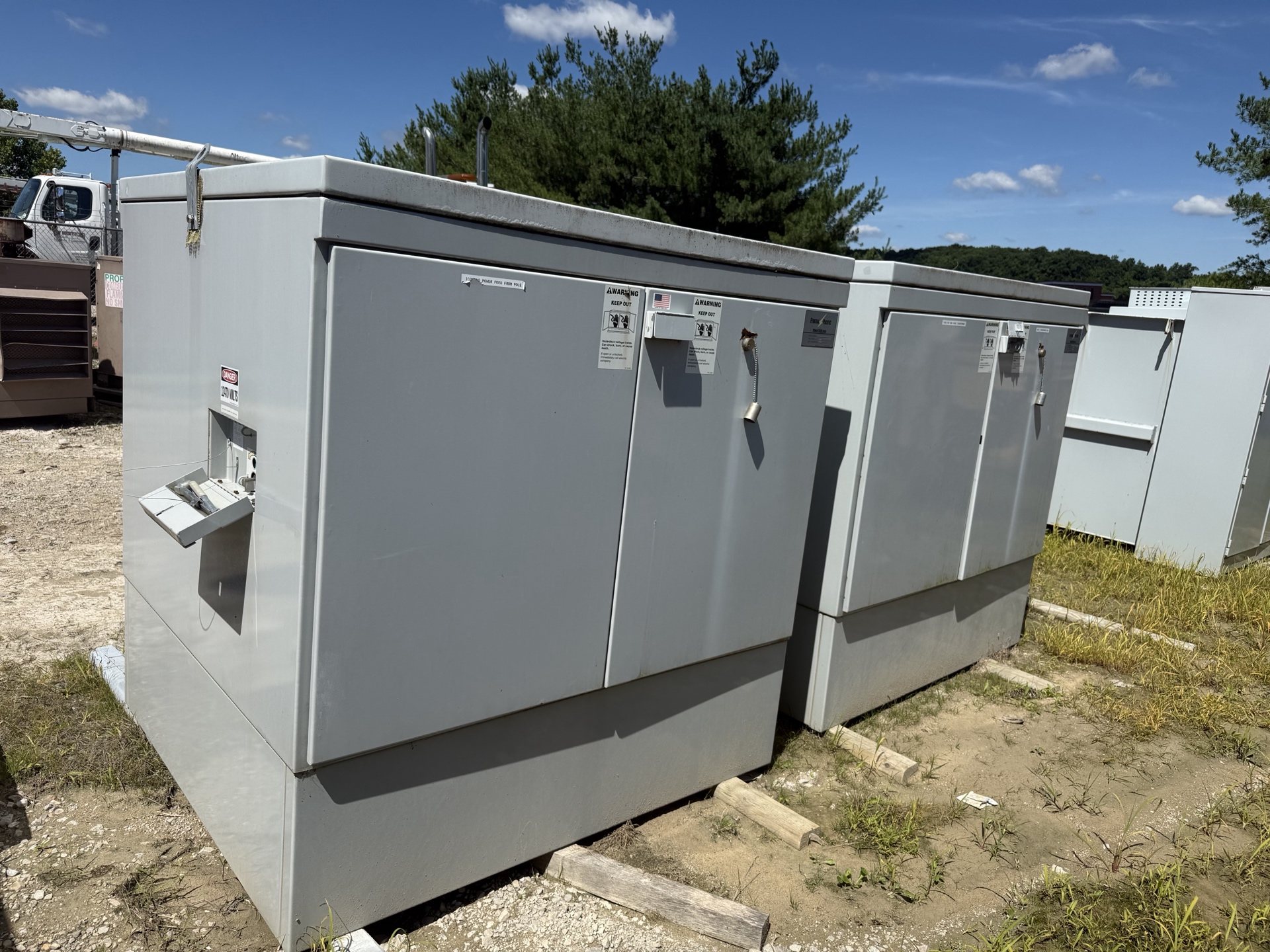
Useful photographs show both the whole assembly and its identifying details. Take a wide context view that excludes address information and customer signage, then photograph the full assembly and readable nameplates. Add representative devices, such as visible breakers or MCC units, and loose accessories arranged with a scale reference if they can be gathered without electrical or lifting work. Avoid entering restricted areas or approaching exposed conductors. If a label cannot be captured safely or clearly, note that in the inventory. Images help establish what is present, but they do not replace an equipment assessment or confirm that an item is tested or operational.
Include dimensions and safe access notes
Approximate dimensions can help assess the assembly and plan a potential recovery. Record height, width and depth when these can be measured without contacting, moving or dismantling electrical equipment; otherwise, mark dimensions as unavailable. Note visible access constraints in practical terms, such as a narrow route, limited staging space, overhead obstructions or a location that may affect lifting access. Do not move equipment to improve access or attempt to estimate a lift. Qualified personnel must determine safe isolation, disconnection, rigging and removal requirements. The buyer can review access notes alongside the equipment details before discussing an offer.
Assemble a review-ready equipment package
Bring together the inventory, photographs and any existing asset records, drawings or prior labels that you are authorized to share. Keep uncertain details clearly marked as unknown, and separate equipment that is included from items that are nearby but not part of the proposed sale. This is especially useful when a facility has several equipment types or loose components stored in different areas. Identify the parish location and provide safe access notes without including unnecessary sensitive information in photos. A buyer assesses the equipment before making an offer; submitting clear records supports that assessment but does not guarantee acceptance.
Consider the sale and recovery sequence
After reviewing the information, the buyer may ask for clarification or make a cash offer for equipment it is prepared to purchase. You can consider the proposed scope and agreed transaction terms before accepting; an offer is not assured for every item. On an agreed purchase, payment is made upfront. The buyer handles and pays for qualified disconnection, crane and rigging work, loading, freight and hauling. This applies across voltage classes and includes surplus or decommissioned equipment from facilities such as data centers and shut-down power plants. Do not arrange electrical or rigging work yourself.
Keep responsibilities clear through removal
Before removal, confirm which listed assemblies and loose items are included in the transaction, and identify any items that must remain. Share relevant access and scheduling information so the recovery team can plan the work. Electrical isolation and disconnection, lifting, loading and transport are handled by qualified professionals arranged by the buyer; you should not touch equipment or perform removal tasks. If conditions differ from the information supplied, pause and let the responsible professionals assess them. Clear scope, accurate records and a careful handoff help keep the sale review and recovery process organized without requiring seller testing.
Buyer notes
Send the facts that move the review forward.
Include the nameplate, lineup or device photos, approximate quantity, visible condition and where the equipment is located. We buy equipment; we do not sell replacement gear or represent a test result that has not been provided.
Start with the nameplate
Request a quote
Tell us what you have. We buy switchgear from decommissioned data centers, shut-down power plants and other facilities. Crane, rigging, disconnects, loading, freight and hauling are on us. You do nothing but get paid.