Surplus electrical equipment in East Carroll Parish can be easier to assess when its identity, configuration and removal constraints are documented before a buyer review. Whether equipment is being removed during a facility change, an agricultural operation’s upgrade or another decommissioning, start with records and observations available to you. Louisiana Switchgear Buyer purchases used, surplus and decommissioned equipment, subject to assessment and acceptance.
Start with an inventory by assembly
List each distinct assembly rather than grouping everything as “electrical equipment.” Identify switchgear, switchboards, motor control centers, panelboards, busway, automatic transfer switches, breakers and unit substations where present. Record the quantity of each assembly and note whether it appears to be a complete lineup, an individual section or a collection of loose devices. In a parish-wide inventory, clear labels help distinguish equipment from separate buildings or work areas without including sensitive facility details. Do not assume that similar-looking sections have matching specifications; document them separately when their markings or configurations differ.
Capture identification and ratings
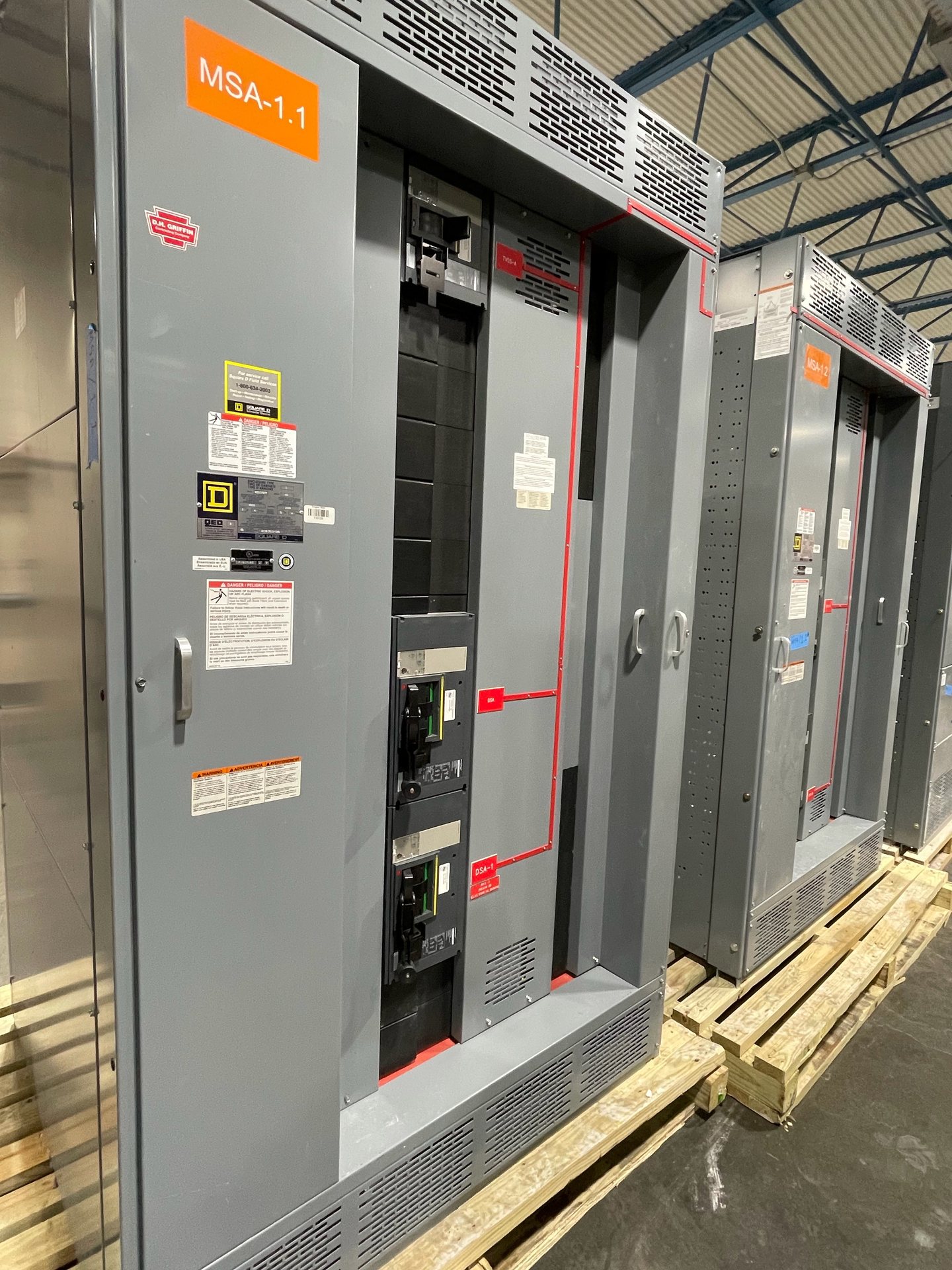
For each item, record the manufacturer as marked, model or catalog number, voltage class, amperage and phase when those details are visible on existing labels or records. Include dimensions, using measurements already available or obtained by qualified personnel without disturbing equipment. A readable nameplate can help a buyer compare the listing with the actual assembly, while a missing or obscured marking should be reported as unknown rather than guessed. Include breaker or device identifiers when legible and relevant. Ratings and model details are particularly useful when assessing mixed surplus lots, where a single broad description may conceal important differences.
Describe condition without claiming performance
Report visible condition factually: for example, note missing covers, apparent corrosion, damaged enclosures, loose components or intact-looking exterior panels. Record completeness separately, including whether doors, internal sections, breakers, relays or accessories appear to be present, based only on safe visual observation and available documentation. Appearance does not establish that equipment is operational, serviceable or tested. Do not open energized compartments or handle electrical components to improve the listing. If you have maintenance, removal or storage records, identify what they document and when; do not represent a record as proof of present condition beyond its stated scope.
Photograph the equipment for review
Useful photographs can show a wide context view without an address, customer signage or other sensitive information; the full assembly; readable nameplates; representative devices; and loose accessories beside a scale reference. Keep each image associated with the inventory item it depicts, and note when a label is unreadable or a view is unavailable. Take photographs only from a safe position and do not remove covers, reach into equipment or enter restricted areas for a closer image. Clear, unaltered views help resolve questions about configuration and completeness before a buyer considers an offer, while staged or selective images may leave material details unclear.
Explain access and removal constraints
Add safe access notes that help plan a review and eventual removal: general access limitations, known loading constraints, whether equipment is indoors or outdoors, and any restrictions on working hours or vehicle entry that you are authorized to share. Avoid publishing security-sensitive details. In East Carroll Parish, describe the actual site and access conditions for the equipment rather than relying on assumptions about a particular operation or community infrastructure. Do not disconnect, move or prepare heavy electrical assemblies yourself. Qualified professionals must handle isolation, disconnects, lifting, rigging and loading; Louisiana Switchgear Buyer handles and pays for removal logistics on agreed transactions.
Coordinate decommissioning and records
Before equipment is made available, coordinate with the facility owner or responsible project team so the asset can be identified, reviewed and released through the appropriate process. Existing one-line diagrams, equipment schedules, photographs and decommissioning lists may support identification; provide only records you are permitted to share. Clearly distinguish confirmed information from estimates and mark discrepancies between documents and visible labels. Do not energize, test or dismantle equipment for a prospective sale. No seller testing is required. Work involving electrical isolation or physical removal belongs to qualified professionals, with the removal plan coordinated after the buyer has assessed the equipment.
Understand review, offer and payment
Submit the inventory, photographs and access notes for assessment. A buyer may need clarification on quantities, ratings, completeness, condition or removal requirements before deciding whether to make an offer. Assessment does not guarantee acceptance, and an offer depends on the equipment reviewed and the agreed transaction terms. If both parties agree to proceed, Louisiana Switchgear Buyer pays upfront and handles and pays for qualified disconnects, crane and rigging work, loading, freight and hauling. Confirm which assemblies are included and how the removal scope is defined before scheduling work. This gives you a documented basis for deciding what surplus equipment to release.
Buyer notes
Send the facts that move the review forward.
Include the nameplate, lineup or device photos, approximate quantity, visible condition and where the equipment is located. We buy equipment; we do not sell replacement gear or represent a test result that has not been provided.
Start with the nameplate
Request a quote
Tell us what you have. We buy switchgear from decommissioned data centers, shut-down power plants and other facilities. Crane, rigging, disconnects, loading, freight and hauling are on us. You do nothing but get paid.