A small switchgear assembly marked below 100 A and 240 V can still represent very different equipment, from a panel serving branch circuits to a compact feeder or control assembly. For a useful review, record what each nameplate actually states and how the components are arranged. Louisiana Switchgear Buyer assesses used, surplus, and decommissioned equipment before making an offer; acceptance is not guaranteed.
Start with the nameplate, not the headline rating
Record the complete marked amperage and voltage, including any prefixes, suffixes, or separate ratings shown on the assembly and its devices. “Under 100 A / 240 V” is a screening description, not a complete specification. A 240 V marking does not by itself establish the system configuration, and a stated current rating may apply to a bus, main, or individual breaker. Photograph each legible nameplate and transcribe the markings as written. If labels are obscured or missing, note that fact rather than estimating. Review depends on identifiable equipment and its documented ratings, not an assumed application.
Separate bus, main, and breaker ratings
A compact panel may have a main breaker, a main-lug arrangement, or a feeder section supplied by upstream protection. Do not report the largest breaker handle rating as the bus rating: they describe different parts of the assembly. Capture the bus marking where present, then list the main device and branch or feeder devices individually. A breaker frame rating can differ from its trip rating, so record both when marked. These distinctions help compare an assembly with a small feeder or branch application without treating unlike configurations as equivalent. Include the manufacturer and catalog information for the assembly and devices.
Distinguish continuous current from interrupting capacity
Amperage and interrupting rating answer different questions. The continuous-current marking describes a current rating under stated conditions; the interrupting rating concerns a protective device’s ability to interrupt fault current at specified voltage. One should not be substituted for the other in a record or summary. Capture interrupting markings from each breaker where visible, along with any voltage conditions shown. If a label is incomplete, photograph it and flag the missing information for review. Do not infer a device’s interrupting capacity from its size, handle color, or the assembly’s advertised amperage. No seller testing is required for an initial equipment review.
Confirm what 240 V means for the assembly
A 240 V marking should be recorded as marked, not translated into an assumed system use. Note phase and frequency separately wherever labels provide them, and photograph the rating plate so the context remains available. An assembly’s nominal voltage, device voltage ratings, and intended system arrangement may not be interchangeable. This matters when comparing a control panel with a feeder or branch panel: equipment can share a nominal voltage while differing in phase, wiring, or device configuration. If system details are unknown, say so plainly. Avoid describing the equipment as suitable for a particular installation unless the documented information supports that statement.
Describe sections, enclosure, and physical size
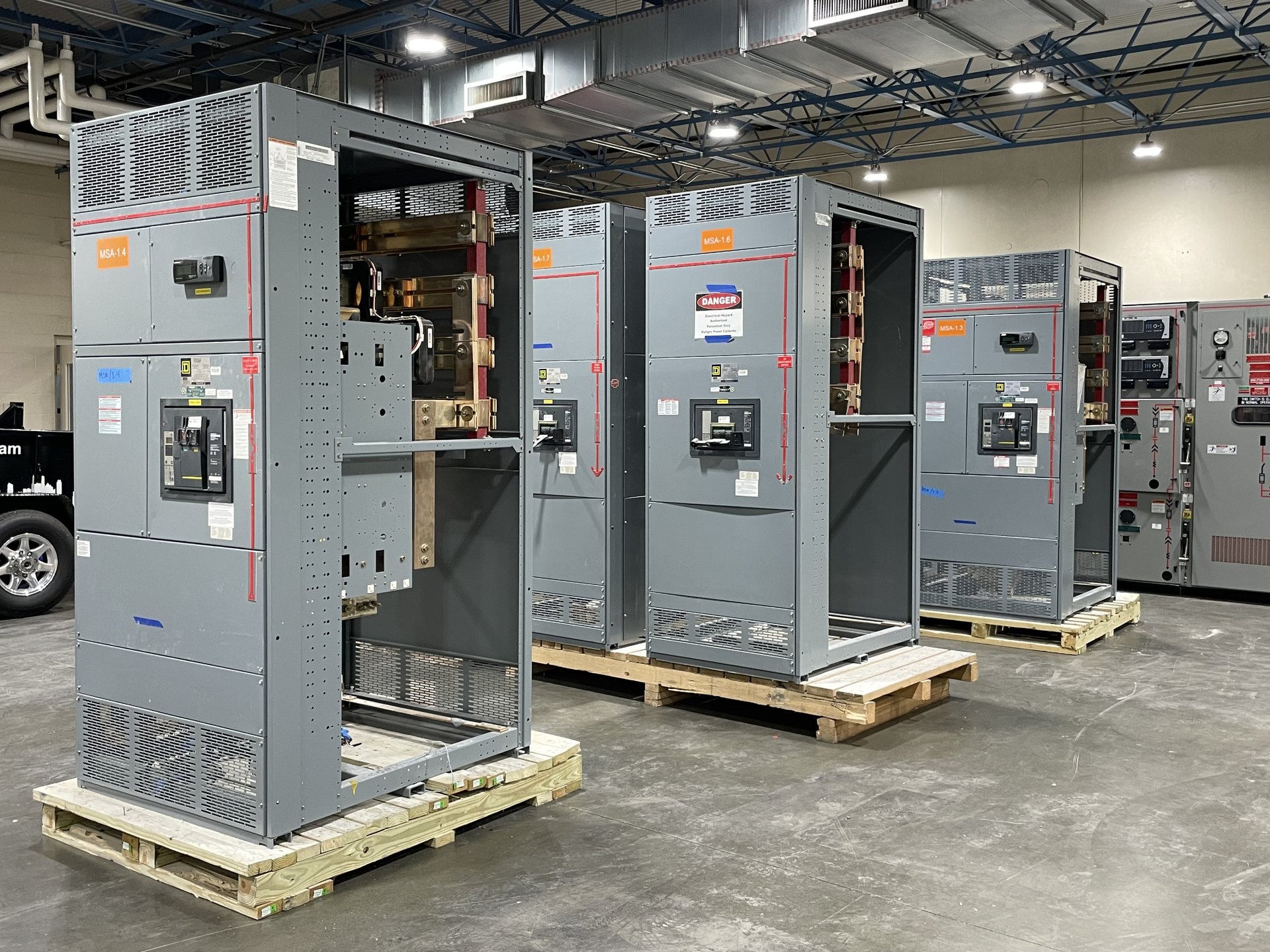
Count the sections and identify whether the equipment is a single enclosure or a group of connected sections. Record enclosure type or marking, overall dimensions, and any visible separation between compartments. A small branch panel may be a single cabinet, while a feeder assembly can include a main section and additional distribution sections; the exterior alone may not explain the internal arrangement. Photos of the full assembly, labels, and visible devices help reviewers understand its form. Do not remove covers or access energized compartments to improve documentation. Leave electrical isolation, inspection, disconnection, and handling to qualified professionals.
Inventory devices and note completeness honestly
Make a device list that identifies each visible breaker or other installed device by marked rating and position, where legible. Note blank spaces, missing covers, absent devices, or other apparent gaps without assuming what was originally supplied. Record visible condition factually, such as damaged exterior paint, corrosion, or unreadable labels; avoid declaring the equipment operational or tested. A complete assembly and a partially stripped one may receive different consideration, but completeness must be assessed from the equipment and available records. Include accessories or loose components only when they can be identified and safely documented by qualified personnel.
Prepare a clear record for buyer review
A concise submission can combine exact marked ratings, manufacturer and catalog number, section count, enclosure, dimensions, device list, visible condition, and completeness. Add clear photographs of exterior identification plates and the overall assembly, taken without approaching or opening energized equipment. Mention whether the unit is used, surplus, or associated with a decommissioned facility, and identify any known documentation gaps. Louisiana Switchgear Buyer purchases eligible equipment across voltage classes and can make a cash offer after assessment; acceptance is not guaranteed. On an agreed transaction, payment is upfront, and the buyer handles and pays for qualified disconnection, rigging, loading, freight, and hauling.
Buyer notes
Send the facts that move the review forward.
Include the nameplate, lineup or device photos, approximate quantity, visible condition and where the equipment is located. We buy equipment; we do not sell replacement gear or represent a test result that has not been provided.
Start with the nameplate
Request a quote
Tell us what you have. We buy switchgear from decommissioned data centers, shut-down power plants and other facilities. Crane, rigging, disconnects, loading, freight and hauling are on us. You do nothing but get paid.