Surplus Schneider Electric equipment can be difficult to identify from a brand name alone. Before requesting an offer, record the exact nameplate wording, model or catalog number, series, and relevant legacy markings. Then describe the equipment’s configuration, condition as observed from a safe distance, included parts, and access constraints. This review checklist helps us assess what is present without asking you to test or dismantle it.
Start with the complete identity
Schneider Electric equipment spans distribution, transfer, protection, and control, and product families can include different configurations. Photograph each accessible nameplate without opening a compartment or approaching exposed electrical parts. Capture the exact manufacturer wording, series or family, catalog or model number, and serial or asset identifier when appropriate. Include older labels and markings that may predate the current brand name. Transcribe characters carefully; a single suffix or revision code can distinguish materially different equipment. If a plate is obscured or unreadable, note that rather than guessing. These details give us a sound basis for review, not a promise of interchangeability.
Describe the equipment as installed
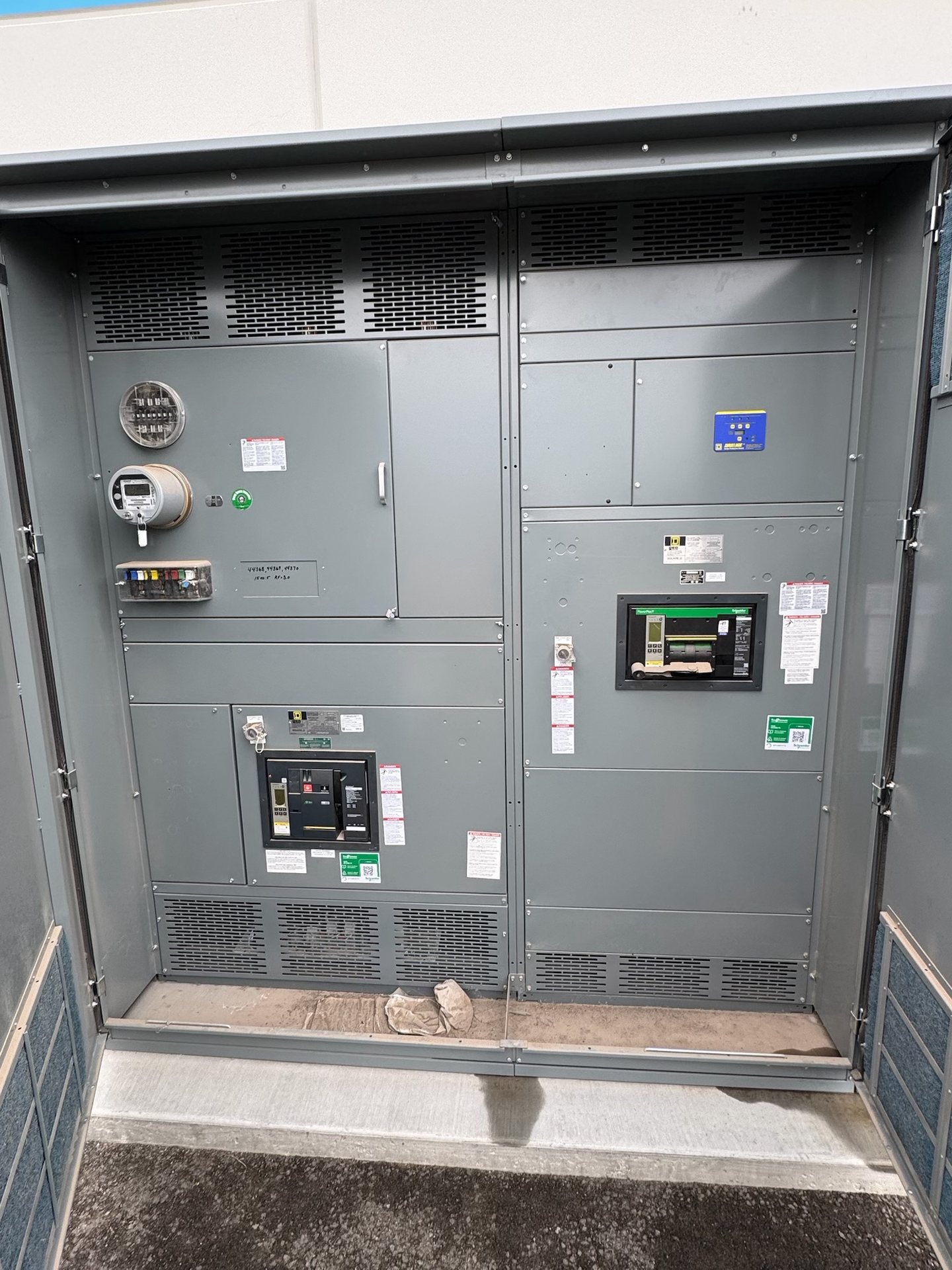
Identify the item in practical terms: breaker, switchboard, panelboard, motor control center, transfer switch, busway, unit substation, or another assembly. For multi-section gear, state the number of sections and describe their arrangement if it is visible without entering a restricted or hazardous area. Record overall dimensions only when they can be measured safely by appropriate personnel, and note how the assembly sits or is mounted. A concise description of doors, barriers, or attached enclosures can help clarify the physical configuration. Do not remove covers, guards, or components to improve access for photographs or measurements.
List devices and configuration details
For each section or assembly, note the visible main and feeder devices, including their labels and ratings where readable. Record breaker frame information, trip-unit identification, controller model, and mounting style if these can be seen safely from existing labels or documentation. Include accessory identifiers and revision markings when available. Explain whether devices appear fixed, draw-out, or otherwise mounted, but do not operate them to confirm. If paperwork, schedules, or existing inventories describe the configuration, share copies or relevant excerpts. These records help distinguish a complete assembly from a housing, partial lineup, or equipment with missing protection or control components.
Make completeness easy to judge
Create an inventory of what is included with the equipment: sections, breakers, trip units, controllers, barriers, handles, keys, wiring diagrams, manuals, and loose parts. Separate items that are physically attached from items stored nearby, and identify any parts whose association is uncertain. Mention visible gaps, removed devices, damaged enclosures, or missing labels without trying to repair or reinstall anything. If equipment was disconnected or removed from service, describe that status only as known to you. Completeness affects assessment, and a clear parts list is more useful than an unsupported claim that the assembly is complete.
Use photographs and records safely
Useful photographs include overall views of each side that is already accessible, section fronts, exterior labels, nameplates, and loose components arranged for identification. Photograph only from a safe location and follow your facility’s access rules. Do not open energized compartments, touch conductors, remove internal panels, or enter a controlled electrical area to obtain images. Existing one-line diagrams, bills of material, maintenance records, and removal inventories may add context; share only records you are authorized to provide. If safe access is limited, say so and submit the documentation already available rather than arranging an unsafe inspection.
Explain site access and removal limits
Tell us where the equipment is positioned within the facility, whether it is indoors or outdoors, and what is known about its route to loading access. Note visible or documented constraints such as low clearances, narrow passages, stairs, overhead obstructions, restricted work hours, or required escorts. Do not disconnect, lift, rig, or move the equipment yourself. Qualified professionals must handle electrical isolation, disconnects, lifting, and rigging. Louisiana Switchgear Buyer coordinates and pays for qualified disconnects, crane and rigging, loading, freight, and hauling on agreed transactions; accurate access information helps determine feasible handling.
Submit details for assessment
Send the identity records, configuration notes, completeness inventory, photographs, and access information together when possible. Flag uncertain readings and distinguish observed facts from details taken from old paperwork. We review the equipment before making an offer, and acceptance is not guaranteed. No seller testing is required. We can consider Schneider Electric surplus and decommissioned equipment across voltage classes, including gear from shut-down power plants and decommissioned data centers. If an offer is agreed, payment is made upfront under the transaction terms, and we handle the removal logistics described above. Clear documentation helps move the review forward without unsafe seller work.
Buyer notes
Send the facts that move the review forward.
Include the nameplate, lineup or device photos, approximate quantity, visible condition and where the equipment is located. We buy equipment; we do not sell replacement gear or represent a test result that has not been provided.
Start with the nameplate
Request a quote
Tell us what you have. We buy switchgear from decommissioned data centers, shut-down power plants and other facilities. Crane, rigging, disconnects, loading, freight and hauling are on us. You do nothing but get paid.