Preparing surplus electrical equipment in Chalmette for buyer review starts with a clear inventory, not a guess about resale value. Whether the material comes from a facility change, a planned replacement, or a decommissioned site, useful records help distinguish complete assemblies from loose components. Louisiana Switchgear Buyer reviews used and surplus equipment across voltage classes and can make a cash offer after assessing the details provided.
Start with a practical equipment inventory
List each assembly as a separate item or identifiable group. Distinguish switchgear from switchboards, motor control centers, panelboards, busway, automatic transfer switches, breakers, and unit substations; similar-looking cabinets can have different functions and buyer considerations. Record quantity and whether equipment is assembled, partially dismantled, or stored with separate sections. For a larger Chalmette inventory, mark the physical location of each group in your own records without sharing customer signage or sensitive site details. A concise inventory lets a buyer compare like items and identify where more information is needed.
Capture ratings and identification marks
Transcribe the manufacturer as marked, model or catalog number, voltage class, amperage, and phase where those details are legible. Keep each rating tied to the correct section or device; a lineup may contain multiple sections, and loose breakers may have ratings unlike the main assembly. Do not infer a missing rating from adjacent equipment or appearance. A clear nameplate photograph can help confirm a transcription, but provide the written fields as well when possible. These details support assessment; they do not establish that the equipment is operational or tested.
Describe completeness and visible condition
Note what is present, what is visibly absent, and what is uncertain. For example, identify whether doors, covers, internal devices, bus sections, control components, or accessories appear to accompany the equipment, without removing covers to check. Describe visible rust, impact damage, broken external parts, dirt, or storage-related concerns plainly. Separate observations from assumptions: “one device missing from the visible lineup” is more useful than calling an assembly complete or ready for service without verification. Louisiana Switchgear Buyer assesses submitted equipment before making an offer, and acceptance is not guaranteed.
Take photographs that answer review questions
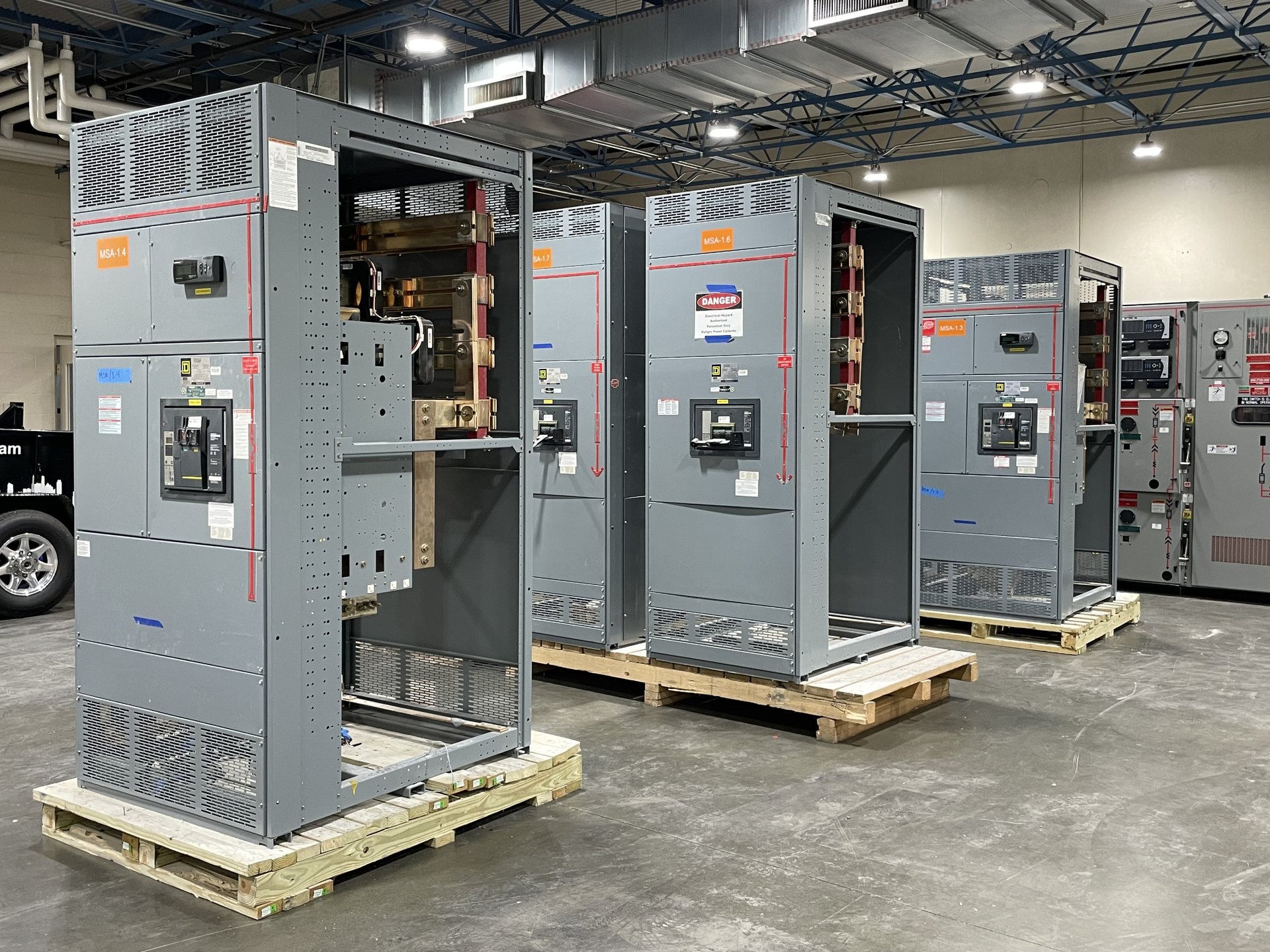
Use a wide context view to show the equipment group without address details or customer signage, then photograph the full assembly from a safe, permitted viewpoint. Add readable nameplate images, representative device views, and loose accessories arranged with a scale reference if that can be done safely. Keep photos associated with the relevant inventory line so a breaker image is not mistaken for a different lineup. Do not open energized compartments, move equipment, or approach restricted areas to improve a photograph. Qualified site personnel should determine what views are safe and accessible.
Compare assembled gear with loose material
An intact switchboard or motor control center presents different review questions from a pallet of breakers, busway sections, or accessories. For assembled equipment, identify lineup sections, approximate overall dimensions, and whether related sections are together. For loose devices, group by visible manufacturer and model markings, then record quantity and any obvious variation. For busway, note the available lengths or fittings only when they can be identified without handling hazards. Avoid combining mixed material into one vague count; a separated inventory helps the buyer understand what is actually included.
Record dimensions and safe access notes
Provide approximate dimensions for major assemblies and describe access conditions that affect removal planning, such as narrow routes, overhead obstructions, stairs, or limited staging space. These notes are for coordination, not a request for you to prepare the equipment. Do not disconnect wiring, dismantle gear, arrange lifting, or move heavy components yourself. Electrical isolation, qualified disconnects, rigging, lifting, loading, freight, and hauling are handled by the buyer using qualified professionals. Share known access constraints early so removal requirements can be considered alongside the equipment assessment.
Submit a reviewable package and next steps
Send the inventory, photographs, and any relevant notes together, identifying which records belong to each item. Include quantity, marked manufacturer, model, voltage class, amperage, phase, dimensions, visible condition, completeness, and safe access notes where available; state clearly when a field is unknown. The buyer reviews the information and equipment before deciding whether to make an offer. On an agreed transaction, payment is made upfront, and the buyer handles and pays for removal and transportation arrangements. No seller testing is required, and you should leave electrical or lifting work to qualified professionals.
Buyer notes
Send the facts that move the review forward.
Include the nameplate, lineup or device photos, approximate quantity, visible condition and where the equipment is located. We buy equipment; we do not sell replacement gear or represent a test result that has not been provided.
Start with the nameplate
Request a quote
Tell us what you have. We buy switchgear from decommissioned data centers, shut-down power plants and other facilities. Crane, rigging, disconnects, loading, freight and hauling are on us. You do nothing but get paid.