If you have surplus electrical equipment in Crowley, Louisiana, start by recording what is present and how each assembly is identified. Switchgear, switchboards, motor control centers, panelboards, busway, breakers, automatic transfer switches and unit substations differ in configuration and component mix, so a clear inventory helps a buyer assess the lot. You do not need to test equipment before requesting review.
Build an inventory that distinguishes each assembly
List each identifiable assembly separately, even when several units appear similar. Record quantity, manufacturer as marked, model or catalog number, voltage class, amperage and phase. Add dimensions where they can be gathered safely, along with visible condition, completeness and any safe access notes. These fields help distinguish a complete lineup from a partial section, or a group of loose breakers from installed devices. In Crowley, as elsewhere, an accurate description is more useful than a broad label such as “electrical gear.” Mark unknown details as unknown rather than guessing from appearance.
Describe the equipment by type and configuration
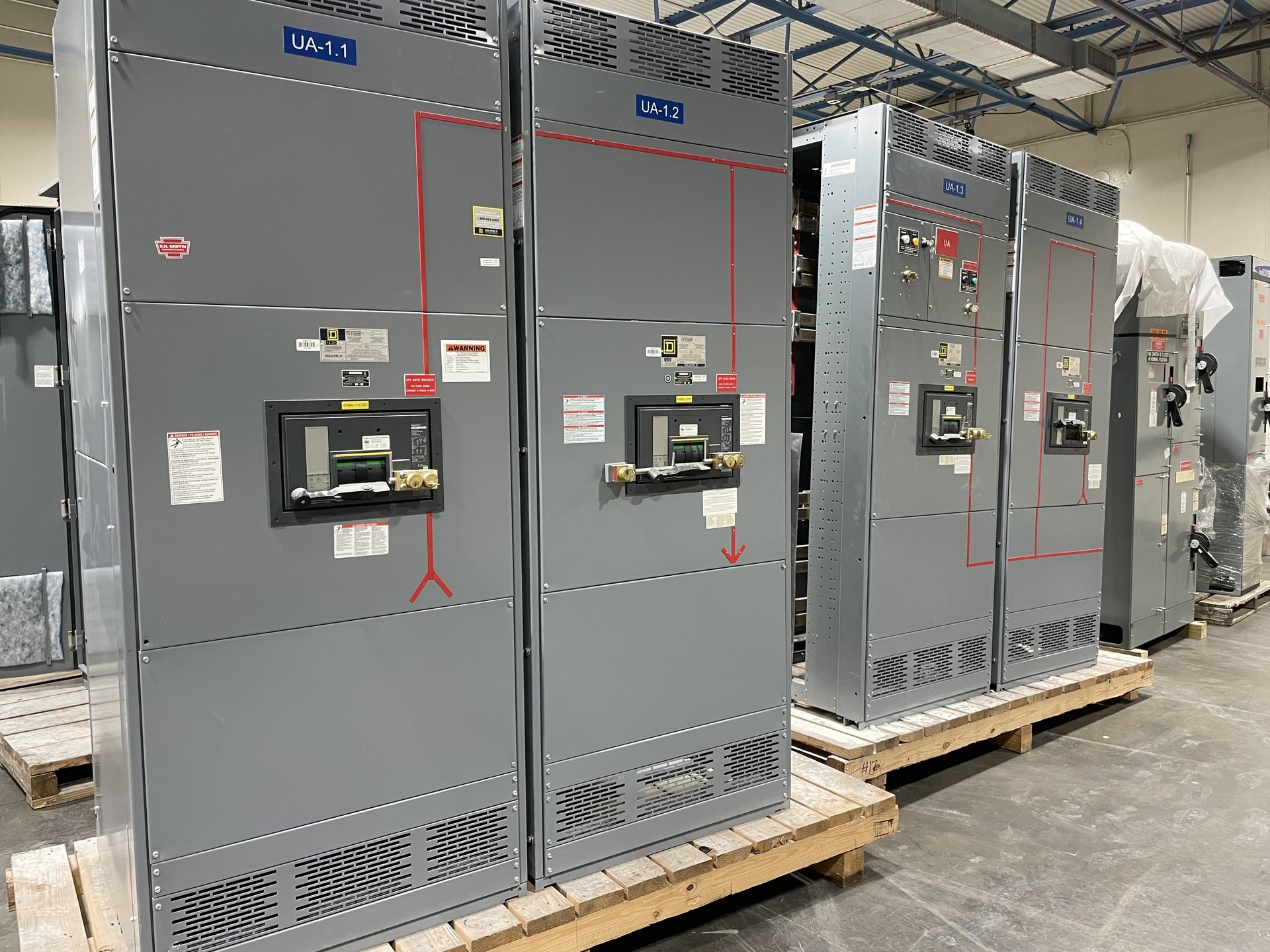
Equipment categories can have different sale considerations. Switchgear and switchboards may comprise multiple sections with distinct functions; motor control centers are arranged around compartments and motor-control devices. Panelboards are generally smaller distribution assemblies, while busway includes straight lengths and fittings that may be stored separately. Automatic transfer switches, breakers and unit substations each have their own identifying details and accessories. Note whether items are assembled, separated or mixed with other material. A buyer can review individual components and the overall lot, but a shared enclosure or nearby location alone does not establish that every component is included.
Capture useful records and photographs
Photographs can make an initial review more precise. Take a wide context view that excludes addresses and customer signage, then photograph readable nameplates when they are accessible without entering hazardous areas. Include the full assembly, representative devices and loose accessories beside a scale reference. Keep images tied to the corresponding inventory line, and note any label that is missing or unreadable. Do not remove covers or approach energized equipment to obtain a photo. If a nameplate cannot be viewed safely, provide the information later through qualified personnel or leave that field blank.
Report visible condition and completeness carefully
Describe what can be observed without operating, opening or dismantling equipment. Examples include missing doors, corrosion visible on exterior surfaces, damaged enclosure sections, loose components, or an assembly that appears incomplete. Separate confirmed observations from assumptions: a clean exterior does not establish internal condition, and a device’s presence does not establish that it functions. You do not need to perform testing for buyer review. Mention whether accessories, spare devices, manuals or related sections are included only when you can identify them. Clear limits on what is known help prevent misunderstandings during assessment.
Prepare the lot for a considered buyer review
Gather the inventory, photos and available documentation in one package, and identify which items are being offered together or individually. Include safe access notes, such as whether equipment is behind a controlled entry point or whether a qualified site contact must coordinate viewing. Do not energize, isolate, disconnect, lift or move equipment to prepare it for review; those tasks belong to qualified professionals. A buyer assesses the information and equipment before making an offer, and acceptance is not guaranteed. No seller testing is required as a condition of requesting consideration.
Agree on scope before removal begins
If the equipment is suitable for an offer, clarify the included assemblies, loose parts and any exclusions before agreeing to a transaction. Confirm the accepted amount and the removal scope together, including which items are accessible and any site coordination needed. On agreed purchases, payment is made upfront. Louisiana Switchgear Buyer handles and pays for qualified disconnects, crane and rigging, loading, freight and hauling. Sellers should not arrange electrical work or lifting as a substitute for this handling. Work involving isolation, electricity, rigging or lifting must remain with qualified professionals.
Coordinate safe recovery and close out the inventory
Once the transaction and scope are agreed, coordinate access with the appropriate site contact so qualified crews can manage removal and transport. Keep the inventory as a reference for what is being recovered, especially when a lot includes several equipment types or loose accessories. Do not enter restricted areas, operate equipment or direct lifting activity. After removal, compare the cleared area and recovered items against the agreed scope with the responsible site representative. This orderly closeout supports clear records for the seller and buyer, while keeping electrical and material-handling work in professional hands.
Buyer notes
Send the facts that move the review forward.
Include the nameplate, lineup or device photos, approximate quantity, visible condition and where the equipment is located. We buy equipment; we do not sell replacement gear or represent a test result that has not been provided.
Start with the nameplate
Request a quote
Tell us what you have. We buy switchgear from decommissioned data centers, shut-down power plants and other facilities. Crane, rigging, disconnects, loading, freight and hauling are on us. You do nothing but get paid.