If you are clearing surplus electrical equipment in Denham Springs, Louisiana, a concise inventory and a few safe exterior photographs can help a buyer decide what warrants closer review. You do not need to test equipment or prepare it for removal. Gather details already available in asset records and identify any access limits; a buyer assesses the information before making an offer, and acceptance is not guaranteed.
Start with an inventory from existing records
List each assembly or group separately, using the terms already shown in facility records: switchgear, switchboards, motor control centers, panelboards, busway, automatic transfer switches, breakers, or unit substations. Record quantity and whether items are complete assemblies, individual devices, or loose components. If equipment is grouped across rooms or storage areas, note those locations in your internal inventory without putting address or customer signage in photographs. A clear list helps a buyer understand the scope, distinguish unlike assets, and identify what additional information may be useful before reviewing the equipment for a possible purchase.
Capture nameplate details without approaching hazards
For each identifiable assembly, transcribe the manufacturer as marked, model or catalog number, voltage class, amperage, and phase from existing records or a nameplate that is safely visible from an accessible position. Keep uncertain characters marked as unclear rather than guessing. These identifiers help a buyer compare equipment of similar appearance and assess its general application and configuration. Do not open a compartment, remove a cover, reach past a barrier, or approach exposed electrical parts to obtain a reading. If a nameplate cannot be viewed safely, note that fact; qualified personnel can determine whether further access is appropriate.
Use exterior photographs to show context and condition
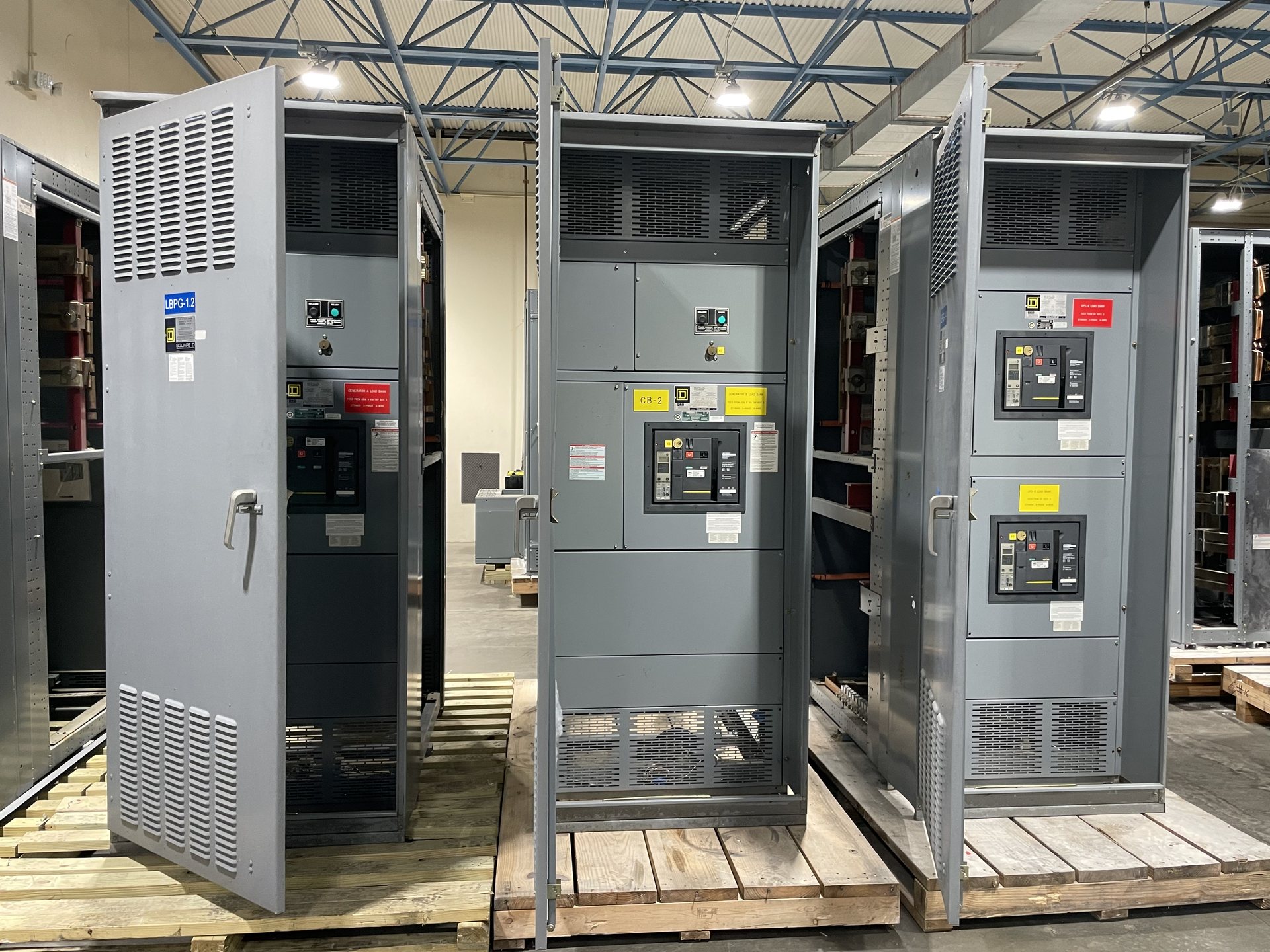
Take a wide context view that shows the equipment’s overall arrangement without including an address or customer signage. Add a full-assembly image and, where safely accessible, a readable nameplate image. Representative devices can help convey the type and mix of equipment, while loose accessories may be photographed with a familiar scale reference placed nearby—not on or inside the equipment. Use ordinary, well-lit images that preserve labels and visible details. Photographs are documentation, not a substitute for inspection or testing, and should be taken only from safe locations without moving equipment or removing guards.
Describe visible condition and completeness carefully
Use neutral observations drawn from what is already visible: for example, whether an enclosure appears intact, whether paint or labels are present, or whether obvious components are absent. Avoid calling equipment operational, serviceable, or tested unless reliable records support that statement. Note apparent completeness separately from condition; a unit may look intact while accessories, doors, or devices are stored elsewhere. A buyer uses these distinctions to understand what is included and what remains uncertain. Do not clean, dismantle, energize, or manipulate equipment to improve its appearance or answer a condition question.
Record dimensions and access constraints
Provide dimensions from existing drawings, asset records, or measurements taken by qualified personnel where available. Include approximate height, width, and depth, and say whether the figure covers one section or an entire lineup. Add safe access notes such as restricted approach, overhead obstruction, narrow route, or a need to coordinate site access, based on information you already have. These details help a buyer consider handling and removal requirements. Do not move equipment, enter restricted areas, or attempt lifting or disconnect work to confirm dimensions or route conditions; removal work is handled by qualified professionals.
Include related devices and loose accessories
For breakers and other removable devices, list quantity and any manufacturer, model, or rating information that is legible in existing records or safely visible. Keep loose accessories distinct from installed components, and note whether they are believed to belong with a particular assembly. Busway sections, panels, and substation components should likewise be counted and described as accurately as records allow. This separation helps a buyer assess the equipment as a group or by individual item and spot gaps in the inventory. No seller testing is required; do not remove devices or open equipment to verify a match.
Send the package for buyer review
A practical review packet combines the inventory, source of the recorded details, visible-condition notes, safe access information, and the exterior photographs. Flag unknowns plainly, including uncertain quantities or unreadable labels, rather than filling gaps with assumptions. A buyer assesses the submitted equipment before deciding whether to make a cash offer; acceptance is not guaranteed. On an agreed transaction, payment is made upfront, and the buyer handles and pays for qualified disconnects, crane and rigging, loading, freight, and hauling. Keep electrical isolation, lifting, and removal with qualified professionals; you do not need to perform that work.
Buyer notes
Send the facts that move the review forward.
Include the nameplate, lineup or device photos, approximate quantity, visible condition and where the equipment is located. We buy equipment; we do not sell replacement gear or represent a test result that has not been provided.
Start with the nameplate
Request a quote
Tell us what you have. We buy switchgear from decommissioned data centers, shut-down power plants and other facilities. Crane, rigging, disconnects, loading, freight and hauling are on us. You do nothing but get paid.