When a data center is decommissioned, equipment value and removal feasibility depend on more than a list of electrical assets. Access routes, assembly boundaries, and what remains installed can shape how a lot is reviewed and recovered. A clear inventory helps distinguish complete switchboards, ATS units, busway, PDUs, breakers, and related distribution assemblies from loose components and unresolved items.
Set the lot boundary before listing equipment
Start by defining which rooms, electrical lineups, and distribution runs are included in the proposed lot. Identify each switchboard, automatic transfer switch (ATS), power distribution unit (PDU), busway section, breaker, and related assembly by location or lineup designation where available. Note items that are excluded, retained, or already assigned elsewhere. A one-line diagram or section schedule can help establish relationships, but it should not replace a field-based inventory. Clear boundaries reduce the chance of mixing equipment from separate systems or treating a loose device as part of a complete assembly.
Separate complete assemblies from loose devices
For each listed item, state whether it appears to be a complete assembly, a section within a lineup, or a separate component. Record loose breakers, trip units, covers, busway fittings, control accessories, and other parts in their own entries rather than silently attaching them to a cabinet or run. If a component’s intended association is uncertain, say so. Note missing doors, covers, or visible accessories when apparent, without assuming the equipment’s internal condition. This distinction helps a buyer assess what is being offered and what may require separate handling or further identification.
Capture identifiers and ratings as marked
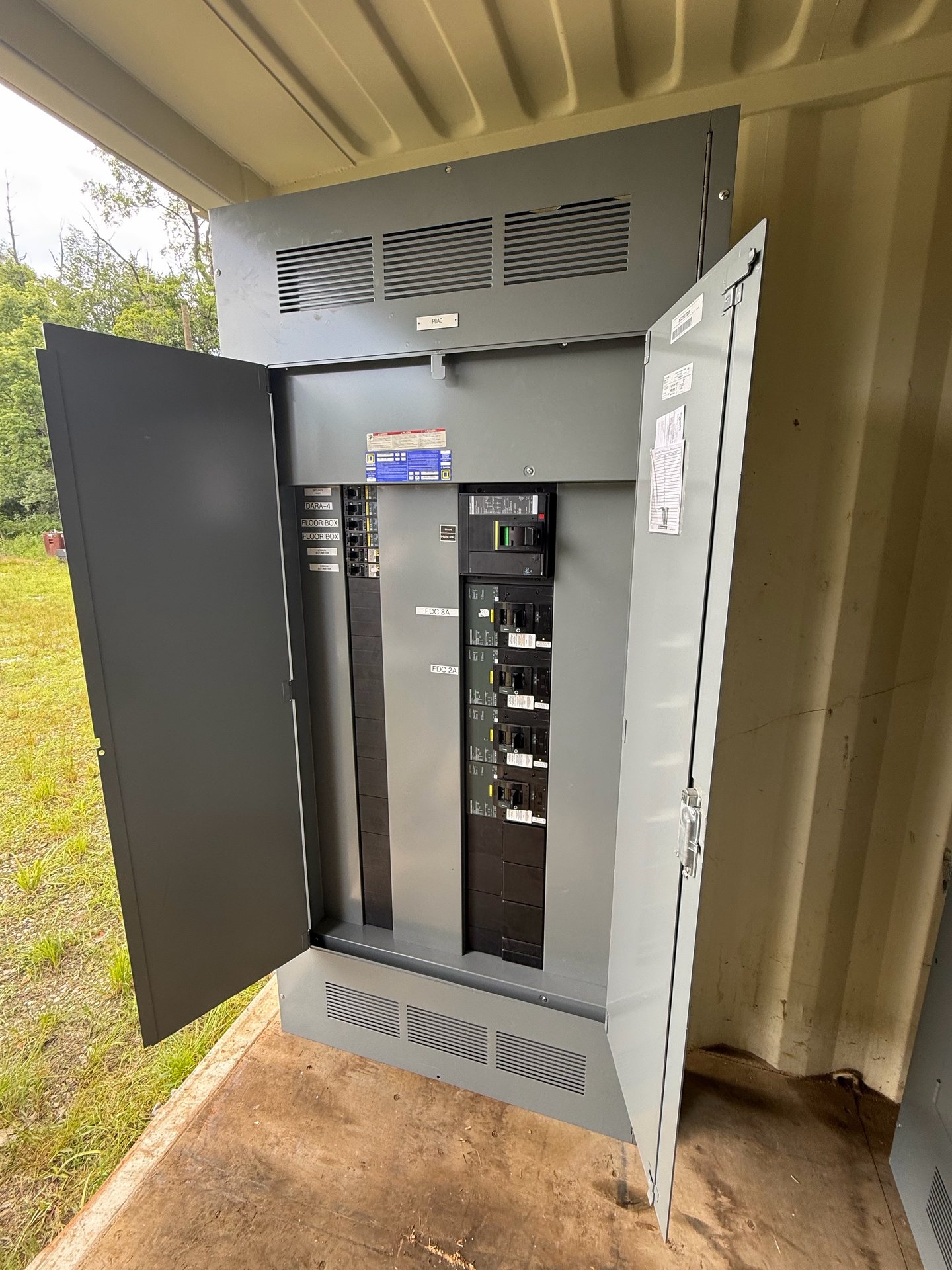
Photograph nameplates and visible labels clearly, including manufacturer, catalog or model designation, serial number, voltage, current rating, and other marked ratings when legible. Capture lineup labels, section numbers, and device identification where present. Do not infer ratings from the former data center’s design or from neighboring equipment. If a plate is obscured, damaged, absent, or unreadable, record that limitation rather than filling in a likely value. These details support initial equipment review, while photographs should show enough context to connect each nameplate to the correct assembly.
Make access part of the equipment record
Describe the route from the equipment’s present position to a practical loading point: room or area, doors, corridors, level changes, and any known restrictions on movement. Include approximate dimensions and weight only when documented or reliably available, and identify the source. Note whether equipment is in place, already separated, or positioned for removal, without asking site staff to move it. Access planning informs the recovery approach, equipment handling, and transport coordination. Qualified professionals must determine and perform any required isolation, disconnection, rigging, lifting, and loading.
Identify unknowns that affect review
Separate confirmed facts from open questions. Examples include whether a busway run is continuous, whether a breaker belongs to a particular lineup, whether controls or accessories are present, and whether an assembly can be removed in its current configuration. Record missing schedules, incomplete device lists, uncertain ownership, or limited access to labels. Unknowns do not need to be guessed away; they need to be visible in the submission. A buyer assesses the equipment before making an offer, and acceptance is not guaranteed. No seller testing is required for review.
Document ownership and supporting records
Include available one-line diagrams, section schedules, nameplate photographs, overall equipment photos, a device list, dimensions, and access notes. Label files so each image or document can be matched to an inventory entry. State the ownership or authorization status of the equipment and identify any approval still needed to transfer it. If records disagree with visible labels, preserve both pieces of information and flag the discrepancy. Organized documentation helps establish what is included, who can authorize a sale, and which details still need clarification before the proposed lot can be evaluated.
Coordinate recovery after the lot is reviewed
Once the equipment has been assessed, a buyer can make a cash offer for items it is prepared to purchase; agreement is required before recovery proceeds. For an agreed transaction, Louisiana Switchgear Buyer pays upfront and handles and pays for qualified disconnects, crane and rigging, loading, freight, and hauling. The seller should not undertake electrical or lifting work. Share access constraints and site coordination requirements early so qualified professionals can plan removal. This process applies to surplus and decommissioned data-center distribution equipment, including items whose operating condition has not been established.
Buyer notes
Send the facts that move the review forward.
Include the nameplate, lineup or device photos, approximate quantity, visible condition and where the equipment is located. We buy equipment; we do not sell replacement gear or represent a test result that has not been provided.
Start with the nameplate
Request a quote
Tell us what you have. We buy switchgear from decommissioned data centers, shut-down power plants and other facilities. Crane, rigging, disconnects, loading, freight and hauling are on us. You do nothing but get paid.