When an industrial plant closes, electrical equipment may be offered as one plant-wide lot, several area lots, or a mix of assemblies and loose components. Lot boundaries affect what can be identified, valued, and removed together. A clear inventory helps distinguish process distribution equipment from utility-area assemblies and shows where ownership, access, or completeness needs clarification before Louisiana Switchgear Buyer reviews the equipment for a possible purchase.
Define the lot by physical and documentary boundaries
Start with the seller’s proposed lot boundary: a room, process line, building area, or equipment schedule. Compare that boundary with the equipment physically present. A switchboard lineup may serve several areas, while an MCC may be dedicated to one process; neither should be assigned to a lot solely because it stands nearby. Mark included equipment, excluded equipment, and shared assemblies separately. Where equipment crosses a proposed boundary, note the relationship rather than dividing an assembly informally. This lets a buyer assess a coherent group and identify questions about ownership or removal scope before an offer is considered.
Separate complete assemblies from loose devices
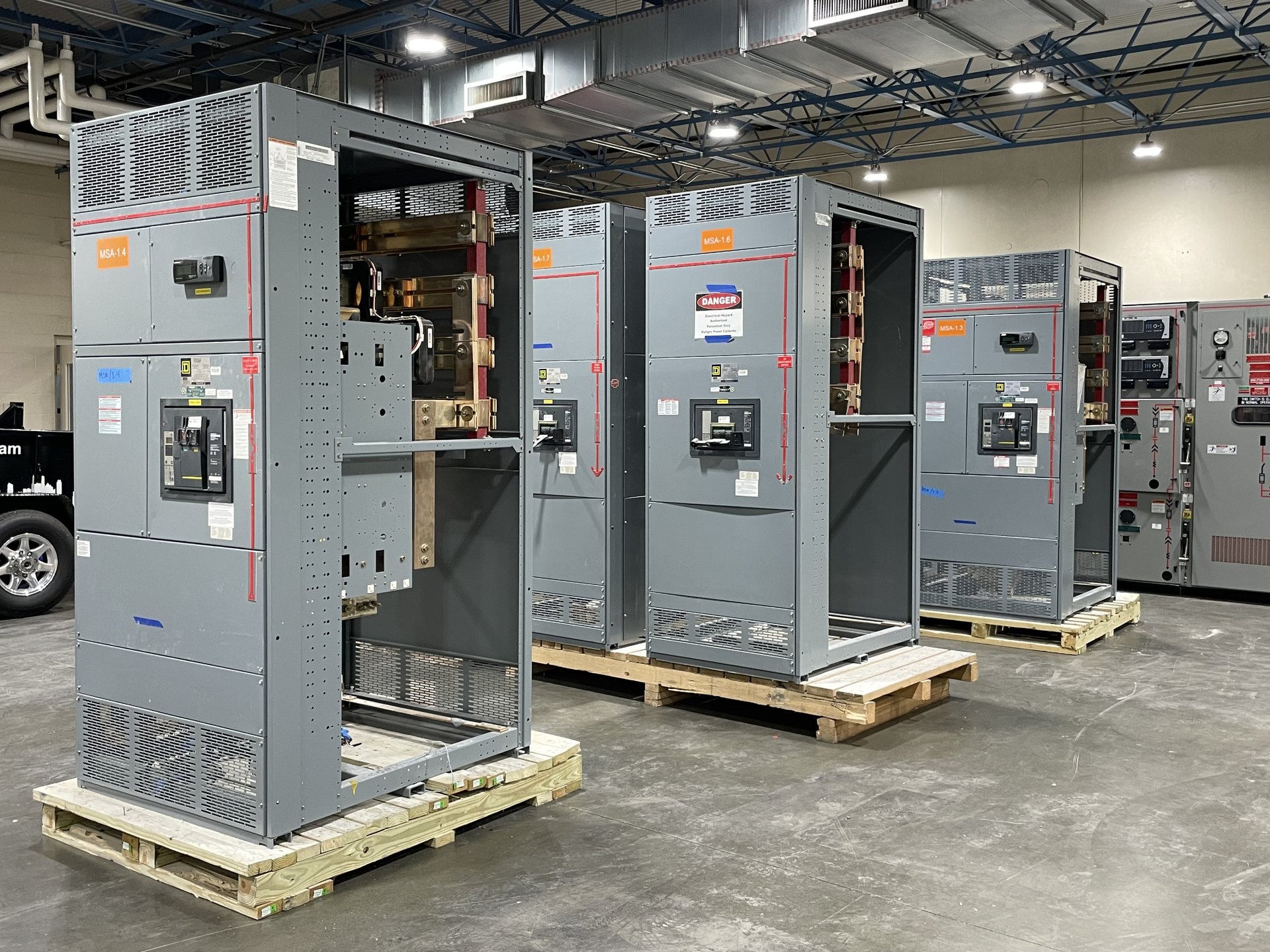
Record whether each item is a complete assembly or a loose device. A switchboard section, panelboard, MCC lineup, or busway run may include enclosures, internal devices, and associated components, but visible appearance alone does not establish completeness. Loose breakers, buckets, control components, or accessories should have their own entries and location notes. If a device has been removed from its original section, identify the apparent association only as such, not as confirmed. This distinction matters when comparing a largely intact lineup with a closure lot made up of mixed equipment and separately stored parts.
Capture visible identifiers and ratings without assumptions
Photograph nameplates and readable markings on each assembly, then record manufacturer, catalog or type designation, voltage, current, and other visible ratings where present. Include section or device identifiers if they can be read safely from an accessible exterior. Do not infer a rating from adjacent equipment or a one-line diagram when the nameplate is obscured or absent. Label uncertain fields as unknown, illegible, or not visible. The purpose is to give the buyer reliable evidence for review, not to establish operating condition. Seller testing is not required for an assessment, and no claim of tested or operational status should be inferred from photographs.
Use drawings and schedules as reference, not proof of contents
A one-line diagram, section schedule, or device list can help connect equipment to its former distribution role. Attach the available revision or date if known, and note whether the document covers the offered lot or a wider plant system. Drawings may show equipment that has since been removed, while installed equipment may have changed from the schedule. Record those discrepancies plainly. For process distribution, identify the relevant line or area; for utility-area assemblies, note the apparent service role if documented. Treat paperwork as supporting context that should be checked against visible equipment, not a substitute for an itemized inventory.
Describe the boundary around shared and adjacent equipment
Plant closures often leave equipment near lot edges: a feeder section beside another lineup, busway crossing an area, or a panel serving both included and excluded spaces. Note these relationships without deciding that a neighboring component is included. Identify visible connection points and where the proposed boundary falls, but leave disconnection and removal to qualified professionals. The buyer handles qualified disconnects, rigging, loading, and hauling for an agreed transaction. Clear boundary notes help establish the removal scope while avoiding an assumption that shared or adjacent equipment can be separated as a standalone item.
Document dimensions and access conditions
Provide approximate overall dimensions for major assemblies when they can be obtained without hazardous work, and state whether measurements are approximate. Note floor level, doorway or corridor constraints, overhead obstructions, and whether the equipment is in a restricted or secured area. Photos showing the approach and surrounding clearance can be more useful than a dimension alone. Do not move equipment, open energized compartments, or attempt to measure in unsafe conditions; leave any necessary assessment to qualified personnel. Access details help determine handling requirements, especially when a lot includes large switchboards, MCC lineups, or utility-area assemblies alongside smaller panels and breakers.
Resolve ownership and authorization before removal planning
A closure inventory can include assets controlled by different parties, such as a plant owner, landlord, contractor, or equipment lessor. Identify who has authority to sell each lot and whether any listed item is excluded, leased, or subject to another party’s claim. If authorization is pending, say so rather than presenting the item as cleared for sale. This is separate from technical identification: a well-documented assembly still cannot be included in a transaction without appropriate authority. Louisiana Switchgear Buyer assesses equipment before making an offer, and acceptance is not guaranteed. Clear ownership status helps prevent avoidable confusion as the review proceeds.
Flag unknowns and submit a coherent review package
A useful package combines a lot map or area list, available one-line or section schedule, nameplate photos, assembly and loose-device lists, dimensions, access notes, and ownership or authorization status. Add an “unknowns” list for missing ratings, uncertain completeness, unclear lot edges, or unavailable documents. Avoid filling gaps with assumptions about condition or compatibility. Louisiana Switchgear Buyer considers used, surplus, and decommissioned electrical equipment across voltage classes, including equipment from industrial closures. No seller testing is required. If a transaction is agreed, payment is made upfront and the buyer handles and pays for qualified removal, lifting, loading, freight, and hauling.
Buyer notes
Send the facts that move the review forward.
Include the nameplate, lineup or device photos, approximate quantity, visible condition and where the equipment is located. We buy equipment; we do not sell replacement gear or represent a test result that has not been provided.
Start with the nameplate
Request a quote
Tell us what you have. We buy switchgear from decommissioned data centers, shut-down power plants and other facilities. Crane, rigging, disconnects, loading, freight and hauling are on us. You do nothing but get paid.