Loose breakers, control devices, trip units, and accessories can be easy to overlook when a data center’s electrical infrastructure is dismantled. Sorting them separately from complete switchboards, ATS units, busway, and PDUs helps establish what is actually available for review. A clear inventory also distinguishes identifiable equipment from items whose fit, rating, or intended assembly remains uncertain.
Separate complete assemblies from loose inventory
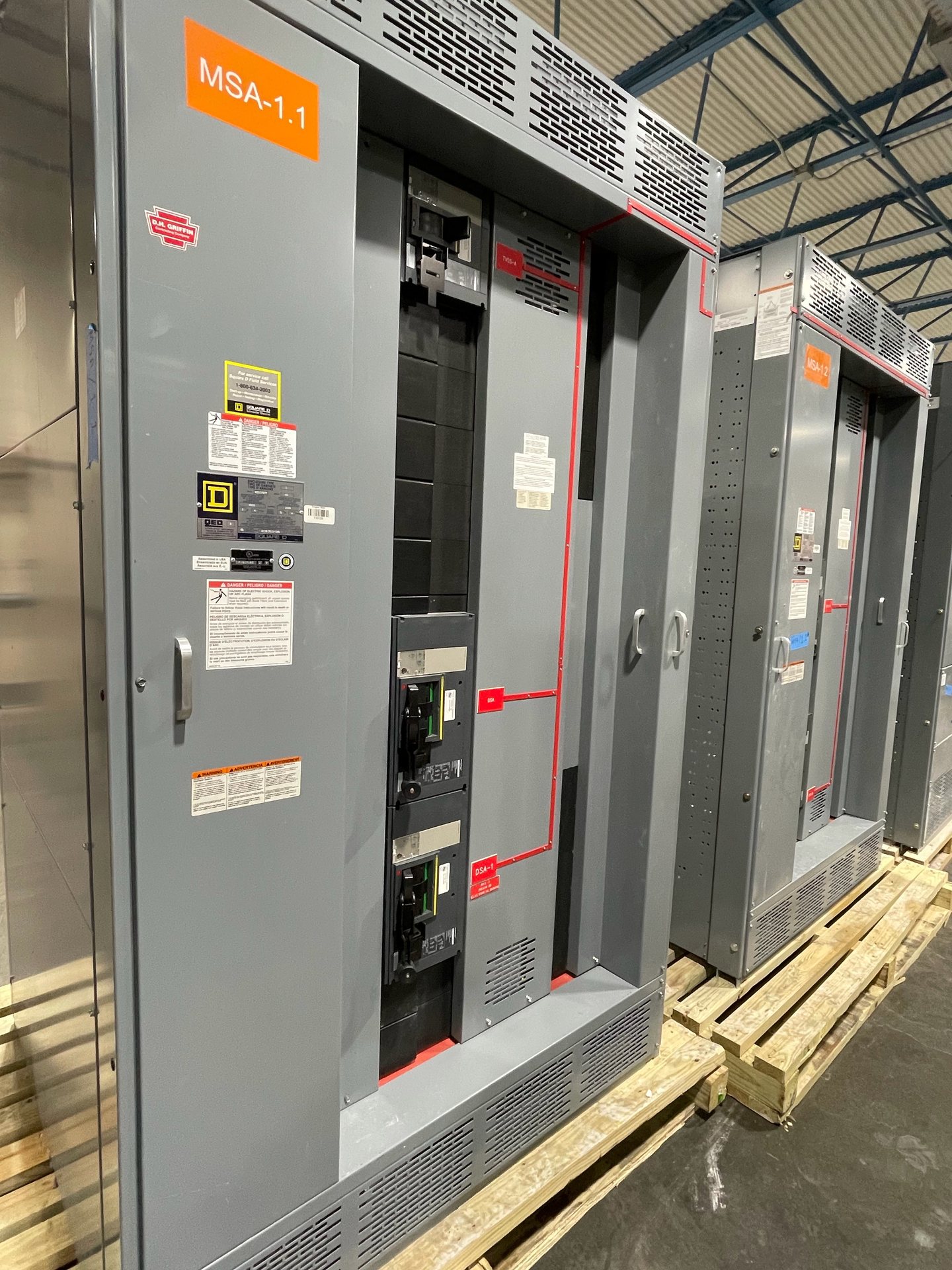
Start the review by identifying intact assemblies separately from individual devices and accessories. A switchboard section, ATS, or PDU may be a complete item for evaluation even if its condition or completeness is not yet established. Loose breakers, trip units, control components, and mounting hardware should have their own inventory entries rather than being assumed to belong with a nearby assembly. Where a device appears associated with a particular section, record that observed relationship and mark it as unconfirmed if documentation does not support it. This prevents a listing from overstating what is included.
Record device identity and visible ratings
For each loose device, capture the manufacturer and catalog or type designation when visibly marked, along with voltage, current, interrupting rating, and other legible nameplate data. Photograph the full device and its markings; avoid relying on a handwritten label or a description recalled from memory. If a marking is obscured, damaged, or absent, record that limitation rather than filling in a likely value. Do not open energized compartments or handle equipment to obtain a better view. Qualified personnel should determine safe access and any necessary isolation before inspection or photography.
Keep device lists tied to the right assemblies
A loose breaker’s physical presence does not establish which switchboard, panel, or lineup it fits. Use a device list that records a unique photo or inventory reference and, where known, the associated assembly and section. Compare identifiers with available one-line diagrams, section schedules, or equipment records, but note conflicts and gaps instead of resolving them by guesswork. Preserve the distinction between confirmed association, possible association, and unknown fit. This is especially useful when devices have been removed from their original positions during decommissioning or gathered into mixed storage lots.
Document the larger distribution context
Loose-device sorting is most useful when it sits alongside a concise record of the surrounding electrical infrastructure. Include available one-line diagrams or section schedules, and identify switchboards, ATS units, busway, PDUs, and related distribution assemblies as separate inventory items. Record each assembly’s visible identifiers and ratings, and note whether its connection to the loose-device lot is documented or merely suspected. A simple cross-reference between assembly photos and device-list entries helps a reviewer understand the lot without treating every nearby component as part of a complete system.
Capture condition and uncertainty without guessing
Describe observable facts: whether an item appears complete, whether labels are legible, and whether visible damage, missing covers, or separated components are present. Do not describe a device as operational or tested unless that status is supported by appropriate records; seller testing is not required for an equipment review. Keep unknowns explicit, including unverified fit, missing accessories, uncertain rating, and unclear relationship to an assembly. Accurate limits are more useful than optimistic assumptions because they let a buyer assess the equipment based on what can actually be identified.
Make photographs and access notes usable
Take well-lit photographs from safe, accessible viewpoints, including overall assembly views and close-ups of visible nameplates or device markings. Give each image a consistent identifier that matches the inventory list. Record dimensions when they can be obtained safely, and note access constraints relevant to later evaluation or removal, such as restricted approach or a need for lifting coordination. Do not move heavy devices, enter hazardous areas, or access electrical compartments to improve documentation. Qualified professionals must handle electrical isolation, disconnection, rigging, and lifting.
Prepare the lot for assessment and removal
Before requesting an offer, assemble the device list, photos, visible ratings, dimensions, available schedules, access notes, and ownership or authorization status. Identify which pieces are complete assemblies, which are loose, and what remains unknown. Louisiana Switchgear Buyer assesses equipment before making an offer, and acceptance is not guaranteed. No seller testing is required. On an agreed transaction, the buyer handles and pays for qualified disconnects, crane and rigging, loading, freight, and hauling; sellers should not perform electrical or rigging work. Clear sorting supports review and practical removal planning.
Buyer notes
Send the facts that move the review forward.
Include the nameplate, lineup or device photos, approximate quantity, visible condition and where the equipment is located. We buy equipment; we do not sell replacement gear or represent a test result that has not been provided.
Start with the nameplate
Request a quote
Tell us what you have. We buy switchgear from decommissioned data centers, shut-down power plants and other facilities. Crane, rigging, disconnects, loading, freight and hauling are on us. You do nothing but get paid.