When documenting electrical equipment from a retired power plant, start with the boundaries of each assembly and the status of its disconnect. Medium-voltage switchgear, station-service gear, breakers, MCCs, auxiliary panels, and controls may belong to different sections or remain connected to other plant systems. Record what is visibly present, what is loose, and what a qualified professional has isolated; do not treat an old label or a shutdown date as proof of safe disconnection.
Separate complete assemblies from loose items
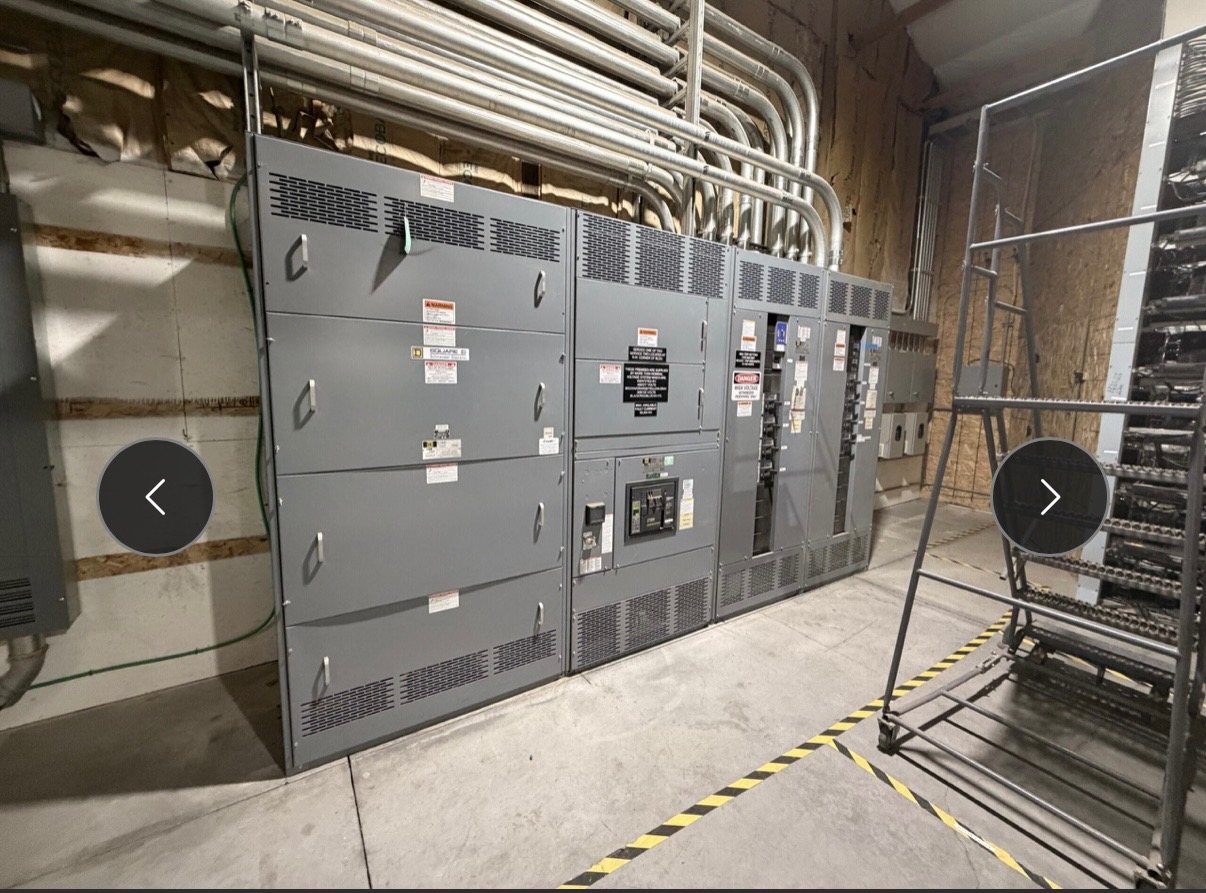
Build the inventory around identifiable assemblies, then list detached devices and accessories separately. A switchgear lineup may include multiple sections, while a breaker stored nearby may or may not belong to that lineup. Station-service gear, MCC buckets, auxiliary panels, and control equipment also need their own descriptions when they are not clearly part of a larger assembly. Note missing doors, covers, barriers, or components without attempting to correct them. This distinction helps establish what is being offered and prevents loose material from being mistaken for a complete, matching assembly.
Record disconnect scope as a verified boundary
For each item, describe the disconnect status only to the extent confirmed by qualified personnel. State whether the equipment remains in place, has been disconnected, or has an unknown status, and identify any known boundary between the equipment and adjacent plant systems. Do not infer isolation from a closed breaker, a removed handle, an old work tag, or the facility’s retirement. Electrical isolation and verification belong to qualified professionals. Louisiana Switchgear Buyer handles the removal, including qualified disconnect work within the agreed scope; sellers should not open energized compartments or undertake electrical work.
Capture visible identifiers and ratings
Photograph nameplates and legible labels on the assembly and on major devices, including breakers where accessible without opening equipment. Record manufacturer, type or model, serial number, voltage, current, interrupting or other marked ratings, and section identifiers when visible. Transcribe carefully and mark unreadable fields as unknown rather than estimating from a neighboring section. A lineup’s rating does not necessarily describe every installed device, and a loose breaker’s label does not establish compatibility with a particular cell. Photos of exterior labels and overall views are useful; do not approach or handle equipment unless the area is safe and access is authorized.
Describe configuration, dimensions, and unknowns
Include a one-line diagram or section schedule when available, along with a device list and approximate dimensions for each assembly or shipping group. Identify known gaps between the drawing and the equipment as observed, such as a section shown on a schedule but not found in the lot. Note whether controls, relays, wiring, or accessories are present, without asserting condition or function. Record what remains unknown: internal completeness, prior service history, operational status, or whether loose components match. No seller testing is required. An assessment can begin with documentation and a visual review; it does not certify equipment operation.
Establish ownership and site access details
Before discussing a sale, confirm that you own the equipment or are authorized to sell it, and identify any approval still required. Provide access notes that help plan a review and eventual removal: where the items are located, whether they are indoors or outdoors, visible obstructions, available staging space, and any known lifting or loading constraints. Do not move equipment to improve access. Flag restricted areas and site rules so qualified personnel can coordinate entry and work. Access information is planning context, not permission to disconnect or lift; those tasks are handled by qualified professionals as part of an agreed transaction.
Submit a usable equipment package for review
Organize the information by equipment group and send the one-line or section schedule, nameplate photos, overall and detail photos, device list, dimensions, access notes, disconnect status, and ownership or authorization information. Keep filenames or captions tied to section identifiers where possible, and distinguish confirmed facts from estimates or unknowns. Include station-service and auxiliary equipment even if it is not part of the main switchgear lineup. Louisiana Switchgear Buyer reviews the equipment before making an offer; acceptance is not guaranteed. No seller testing is needed, and an unverified item should be described as unverified rather than represented as operational.
Agree scope before removal and recovery
If the equipment is accepted and both parties agree to proceed, confirm the included assemblies, loose items, and removal boundaries in the transaction scope. Louisiana Switchgear Buyer pays upfront on agreed transactions and handles and pays for qualified disconnects, crane and rigging, loading, freight, and hauling. Sellers should not perform electrical isolation, dismantling, lifting, or loading. Coordinate site access and required authorization with the responsible facility representatives, then leave the work to qualified professionals. Clear inventory records and an explicit disconnect scope help keep the sale, removal, and recovery process aligned without relying on assumptions about the retired facility.
Buyer notes
Send the facts that move the review forward.
Include the nameplate, lineup or device photos, approximate quantity, visible condition and where the equipment is located. We buy equipment; we do not sell replacement gear or represent a test result that has not been provided.
Start with the nameplate
Request a quote
Tell us what you have. We buy switchgear from decommissioned data centers, shut-down power plants and other facilities. Crane, rigging, disconnects, loading, freight and hauling are on us. You do nothing but get paid.