When a data center is decommissioned, electrical equipment may be offered as a single package even though the records, ownership, and physical boundaries describe several different lots. A clear lot outline helps a buyer review switchboards, ATS units, busway, PDUs, breakers, and related distribution assemblies without assuming that nearby or connected equipment is included. Start with existing documents and safe exterior photographs; leave electrical work, lifting, and removal to qualified professionals.
Define the lot before listing equipment
Use a marked-up floor plan, equipment-room plan, one-line diagram, or section schedule to show the proposed sale boundary. Identify rooms, rows, elevations, or equipment tags that are inside the lot, and distinguish them from adjacent assets that remain with the site or belong to another party. A boundary can follow a room, a distribution path, or a group of tagged assemblies, but the records should make the intended scope understandable. If a document is outdated or does not match current labels, note that uncertainty rather than treating the drawing as conclusive. Clear limits let a buyer review the package as offered.
Separate complete assemblies from loose items
For each switchboard, ATS, PDU, or other assembly, state whether the offered item is a complete assembly, a section of a larger lineup, or a group of components. Record loose breakers, control devices, doors, bus plugs, accessories, and spare parts separately; do not assume they belong to a nearby enclosure merely because they are stored together. If a breaker or accessory is installed in a listed assembly, identify its position when records allow. This distinction helps the buyer assess what is physically included and what may need separate review. Use inventory descriptions, tags, and exterior views; do not open compartments or handle electrical components to confirm contents.
Capture identifiers and visible ratings
Transcribe the manufacturer, catalog or model information, serial number, voltage, current, interrupting rating, and other nameplate details that are legible from existing records or safe exterior photographs. Record the equipment tag and its location so each identifier can be matched to the lot boundary. For busway, note visible system identification and section markings where accessible without disturbing installed equipment. Mark fields as unreadable, absent, or unverified instead of filling gaps from a neighboring unit or an old schedule. These details help a buyer distinguish equipment types and assess a proposed lot; they do not establish condition, completeness, or operational status.
Use photographs to show context, not hidden condition
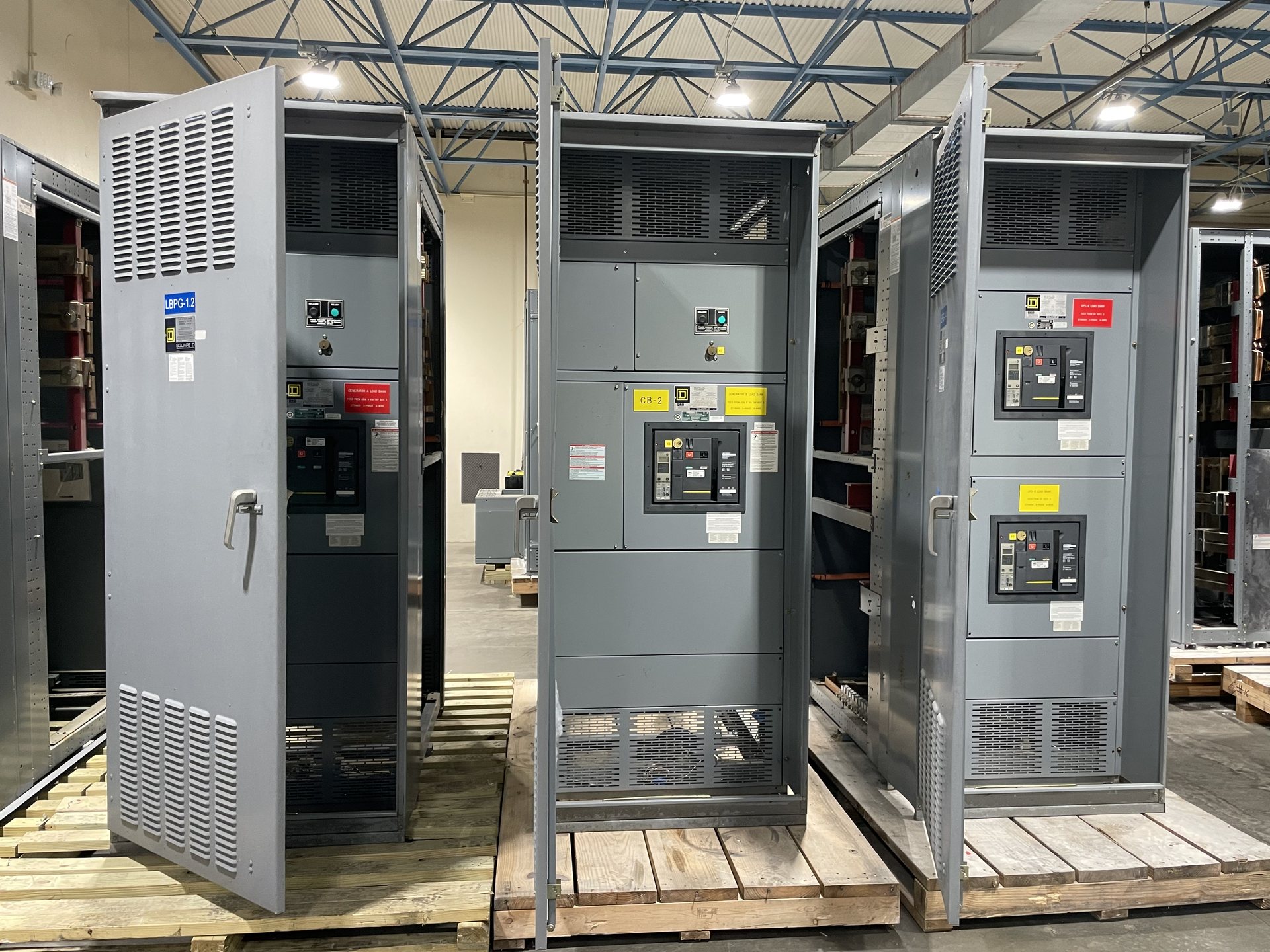
Provide wide exterior views that show each assembly in place and how it relates to the stated boundary, followed by closer exterior images of visible labels and interfaces. A photo list keyed to equipment tags makes it easier to connect images with the device list and drawings. Include visible clearance or access constraints only as observations, not as a request for someone to move equipment or remove covers. Do not photograph by entering restricted areas or approaching exposed hazards. Do not open energized compartments, remove barriers, or touch equipment for a better image. Buyer review can begin with safe, existing views and proceed through qualified site arrangements if needed.
Describe access and removal constraints
Record practical access information available from facility plans or the site team: door and corridor dimensions, floor or loading-area restrictions, known overhead obstructions, staging limits, and any scheduled access requirements. Note whether the equipment remains installed, is already disconnected by qualified personnel, or is stored separately, if that status is confirmed. Avoid estimating weights or lift requirements unless reliable documentation provides them. These details help a buyer consider handling and logistics, but they do not transfer removal work to the seller. Louisiana Switchgear Buyer handles and pays for qualified disconnects, crane and rigging, loading, freight, and hauling on agreed transactions; all such work must be performed by qualified professionals.
Document ownership and authorization
A lot boundary is useful only when the party offering the equipment has authority to include the listed assets. Provide available ownership records, disposal approvals, lease or finance information, or other authorization documents, and identify any items whose status is pending. This is especially important where a decommissioning contractor, facility owner, tenant, and equipment owner may have different roles. Do not include neighboring equipment simply because it shares a lineup, room, or feeder. A buyer can review the stated scope and supporting records, but the equipment is assessed before an offer and acceptance is not guaranteed. Resolve unclear ownership or boundary questions before representing an item as available for sale.
Mark unknowns and support a focused review
Finish the package with a device list that links each item to its tag, location, visible identifiers, photograph references, and included accessories. Add dimensions where they are already documented or can be obtained safely from records. Explicitly list unresolved questions, such as a missing schedule, unreadable nameplate, uncertain boundary, incomplete assembly, or unconfirmed ownership. Do not describe equipment as tested or operational unless that status is supported by reliable documentation; seller testing is not required for a buyer review. A straightforward record set lets the buyer ask targeted questions, assess the proposed lot, and make a cash offer if the equipment and scope are acceptable.
Buyer notes
Send the facts that move the review forward.
Include the nameplate, lineup or device photos, approximate quantity, visible condition and where the equipment is located. We buy equipment; we do not sell replacement gear or represent a test result that has not been provided.
Start with the nameplate
Request a quote
Tell us what you have. We buy switchgear from decommissioned data centers, shut-down power plants and other facilities. Crane, rigging, disconnects, loading, freight and hauling are on us. You do nothing but get paid.