When a generation facility retires electrical equipment, section mapping can make a mixed lot easier to describe and review. Use existing one-lines, section schedules, device lists, nameplates, and safe exterior photographs to show how medium-voltage switchgear, station-service gear, breakers, MCCs, auxiliary panels, and controls are grouped. Clear records help distinguish complete assemblies from loose items and identify questions that remain before a buyer assesses the equipment.
Start with the existing section schedule
Gather the latest available one-line diagram, section schedule, or equipment index rather than reconstructing the system from memory. Mark the identifiers already used in those records, such as lineup, section, cubicle, or panel numbers, and note where a drawing appears incomplete or out of date. The purpose is to describe the equipment’s recorded arrangement, not to certify its present configuration. A buyer can use that mapping to compare the listed assets with photographs and device information, spot apparent gaps, and ask focused questions before considering a lot.
Separate complete assemblies from loose devices
For each mapped section, indicate whether it appears to be a complete assembly, a partial assembly, or a group of loose components. For example, list a switchgear section separately from a breaker removed from that lineup, and identify MCC buckets, relays, control devices, or accessories that are stored apart. Do not assume a loose device belongs to a particular section unless existing records or visible identifiers support that connection. This distinction helps a buyer understand what is being offered together and assess completeness without treating disconnected pieces as an intact, usable assembly.
Record visible identifiers and ratings
Transcribe only markings that can be read from existing records or safe exterior views: manufacturer and type labels, serial or catalog numbers, voltage, current, interrupting ratings, and other nameplate data. Tie each observation to a mapped section or device identifier, and mark information as unreadable or not located when appropriate. Do not open energized compartments or approach equipment to obtain a better view. A buyer uses these details to classify the equipment and compare related sections; visible markings alone do not establish operating condition, test history, or suitability for a particular application.
Use photographs to confirm the map
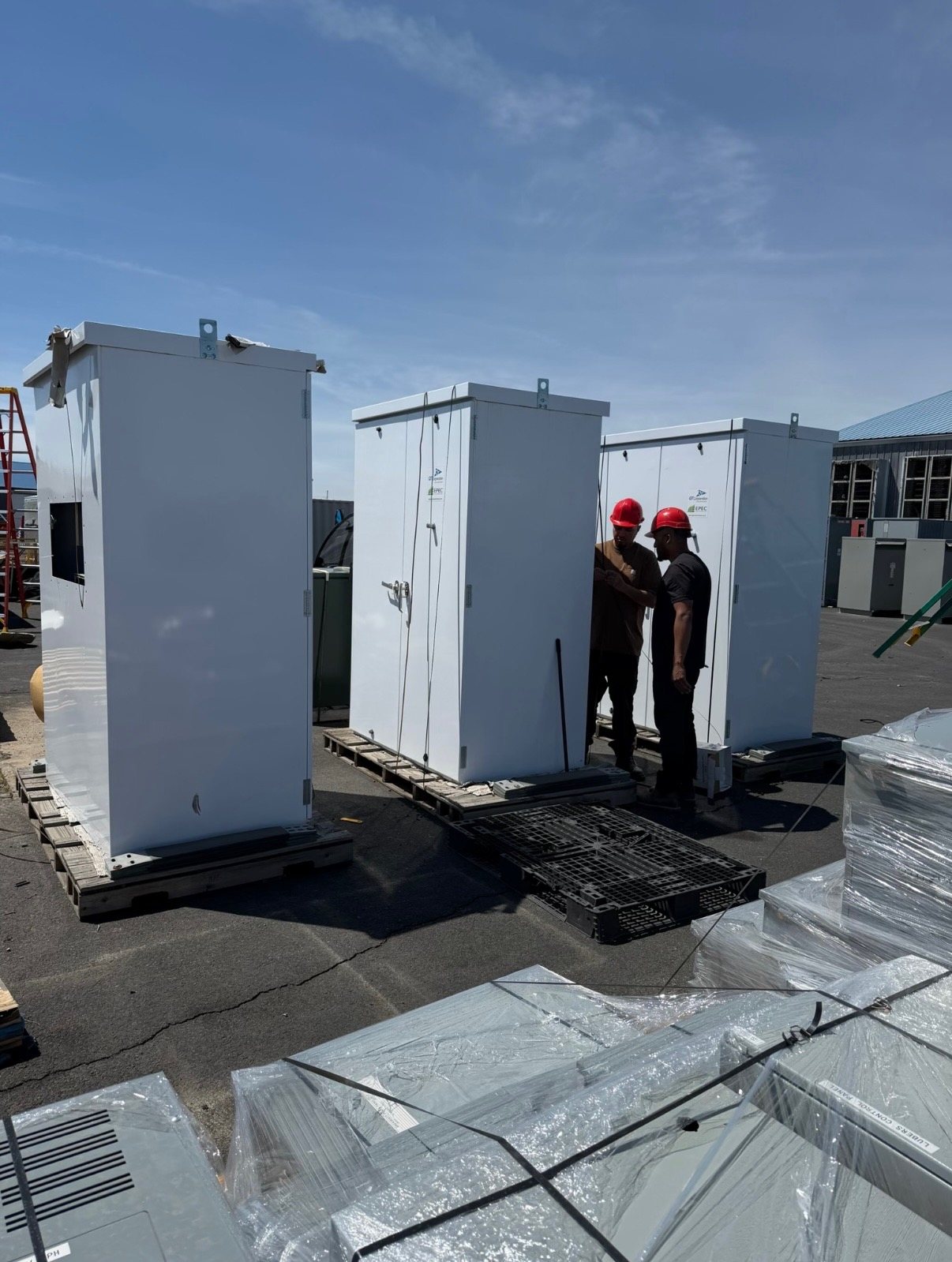
Provide clear photographs taken from safe locations, showing overall lineups, section labels, exterior nameplates, and loose items as they are currently stored. Include a simple reference in the image list so each photograph can be matched to the schedule or device list. Avoid touching equipment, removing covers, entering restricted areas, or moving components to improve a view. Exterior photographs can help a buyer check whether the mapped sections are visually identifiable and whether loose items are represented. They are supporting documentation, not a substitute for inspection or evidence that equipment has been tested.
Build a device list with known relationships
A concise device list should give each item a unique reference, its visible identifier, its apparent type, and the section association supported by records. Include breakers, control equipment, auxiliary panels, and MCC components as separate entries where that makes the lot clearer. If the association is uncertain, say so instead of assigning the device to the nearest lineup. Buyers can use a consistent list to compare quantities, avoid counting an item twice, and identify missing details. Keep the wording factual: a recorded device type or rating does not by itself confirm completeness or condition.
Add dimensions, access, and ownership status
Record available dimensions for major lineups or individual assemblies, noting whether measurements come from drawings or existing records rather than a new field measurement. Describe access information that a facility manager can confirm safely, such as the general route to the equipment, visible obstructions, and known loading constraints. State whether the seller owns the equipment or is authorized to arrange its sale, and flag any approval still needed. These facts help a buyer evaluate handling and removal considerations. Qualified professionals must perform electrical isolation, disconnects, lifting, rigging, loading, and hauling; the seller should not undertake this work.
Identify unknowns and request an equipment review
Close the package with a short list of unresolved points: missing schedules, unreadable nameplates, uncertain section associations, absent accessories, unknown dimensions, or unclear ownership authorization. Do not fill gaps with assumptions about operating status or prior testing. Send the available records, photographs, and device list for assessment; a buyer may make a cash offer after reviewing the equipment, but acceptance is not guaranteed. No seller testing is required. On an agreed transaction, the buyer handles and pays for qualified disconnects, rigging, loading, freight, and hauling, with removal left to qualified professionals.
Buyer notes
Send the facts that move the review forward.
Include the nameplate, lineup or device photos, approximate quantity, visible condition and where the equipment is located. We buy equipment; we do not sell replacement gear or represent a test result that has not been provided.
Start with the nameplate
Request a quote
Tell us what you have. We buy switchgear from decommissioned data centers, shut-down power plants and other facilities. Crane, rigging, disconnects, loading, freight and hauling are on us. You do nothing but get paid.