Surplus automatic transfer switches can vary from a compact, enclosed device to a multi-section assembly with bypass-isolation equipment and loose controls or accessories. A useful first review establishes what is present and how it can be accessed safely, without asking you to open compartments or handle electrical parts. Louisiana Switchgear Buyer assesses the described equipment before making an offer; acceptance is not guaranteed.
Start with safe, exterior-only access
For an initial review, share information you can obtain from existing records and exterior views taken from a safe location. Do not open energized compartments, remove covers, operate the switch, or approach equipment to get a better photograph. If access requires isolation, disconnection, lifting, or entry into a restricted area, leave that work to qualified professionals. Tell us whether the ATS remains installed, is already disconnected, or has been staged for removal. We handle removal and arrange qualified disconnects, rigging, loading, freight, and hauling when a transaction is agreed.
Describe the transfer arrangement, not just the label
An ATS may transfer selected loads between normal and alternate sources, but the visible arrangement can differ considerably. Note whether the equipment appears to be a standalone device or part of a larger switchboard, and whether a bypass/isolation section is identified. Record the assembly or device count, section or frame dimensions if available, and any marked shipping splits. A bypass-isolation ATS is not interchangeable in description with a simpler transfer device: the additional arrangement affects what is included and how the assembly is reviewed. Use labels or drawings rather than assumptions.
Capture source and electrical ratings
Photograph or transcribe readable nameplate information from a safe exterior position. Useful fields include voltage class, continuous current or bus rating, phase, frequency, enclosure style, and any interrupting or withstand marking shown. For an ATS, identify normal and alternate source ratings separately when the documentation does so; do not infer a rating from the connected building or another nearby panel. If a plate is obscured or unreadable, say so rather than removing a cover. Markings help distinguish equipment with similar appearances and support a more specific assessment, but do not establish present operating condition.
Identify controls and switching devices
Controller type, visible device faces, and accessory markings can clarify the configuration without a functional test. Record the controller make or model only when it is legible, and note whether the device appears to have a bypass/isolation mechanism or other labeled accessories. A representative photograph of each distinct device face is more useful than many nearly identical images. Do not operate the controller or attempt a transfer to demonstrate function. If control components are missing, replaced, or stored separately, describe that plainly; completeness and condition are reviewed as reported, not assumed from the cabinet exterior.
Account for the full assembly and loose parts
List the main and feeder arrangement when shown on drawings or equipment labels, plus bus or conductor details that are already documented. Include doors, fittings, accessory packages, and loose parts in the inventory, distinguishing attached items from items stored separately. Note shipping splits, missing sections, or uncertain piece counts. A complete-looking enclosure may not include every control or accessory, while a partially dismantled assembly may have identifiable components staged nearby. Clear counts and descriptions help the buyer understand what is offered without asking you to move, reconnect, or inspect parts.
Use photographs that support review
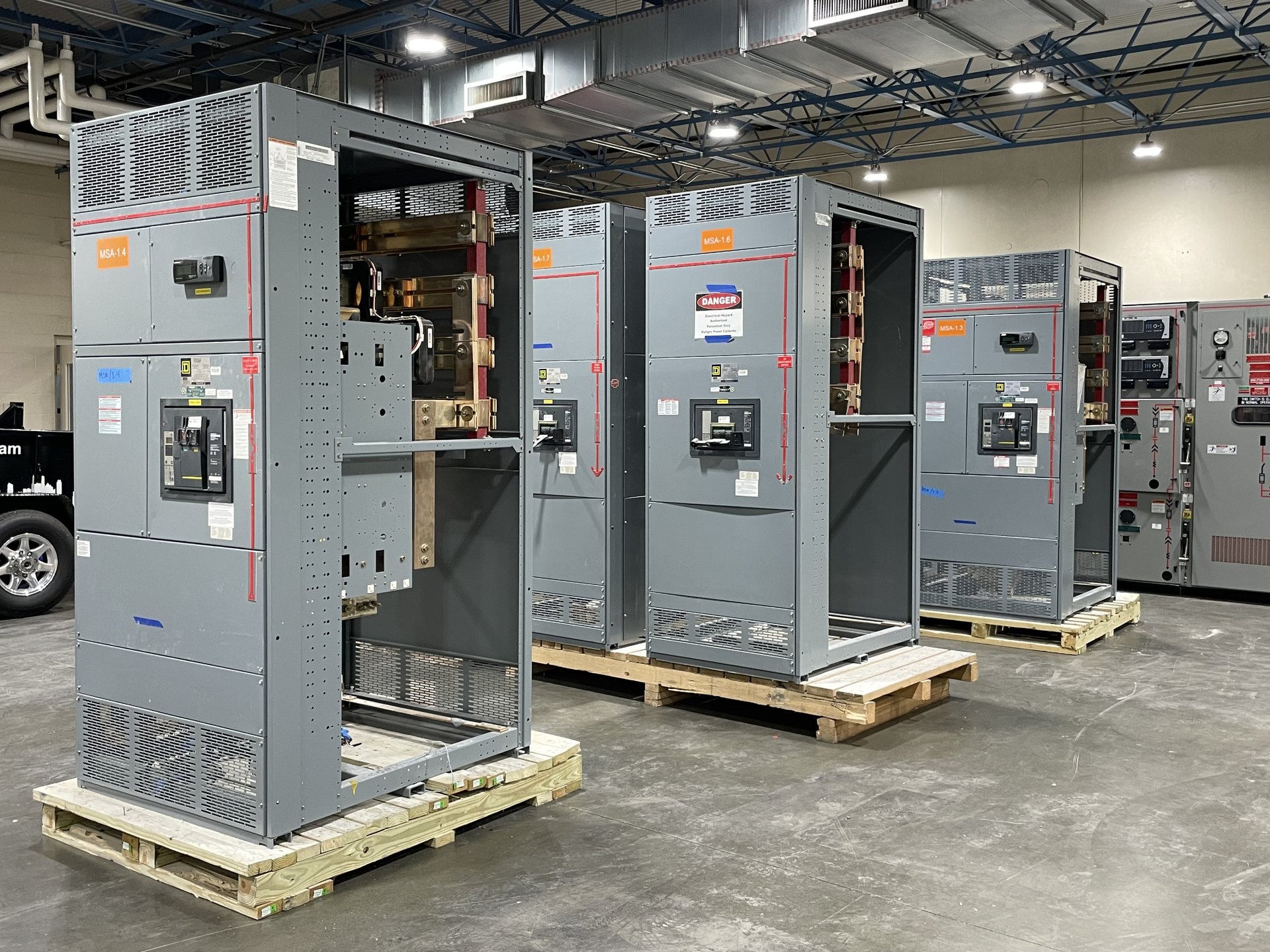
A practical photo set includes the full assembly, each accessible nameplate, representative device faces, exterior doors and fittings, and loose parts arranged where they can be seen safely. Add a scale reference only if one is already available at a safe viewing point; do not enter a hazardous area or place an object against equipment to create one. Include enough context to show section count and shipping splits. Avoid close-ups that require opening compartments or reaching past barriers. If a view is unavailable, explain why and share the corresponding inventory or documentation instead.
Share condition and removal context
Describe what you know about storage, prior service, visible exterior damage, corrosion, missing pieces, or changes made before the equipment became surplus. Separate observed facts from records and uncertainty: for example, an exterior door may be present while internal completeness remains unknown. No seller testing is required, and you should not energize equipment or arrange an unsafe demonstration. Tell us about site access constraints, current installation status, and who can coordinate qualified isolation where needed. After reviewing the available details, Louisiana Switchgear Buyer may make a cash offer for an agreed transaction, with payment upfront; assessment does not guarantee acceptance.
Buyer notes
Send the facts that move the review forward.
Include the nameplate, lineup or device photos, approximate quantity, visible condition and where the equipment is located. We buy equipment; we do not sell replacement gear or represent a test result that has not been provided.
Start with the nameplate
Request a quote
Tell us what you have. We buy switchgear from decommissioned data centers, shut-down power plants and other facilities. Crane, rigging, disconnects, loading, freight and hauling are on us. You do nothing but get paid.