When documenting surplus busway for a buyer review, dimensions help show how sections, fittings, and tap boxes relate to one another—not just how much material is present. Use existing drawings, equipment schedules, labels, and inventory records wherever available. Pair those details with safe exterior photographs so Louisiana Switchgear Buyer can assess the configuration, completeness, condition, and practical requirements of a potential purchase.
Record the overall assembly and section dimensions
Start with the number of straight sections and the approximate length and width of representative sections, using drawings or existing inventory records rather than measuring installed equipment. Note any variation in section size, enclosure depth, or mounting form if the records show it. For removed material, distinguish intact lengths from short offcuts or sections with altered ends. Dimensions help a buyer understand how the busway may be grouped for review and handling. They also make it easier to compare the listed inventory with photographs, shipping splits, and any facility removal schedule.
Map the route through fittings and branches
Describe the system as a collection of parts: straight lengths, elbows, tees, offsets, end pieces, and transitions. Record the count of each fitting and, where documented, its orientation or approximate dimensions. Identify which fittings appear connected to the main run and which are loose or stored separately. A simple marked-up drawing or existing layout can clarify how branches relate to straight sections without requiring anyone to access equipment. This route-level description helps distinguish a substantial, coherent assembly from a lot of mixed sections whose original arrangement is uncertain.
Include bus rating and conductor information
Transcribe the bus rating or continuous-current value, voltage class, phase, and frequency from visible nameplates or existing equipment schedules. Note conductor material only when it is identified in records or clearly marked on the equipment; do not infer copper or aluminum from appearance alone. If a label shows interrupting or withstand information, include its wording as printed. Also describe the enclosure style and whether plug-in openings or other tap-off features are present. These ratings and construction details let a buyer assess the busway alongside its dimensions rather than treating size as a proxy for capacity.
Count tap boxes and other removable devices
List tap boxes, plug-in units, switches, protective devices, and other accessories separately from the busway lengths. For each group, provide a count and any legible rating or identifying information from exterior labels. Describe whether items are attached, boxed, or loose, and whether the inventory records associate them with particular sections. Do not open compartments or handle electrical devices to obtain details. A clear accessory count can materially change the completeness picture: a route may include many straight lengths yet lack important fittings or tap units needed to understand the surplus lot.
Explain shipping splits and loose parts
State how the material is currently grouped: intact assemblies, separated lengths, palletized fittings, or mixed loose pieces. Where available, note the number of shipping splits and approximate dimensions or weights recorded on packing lists. Flag missing end covers, visibly damaged enclosures, cut sections, or unverified pieces as observations, not conclusions about electrical condition. Clarify whether labels, drawings, or packing records identify the contents of each group. This information helps a buyer compare the stated dimensions with the actual lot and consider the handling and freight requirements of the proposed transaction.
Photograph dimensions without approaching hazards
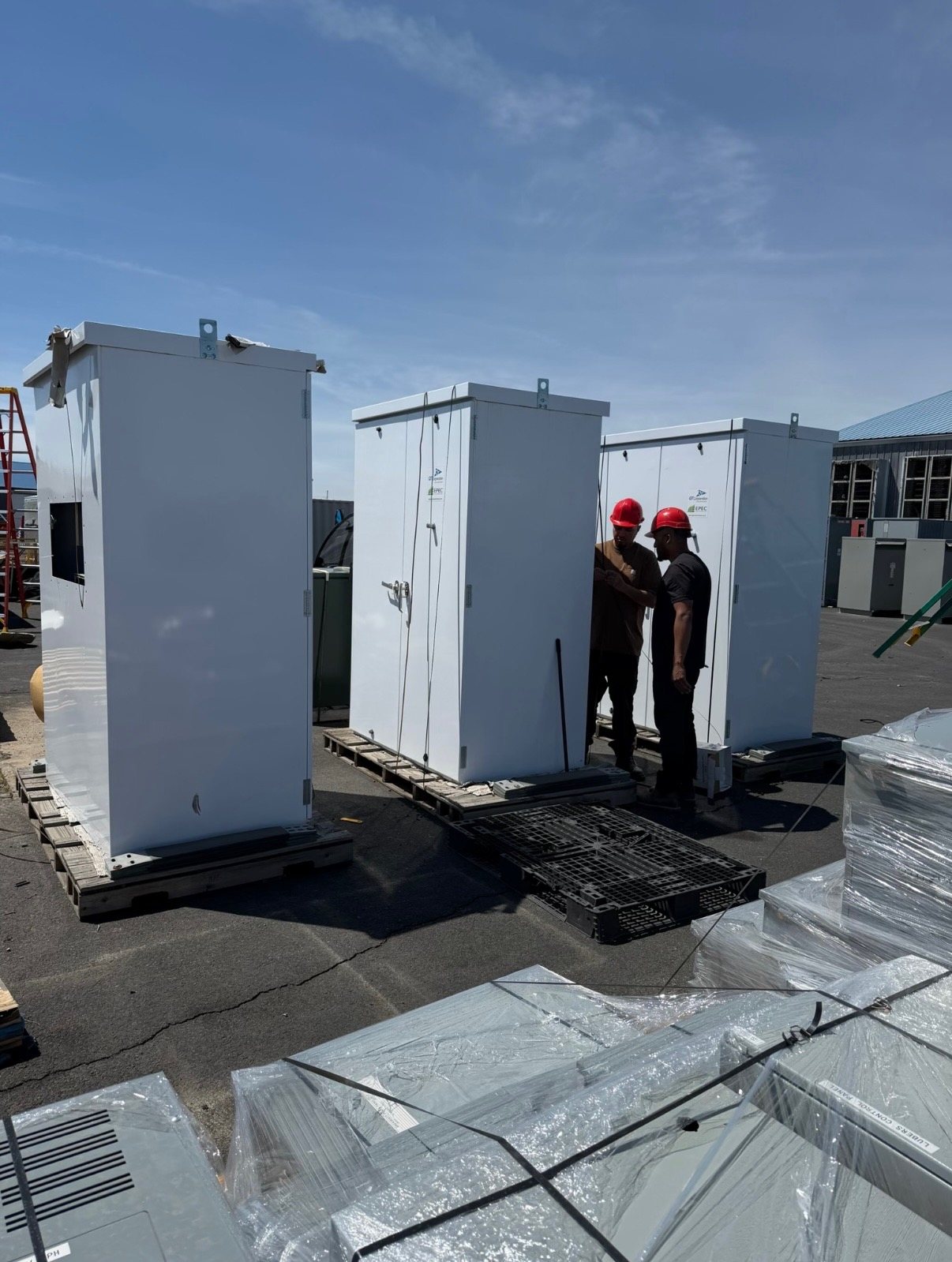
Use photographs taken from a safe exterior position: a view of the full assembly or stored group, representative nameplates, device faces, doors and enclosure exteriors, fittings, and loose parts. Include a scale reference only if it can be placed and photographed without touching equipment or entering a hazardous area; an existing dimensioned drawing is often better. Keep labels in focus and avoid cropping out section ends or attachment points. Never open an energized compartment or ask unqualified personnel to access, disconnect, lift, or measure equipment. Qualified professionals must handle isolation and removal.
Send a review-ready inventory, not assumptions
Bring the information together in a short inventory: assembly or device count, section dimensions, main and feeder arrangement, bus details, ratings, accessory list, shipping splits, and known condition observations. Identify gaps plainly, such as a missing nameplate image or uncertain fitting count, rather than estimating. Louisiana Switchgear Buyer reviews the equipment information before making an offer; acceptance is not guaranteed. Seller testing is not required. If a transaction is agreed, the buyer handles and pays for qualified disconnects, rigging, loading, freight, and hauling, with the work performed by qualified professionals.
Buyer notes
Send the facts that move the review forward.
Include the nameplate, lineup or device photos, approximate quantity, visible condition and where the equipment is located. We buy equipment; we do not sell replacement gear or represent a test result that has not been provided.
Start with the nameplate
Request a quote
Tell us what you have. We buy switchgear from decommissioned data centers, shut-down power plants and other facilities. Crane, rigging, disconnects, loading, freight and hauling are on us. You do nothing but get paid.