When an industrial plant closes, electrical equipment may be offered as one lot even though its assemblies are destined for different shipping splits. A buyer can review the opportunity more accurately when records distinguish complete sections from loose devices, identify visible ratings, and note what remains unknown. Gather information already available to your facility team; qualified professionals handle equipment isolation, disconnection, lifting, and removal.
Map the proposed shipping splits
Start with a simple list of the groups you expect to ship separately: for example, process distribution, motor control centers, switchboards, panelboards, busway, breakers, or utility-area assemblies. Use existing one-line diagrams, section schedules, or equipment registers to connect each group to its recorded location and function. Mark the intended split boundaries without assuming that a physical lineup can be separated at those points. A buyer uses this overview to understand whether the proposed lots are coherent and what equipment is included. If the split plan is tentative, label it as such rather than presenting it as a confirmed configuration.
Separate complete assemblies from loose items
For each proposed lot, identify what appears to be a complete assembly and what is listed separately. Existing inventory records may show switchboard sections, MCC buckets, feeder breakers, control components, busway lengths, fittings, or spare devices. Record whether an item is installed in an assembly, stored nearby, or simply associated with it in paperwork. Do not infer that a loose breaker belongs to a particular lineup unless records support the link. This distinction helps a buyer assess the lot’s scope, consider practical shipping splits, and avoid counting an accessory as included when ownership or association has not been established.
Capture ratings and identifiers from records
Transcribe available nameplate information and equipment identifiers from existing records. Useful fields include manufacturer and model as marked, serial or catalog numbers, voltage, current rating, interrupting rating where listed, and section or circuit designation. Add the source of each entry, such as a nameplate image, equipment schedule, or asset register, and mark values that are illegible or absent as unknown. Avoid filling gaps from neighboring equipment or assumptions about the former process. Visible ratings and identifiers help a buyer distinguish similar-looking sections and determine which details require clarification before making an offer.
Use safe exterior photographs purposefully
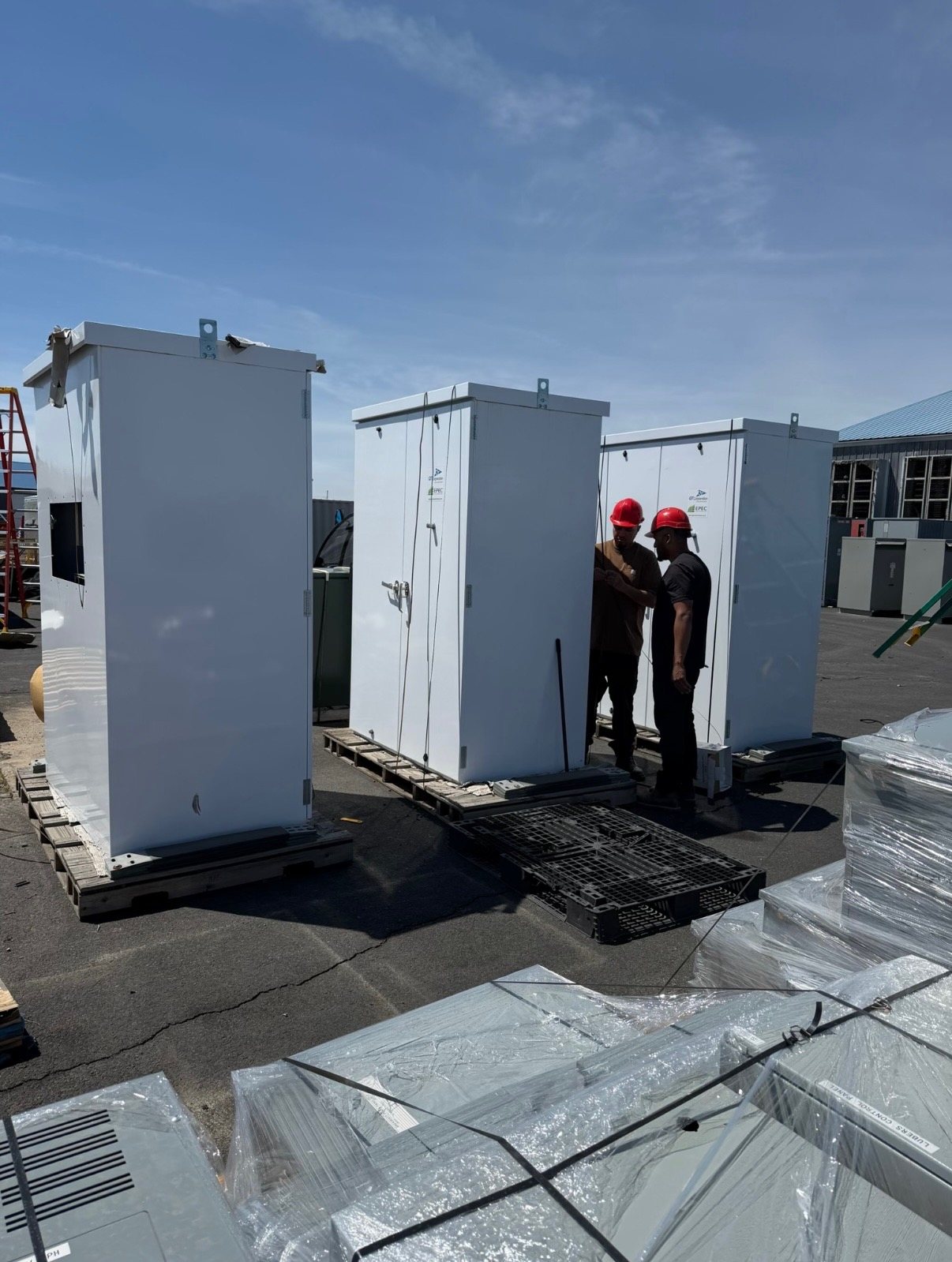
Photographs can supplement records when taken from a safe, authorized position by someone who is not required to approach exposed electrical hazards. Exterior views may show overall lineup arrangement, visible nameplates, labels, doors, and the relationship between listed sections. Keep images clearly associated with the proposed shipping split and preserve the original files when possible. Do not open energized compartments, remove covers, or touch equipment to obtain a better view. If a label cannot be read safely, report that limitation rather than trying to access it. A buyer can use the images to compare visible details with schedules and identify questions.
Describe dimensions and access from existing information
Provide dimensions from drawings, equipment records, or measurements already taken by qualified personnel. Note whether figures refer to an individual section, a connected lineup, or a loose assembly, and include units. Existing site plans or logistics notes can describe door clearances, overhead constraints, loading areas, and the route to the equipment, provided the information is current enough to be useful. Flag uncertain measurements and access restrictions rather than estimating. These details help a buyer evaluate handling needs and whether separate shipping splits are practical. Louisiana Switchgear Buyer coordinates and pays for qualified disconnection, rigging, loading, freight, and hauling on agreed transactions.
State what remains unknown
A useful review packet is explicit about gaps. List unanswered questions such as whether a section is complete, whether accessories are included, whether bus connections are continuous, or whether recorded ratings match visible labels. Note missing drawings, illegible plates, unverified device associations, and any discrepancy between an inventory list and photographs. Do not describe equipment as operational or tested unless reliable documentation establishes that status; no seller testing is required for review. Clear uncertainty lets a buyer assess the available evidence without treating an assumption as fact. Equipment is assessed before an offer, and acceptance is not guaranteed.
Confirm authority and organize the handoff
Include ownership or authorization status for each proposed lot, along with the contact responsible for confirming what may be sold. Gather the one-line or section schedule when available, nameplate information, photographs, device list, dimensions, and access notes into a consistent packet. Label files by lot or shipping split and keep a short index so records can be matched to visible equipment. Once the buyer reviews the information, qualified professionals must handle electrical isolation, disconnection, lifting, and removal; the seller should not undertake that work. On an agreed transaction, payment is made upfront, and the buyer handles and pays for removal and transportation.
Buyer notes
Send the facts that move the review forward.
Include the nameplate, lineup or device photos, approximate quantity, visible condition and where the equipment is located. We buy equipment; we do not sell replacement gear or represent a test result that has not been provided.
Start with the nameplate
Request a quote
Tell us what you have. We buy switchgear from decommissioned data centers, shut-down power plants and other facilities. Crane, rigging, disconnects, loading, freight and hauling are on us. You do nothing but get paid.