If you are reviewing surplus electrical equipment in Catahoula Parish, begin with a clear inventory of each assembly and its loose components. Record quantities, manufacturer markings, model or catalog numbers, voltage class, amperage, phase, dimensions, visible condition, completeness, and safe access notes. These details help a buyer assess switchgear and related equipment without treating an unverified unit as tested or operational.
Separate equipment by assembly and type
List each distinct asset separately rather than grouping everything as “electrical gear.” A switchgear lineup, switchboard, motor control center, panelboard, busway run, automatic transfer switch, breaker, and unit substation have different configurations and component relationships. Note whether an item is a complete assembly, a section, a standalone device, or a group of parts. For equipment removed from a facility or held in surplus, identify which accessories belong with which assembly. This first pass makes the inventory more useful for review and reduces confusion when several equipment types or voltage classes are stored together.
Capture nameplate details accurately
Transcribe the manufacturer as marked and include model or catalog number where legible. Record voltage class, amperage, and phase from the equipment markings; do not infer missing values from appearance or nearby equipment. If a label is damaged or unreadable, mark that field unknown rather than guessing. Dimensions are also useful, especially for large lineups, busway sections, and unit substations, because they help establish what is being reviewed and how it may be handled. Record quantities by matching units or sections, not just by counting visible doors or devices.
Describe condition and completeness plainly
Use neutral observations such as visible corrosion, damaged enclosure panels, missing covers, loose components, or apparent signs of water exposure. Avoid declaring equipment functional, safe, or tested unless that status is supported by appropriate records. Note whether doors, barriers, breakers, control devices, bus sections, and accessories appear present, without opening energized compartments or touching electrical equipment to check. If components are separated, list them and indicate their apparent association. A straightforward condition description gives the buyer a more reliable basis for assessment than broad labels such as “good” or “ready to use.”
Take useful, safe photographs
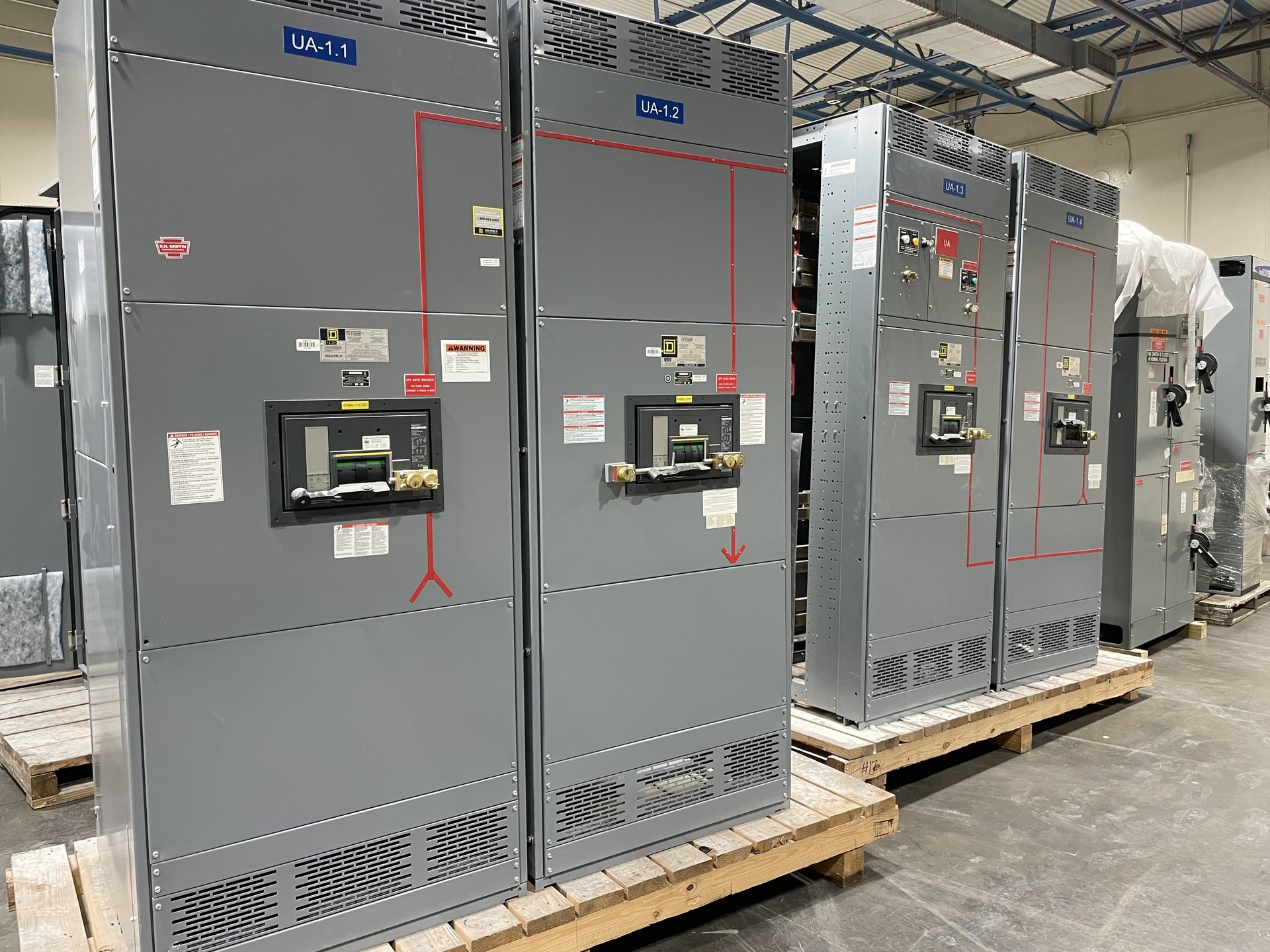
Photographs can help identify equipment and establish completeness. Include a wide context view that shows the assembly without address or customer signage, a readable nameplate when it can be photographed safely, and a full view of the assembly from an appropriate safe position. Add representative-device photos and images of loose accessories with a scale reference. Do not remove covers, enter restricted areas, approach exposed energized parts, or reposition heavy equipment for a picture. If a label or component cannot be photographed safely, note that limitation in the inventory instead of taking a risk.
Prepare records for buyer review
Gather the inventory, photographs, and any existing asset records in one place. Separate confirmed markings from estimates and identify information that remains unknown. If the equipment came from a decommissioned data center, shut-down power plant, or another facility, the source can be stated plainly when known; no special format is required. Include safe access notes that describe practical constraints without asking staff to perform electrical work. Louisiana Switchgear Buyer reviews used, surplus, and decommissioned equipment across voltage classes, but each item is assessed before an offer is made, and acceptance is not guaranteed.
Consider the sale and removal sequence
After reviewing the information, the buyer may make a cash offer for equipment it can accept. Discuss the scope of the proposed transaction, including which assemblies, breakers, busway, and loose accessories are included, and confirm the agreed terms before scheduling removal. Payment is made upfront on agreed transactions. No seller testing is required. Do not disconnect, isolate, dismantle, or prepare electrical equipment yourself; any electrical isolation and disconnection must be handled by qualified professionals. The buyer handles and pays for qualified disconnects, crane and rigging work, loading, freight, and hauling as part of the removal arrangement.
Coordinate recovery without taking on the hazards
Once terms are agreed, coordinate site access and point out the equipment locations and any known restrictions to the removal team. Keep staff and others clear of the work area while qualified professionals manage isolation, lifting, rigging, and loading. Do not move assemblies, operate breakers, or detach components to make removal easier. Confirm that the equipment included in the transaction is identified before it leaves, particularly where multiple lineups or loose parts are present. A careful handoff preserves the agreed scope and lets you clear surplus equipment without taking on electrical or heavy-lifting work.
Buyer notes
Send the facts that move the review forward.
Include the nameplate, lineup or device photos, approximate quantity, visible condition and where the equipment is located. We buy equipment; we do not sell replacement gear or represent a test result that has not been provided.
Start with the nameplate
Request a quote
Tell us what you have. We buy switchgear from decommissioned data centers, shut-down power plants and other facilities. Crane, rigging, disconnects, loading, freight and hauling are on us. You do nothing but get paid.