When a generation facility is retired, electrical equipment may be offered as intact sections, separated devices, or mixed lots assembled during dismantling. A completeness review helps distinguish what is present from what is merely expected. For a useful assessment, document medium-voltage switchgear, station-service gear, breakers, MCCs, auxiliary panels, and control equipment by assembly, visible markings, loose components, and unresolved questions.
Separate complete assemblies from partial lineups
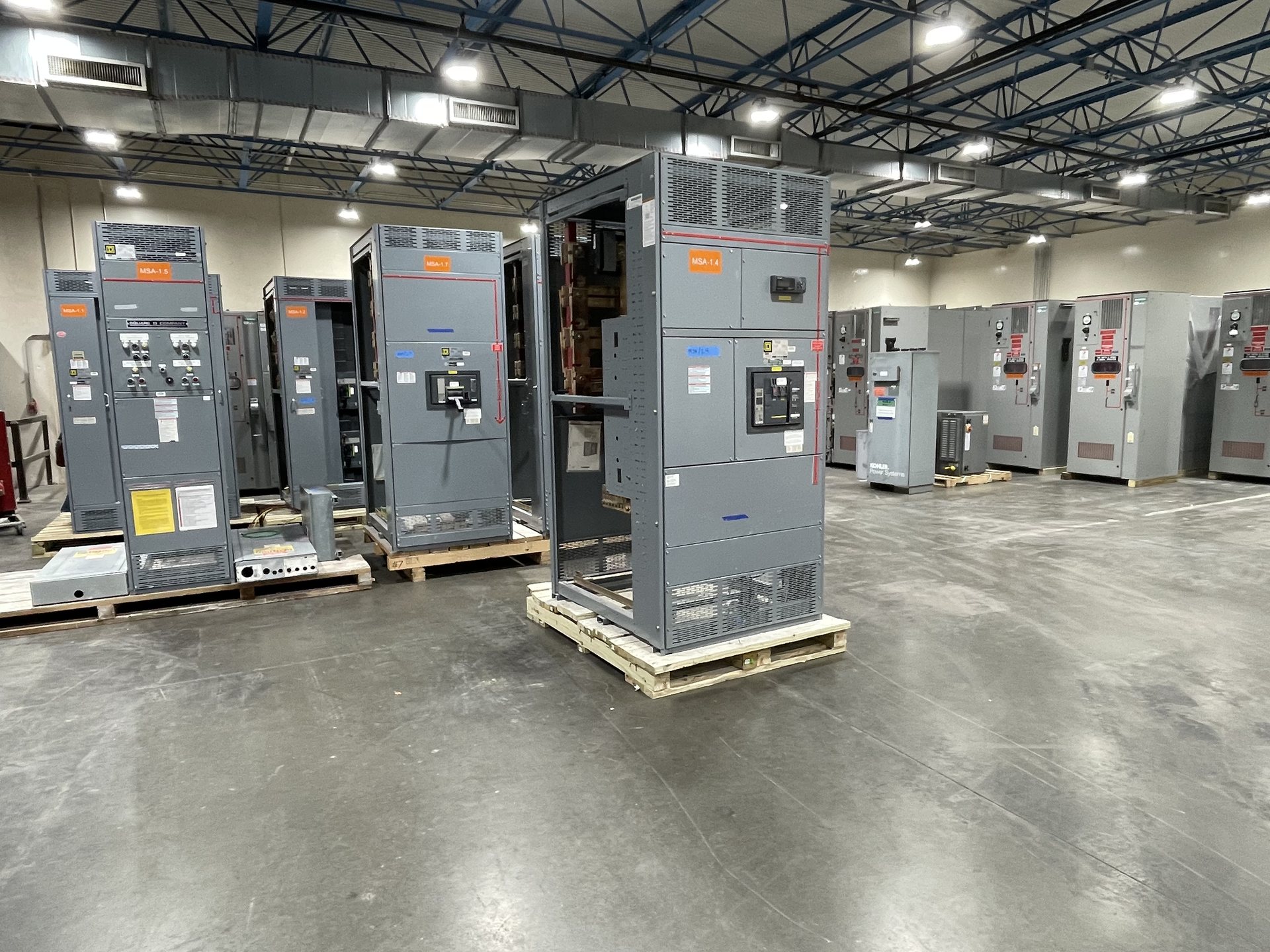
Start by listing each lineup or assembly as a distinct item rather than describing everything as one switchgear lot. Note the number of sections, the apparent arrangement, and whether end barriers, doors, covers, and supporting frames are present. A lineup that appears continuous may have been divided for removal, while a group of adjacent sections may come from different systems. Record visible gaps or missing portions without deciding why they are absent. This distinction matters when reviewing medium-voltage switchgear and station-service gear: a complete-looking enclosure is not proof that its internal devices or accessories are included.
Inventory breakers and loose devices independently
List breakers, contactors, relays, and other removable devices separately from the enclosures where they were found. For each, capture the visible manufacturer, type or catalog designation, voltage and current markings, and any readable serial or rating information. Record whether a device is installed, stored beside its section, or located elsewhere in the lot. Include loose items such as racking handles, shutters, auxiliary switches, trip units, or control plugs only when their presence can be confirmed. Do not assume a loose device belongs to a particular cubicle merely because its style appears similar.
Compare markings with available schedules
If a one-line diagram or section schedule is available, use it as a comparison reference, not as proof of what remains on site. Record the drawing title, revision, and date when legible, then note which equipment tags or section identifiers can be matched to visible nameplates. A schedule may describe the original installation even after devices were removed or circuits changed. Mark discrepancies plainly: for example, an indicated feeder section with no corresponding visible tag, or a nameplate identifier absent from the schedule. Keep observed facts distinct from interpretations so the review remains useful.
Photograph identifiers and overall condition
Photographs should establish both context and detail. Take wide views that show the lineup or panel arrangement, then individual images of nameplates, section labels, breaker markings, and visible accessories. Include enough surrounding equipment in each image to identify where a detail was found. Avoid opening energized compartments or touching electrical equipment to improve a photograph; access and isolation decisions belong to qualified personnel. If markings are obscured, damaged, or unreadable, record that limitation rather than guessing. Clear photographs can support an initial buyer review, but they do not establish operating condition or replace an equipment assessment.
Describe MCCs, auxiliary panels, and controls by scope
MCCs and auxiliary systems often contain varied combinations of buckets, starters, control devices, and panels, so report their visible scope rather than applying a broad label alone. Note lineup dimensions, section count, bucket positions, and any clearly visible empty spaces. For auxiliary panels and control equipment, identify enclosures and readable tags, and list separately stored components as loose items. Distinguish a complete enclosure from a documented set of internals; do not infer that every compartment is equipped. Where control wiring or device details cannot be verified from safe, accessible views, leave them as unknown for follow-up.
Capture dimensions, access, and unknowns
Record approximate overall dimensions for large sections and note whether measurements are confirmed or estimated. Describe practical access information relevant to a review, such as the equipment’s location within the property, visible obstructions, and any known restrictions on loading access. Do not move equipment or attempt to assess lifting points; qualified professionals handle removal planning. Maintain an explicit unknowns list: missing drawings, unreadable ratings, uncertain device-to-section relationships, or unclear completeness of control components. A short, honest unknowns list is more useful than filling gaps with assumptions about the former plant configuration.
Confirm ownership and prepare the review packet
Before requesting an offer, establish who is authorized to sell each asset and whether the listed equipment is included in the proposed transaction. Assemble the available one-line or section schedule, nameplate and overview photos, device list, dimensions, access notes, and ownership or authorization status. Identify which items are complete assemblies, which devices or accessories are loose, and what remains unknown. Louisiana Switchgear Buyer assesses equipment before making an offer; acceptance is not guaranteed, and seller testing is not required. For agreed transactions, the buyer handles and pays for qualified disconnects, rigging, loading, freight, and hauling.
Buyer notes
Send the facts that move the review forward.
Include the nameplate, lineup or device photos, approximate quantity, visible condition and where the equipment is located. We buy equipment; we do not sell replacement gear or represent a test result that has not been provided.
Start with the nameplate
Request a quote
Tell us what you have. We buy switchgear from decommissioned data centers, shut-down power plants and other facilities. Crane, rigging, disconnects, loading, freight and hauling are on us. You do nothing but get paid.