A well-planned handoff helps keep switchgear recovery orderly from initial assessment through loading and transport. Whether the equipment is a switchboard, MCC, unit substation, busway, transformer-connected assembly, or loose breakers and accessories, useful records clarify what is included, how it is arranged, and what site conditions may affect removal. This checklist helps you prepare information for review; qualified professionals coordinate and perform the physical work.
Start with an accurate equipment inventory
List each asset or group being considered, using the names shown on available labels, drawings, schedules, or decommissioning records. Distinguish complete lineups from separate sections, and identify loose breakers, busway fittings, accessories, and transformer-connected assemblies as separate items when appropriate. Note manufacturer and model details only when they are legible or documented. Include known condition information, missing components, and whether the equipment is installed, disconnected, or already removed, but do not infer operational status. A clear inventory helps establish the scope for assessment and reduces confusion about what is included in a potential transaction.
Record layout, section count, and shipping splits
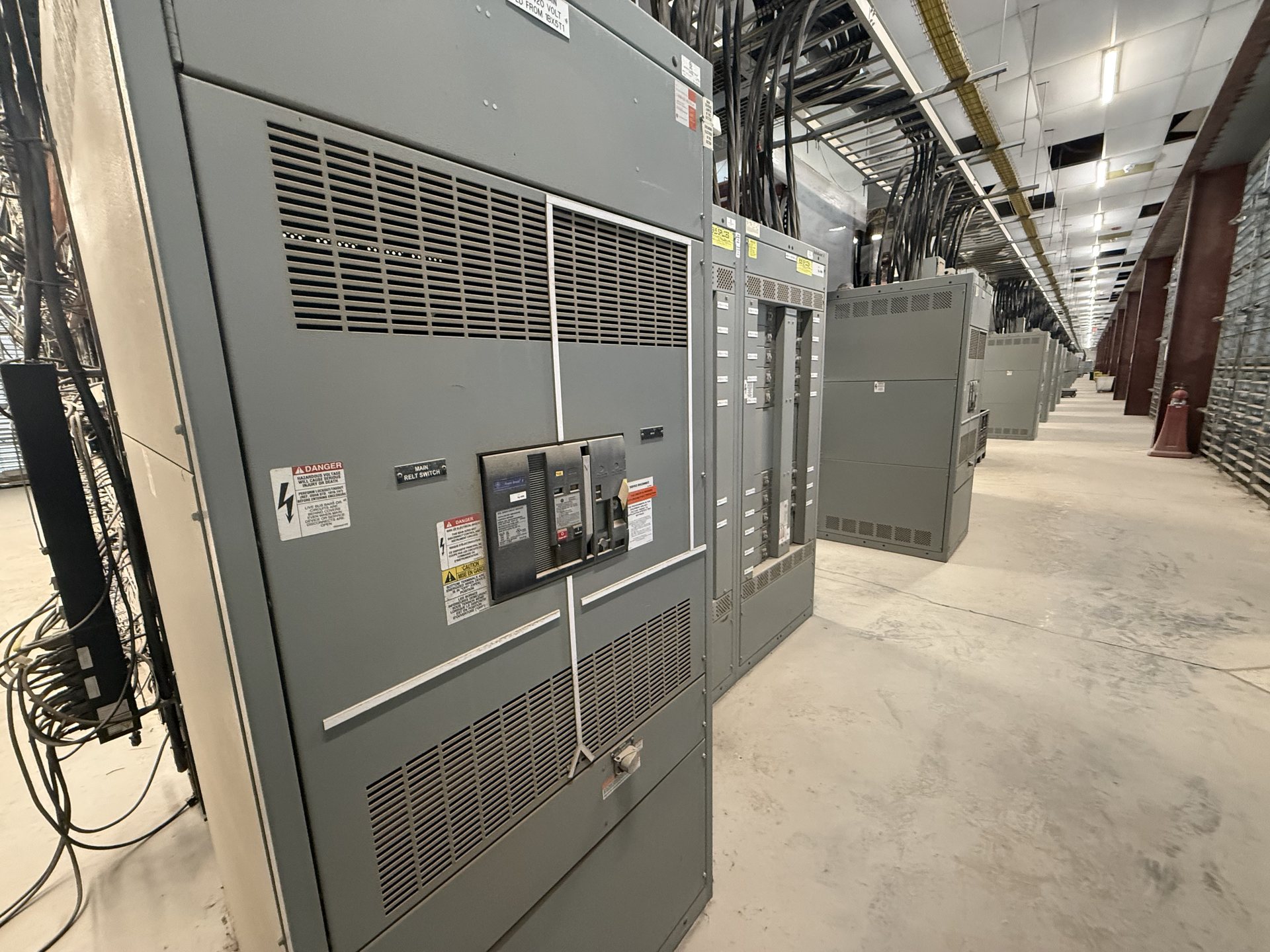
For equipment arranged in multiple sections, record the section count and any known lineup sequence. Note existing shipping splits or documented plans to separate assemblies, and identify which pieces belong together. Drawings, photographs, and equipment schedules can help explain the arrangement, provided they are current enough to be useful. Do not assume that adjacent cabinets form one recoverable assembly or that a lineup can be divided at any particular point. Separation decisions and work must be made by qualified professionals after review. These details help the buyer understand the proposed recovery scope and consider handling and transport requirements.
Share dimensions and weight only when supported
Approximate dimensions and weight can help with transport and handling planning, but provide them only when they are documented or otherwise reliably available. Identify whether a measurement describes one section, an entire lineup, a busway run, or a separate accessory. If the source or scope is uncertain, say so rather than presenting an estimate as confirmed. Existing equipment drawings, shipping records, or manufacturer documentation may offer useful reference points. Do not climb, enter restricted areas, move equipment, or approach electrical gear to collect measurements. Qualified personnel can determine what additional information is needed during the review and removal planning.
Describe lifting information without interpreting it
If existing records visibly document lifting points, share those records and indicate which equipment they refer to. A photograph may also show visible features, but it should not be treated as proof of lifting capacity or safe rigging suitability. Avoid marking a cabinet as lift-ready based on appearance or assuming that a base, frame, or attachment is designed for a particular lift. Qualified rigging professionals must assess the equipment and establish the appropriate method. Their review may also identify information still needed before work can proceed. The seller’s role is to provide available records and access information, not to attach lifting gear or prepare the load.
Explain access, loading surface, and site conditions
Describe the known route from the equipment to the loading area, including relevant doors, corridors, turns, thresholds, and changes in elevation when documented or readily visible from a safe location. Note whether loading is expected at a dock or ground level, and describe the loading surface as known. Identify access restrictions such as limited entry windows, shared routes, or areas that require coordination with facility personnel. Do not assume that a dock, surface, or route can support equipment or lifting machinery. The removal team will review access and handling requirements with qualified professionals and determine what arrangements are suitable.
Flag restrictions and safe staging information
List known restrictions that could affect removal or transport planning, such as controlled access, restricted working hours, site coordination requirements, or limits on where equipment may be staged. Share only staging information that has been approved by the responsible site contact; do not designate an area as safe or suitable without that confirmation. Include any known sequencing requirements when other decommissioning work is taking place. Electrical isolation, disconnection, rigging, lifting, and loading are work for qualified professionals. Louisiana Switchgear Buyer handles and pays for qualified disconnects, removal, loading, freight, and hauling on agreed transactions, coordinating the work after the equipment and access are reviewed.
Assemble a practical handoff packet
A useful handoff packet can include an inventory, available drawings or records, representative photographs, documented dimensions and weights, section count, shipping splits, and notes on access and restrictions. Label files so a reviewer can tell which asset or area each one describes, and distinguish current observations from older records. Include a contact for the person authorized to discuss the assets and site coordination. Avoid opening energized compartments or touching equipment to improve photographs or gather details. Send what is already available; if information is missing, identify it clearly. The buyer assesses the equipment before making an offer, and acceptance is not guaranteed.
Confirm scope before the physical handoff
Before agreeing to a recovery, confirm which assets are included, what documentation remains uncertain, and what access or scheduling coordination is required. Clarify whether loose breakers and accessories are part of the proposed scope, and whether any sections or assemblies are excluded. On an agreed transaction, payment is made upfront, and the buyer arranges and pays for the qualified physical work and transportation. Do not disconnect, dismantle, rig, or load equipment yourself. A precise handoff record gives all parties a shared reference for assessment and planning, while leaving electrical and lifting decisions to the professionals responsible for performing that work.
Buyer notes
Send the facts that move the review forward.
Include the nameplate, lineup or device photos, approximate quantity, visible condition and where the equipment is located. We buy equipment; we do not sell replacement gear or represent a test result that has not been provided.
Start with the nameplate
Request a quote
Tell us what you have. We buy switchgear from decommissioned data centers, shut-down power plants and other facilities. Crane, rigging, disconnects, loading, freight and hauling are on us. You do nothing but get paid.