Lift documentation gives a buyer and qualified removal professionals a practical starting point for reviewing switchgear recovery. You can assemble useful information from existing equipment records, shipping documents, site plans, and safe exterior photographs without handling the equipment. Clear records help establish what is being considered, how it may be divided for transport, and what access questions must be resolved before an offer or removal plan is discussed.
Start with records already on hand
Gather available asset lists, drawings, nameplates photographed from a safe position, prior shipping records, and decommissioning documents. Note which items belong to the proposed sale: switchgear lineups, switchboards, MCCs, unit substations, busway, transformer-connected assemblies, loose breakers, or accessories. Records may describe equipment that has since changed, so identify dates and mark details as confirmed, estimated, or unknown. This gives the buyer a clearer basis for review and helps qualified professionals identify what further site information they need. Do not open compartments or approach equipment that is energized or otherwise unsafe to access.
Record dimensions and weights with their source
Provide approximate dimensions or weights only when they appear in existing documentation, such as equipment schedules, drawings, shipping papers, or handling records. Include the source and identify whether a figure applies to one section, a complete lineup, a shipping split, or an assembly with connected equipment. A listed value should not be treated as a verified lifting weight. If no reliable figure is available, say so rather than estimating by appearance. These distinctions help the buyer assess the material and help lift professionals determine what must be confirmed before selecting handling equipment or planning a lift.
Explain section counts and shipping splits
Describe the lineup or assembly as it is represented in available records: section count, documented shipping splits, and any known loose items. A simple schedule can connect each section identifier to its recorded description and location, while noting gaps or mismatches. Include whether busway, breakers, or accessories are listed separately or included with a larger assembly. Avoid assuming that connected sections can be separated or moved independently. This information helps the buyer understand the scope being reviewed and lets qualified removal professionals evaluate sequencing, handling boundaries, and transport planning after equipment condition and site access have been reviewed.
Share lifting-point information cautiously
If drawings, handling instructions, or manufacturer documentation visibly identify lifting points, provide the relevant pages or a clear copy and state which equipment they describe. Exterior photographs may help show labels or visible features, but they do not establish that a point is suitable for a particular lift or remains usable. Do not attach rigging, remove covers, or test lifting points. Qualified professionals must interpret the documentation and determine the safe method for each item. For the buyer, documented lifting information can clarify whether useful handling records exist; missing information is a review item, not a reason to guess.
Describe loading surfaces and access
Use a site plan, loading-area drawing, or safe exterior photographs to show the route from the equipment area to a possible loading position. Identify the loading surface as documented or observed, and note whether the intended area is dock-level or ground-level. Include visible constraints such as narrow turns, overhead obstructions, steps, ramps, or restricted approaches when you can report them accurately. Do not measure or inspect areas that require unsafe access. These details help the buyer and qualified logistics professionals identify questions about equipment movement, vehicle positioning, and whether a proposed recovery approach needs further review.
List restrictions and safe staging information
Report known access rules, operating-area restrictions, scheduled closures, or limits on where equipment may be staged. Separate confirmed requirements from assumptions, and indicate who can verify them. If a staging area is identified on a plan, note its location and any documented surface or access limitation; do not treat a photograph as proof that it can support a load. The information helps the buyer understand practical conditions that may affect recovery and helps qualified professionals coordinate subsequent planning. Electrical isolation, lifting, rigging, loading, and removal are handled by qualified personnel, not by the seller.
Send a clear package for buyer review
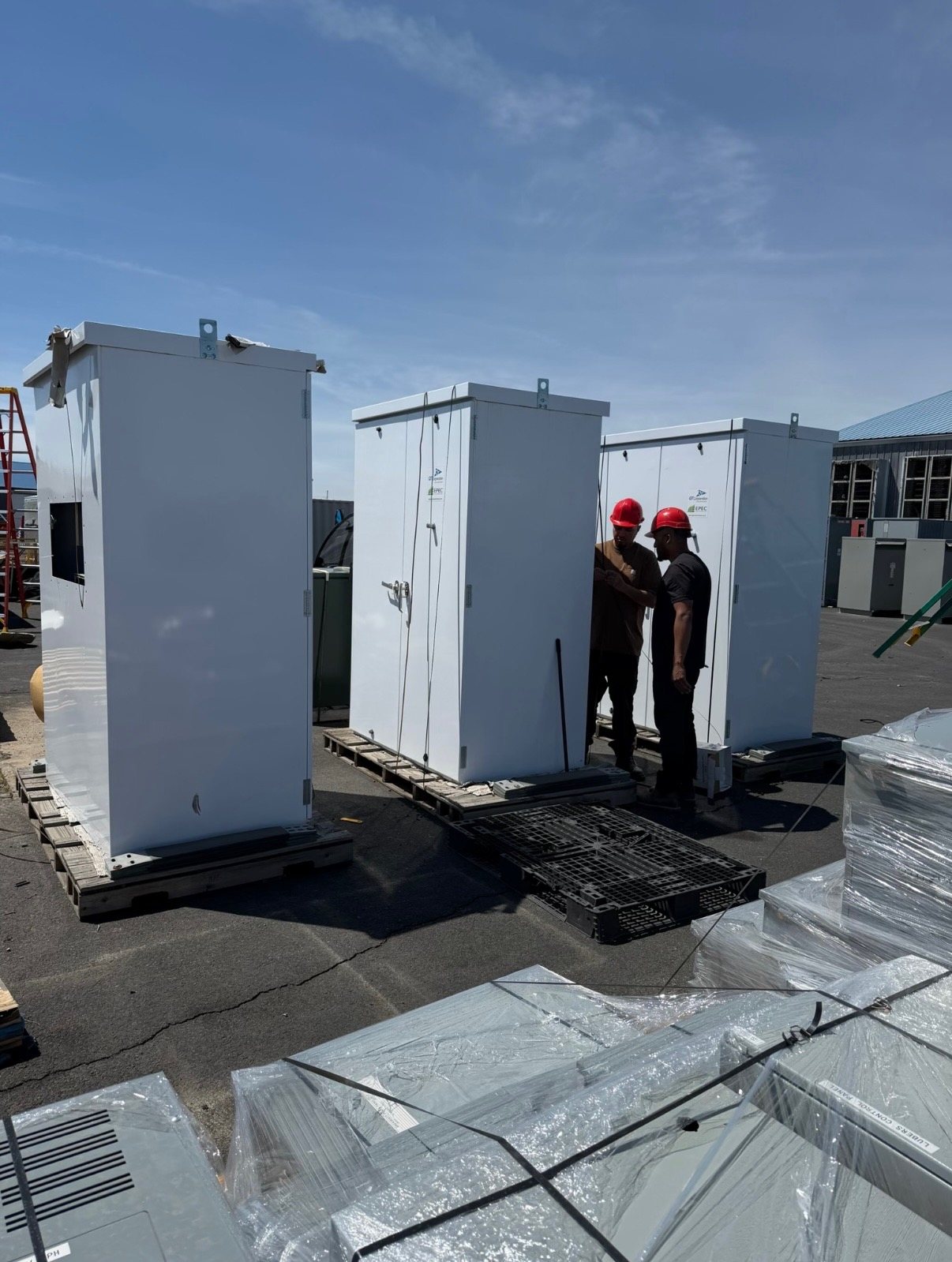
Organize the materials into a concise package: equipment inventory, dated records, documented dimensions and weights with sources, section and shipping-split details, available lifting documentation, and access photographs or plans. Label unknowns plainly and avoid presenting old records as current verification. The buyer assesses the equipment and available information before making an offer; acceptance is not guaranteed, and no seller testing is required. For an agreed transaction, the buyer handles and pays for qualified disconnects, rigging, lifting, loading, freight, and hauling. A well-organized lift-documentation package supports review without asking facility staff to perform hazardous work.
Buyer notes
Send the facts that move the review forward.
Include the nameplate, lineup or device photos, approximate quantity, visible condition and where the equipment is located. We buy equipment; we do not sell replacement gear or represent a test result that has not been provided.
Start with the nameplate
Request a quote
Tell us what you have. We buy switchgear from decommissioned data centers, shut-down power plants and other facilities. Crane, rigging, disconnects, loading, freight and hauling are on us. You do nothing but get paid.