If you have 2,001–4,000 A, 2.4 kV switchgear to disposition, the clearest review starts with records and safe exterior observations—not assumptions about how the lineup was used. Louisiana Switchgear Buyer assesses used, surplus and decommissioned equipment before making an offer. Send the marked ratings, lineup details and available photographs so the equipment can be evaluated in context.
Start with the complete nameplate information
Use existing records or photographs taken from a safe position to capture each readable nameplate field exactly as marked. Record manufacturer, catalog or model designation, serial number if legible, rated voltage, current ratings, phase, frequency and any other stated electrical values. For this 2.4 kV class and 2,001–4,000 A range, do not substitute a rounded description for the actual markings. Different sections or devices may carry different ratings. If a field is obscured or absent, identify it as unknown rather than estimating. These details help distinguish the lineup’s documented characteristics from assumptions based on its former application.
Separate bus, breaker and interrupting ratings
A lineup’s main bus rating is not interchangeable with a breaker’s frame size or continuous current rating. Likewise, an interrupting rating describes a different characteristic from the current the breaker is rated to carry continuously. Transcribe each value with its label and identify the device or section it belongs to, using drawings, schedules or equipment records where available. Avoid reporting a single amperage as though it describes every component. This distinction matters when assessing a high-capacity lineup: a buyer needs to understand the relationship between the bus and installed devices, not just the largest number visible in a record or photograph.
Keep voltage and system assumptions distinct
Record the marked 2.4 kV voltage rating separately from any description of the electrical system where the equipment was installed. A nominal system voltage, operating history or facility label does not replace the manufacturer’s marked value. Include phase and frequency as separate fields, and copy them from the nameplate or reliable existing documentation. Do not infer phase or frequency from the voltage class, equipment appearance or a neighboring lineup. The separation helps a reviewer understand what is documented and what remains uncertain, especially when records describe the site configuration but do not identify the switchgear’s own ratings.
Describe the lineup and its sections
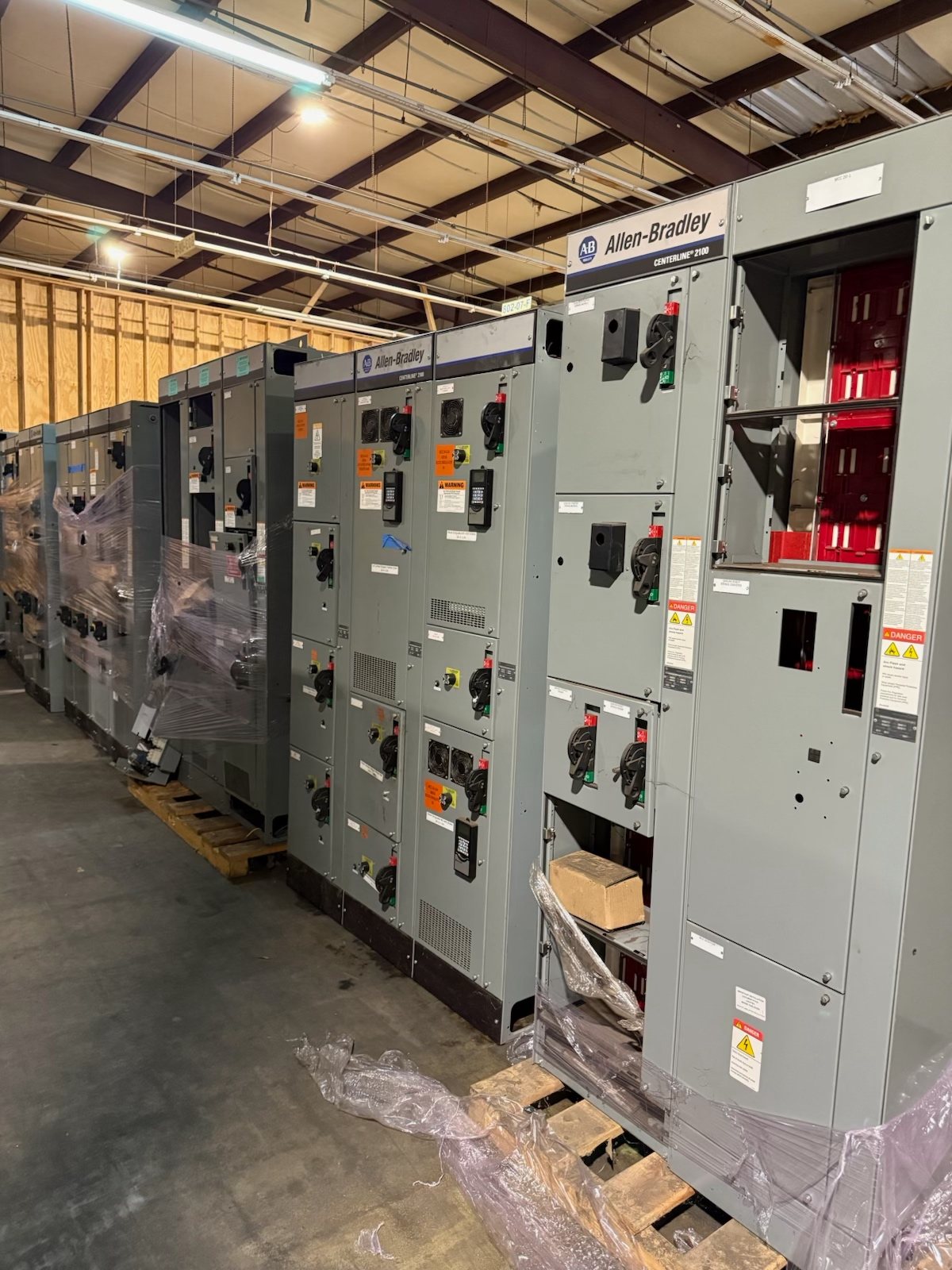
Provide the section count and, if existing drawings or schedules make it clear, a concise section-by-section description. Note the enclosure type or description shown in records, along with overall dimensions if they are already documented. A safe exterior photograph can help show the lineup arrangement, doors, labels and visible configuration; do not open compartments or approach exposed electrical parts to obtain additional views. Section count and dimensions help frame the physical scope of a potential purchase and removal. They also let a reviewer compare the reported lineup with available documents without treating a partial view as proof of completeness.
List devices and document completeness
Share an existing device list, breaker schedule or equipment inventory, identifying each device by its recorded location and marked ratings where available. Note apparent gaps between the list and the records, but do not remove covers or inspect internal components to resolve them. Describe completeness in practical terms: for example, whether the records account for all listed sections and devices, or whether certain items are unconfirmed. Completeness affects how a buyer understands the proposed lot and what may be included in an offer. It is better to flag an uncertain component than to present the lineup as fully equipped without supporting information.
Use photographs to show visible condition
Exterior photographs can document labels, doors, enclosure surfaces, visible damage, corrosion, missing external parts or other readily observable conditions. Take them only from a safe position and follow the facility’s access and safety requirements; leave electrical isolation, access to equipment interiors, lifting and disconnection to qualified professionals. Pair each image with a brief note identifying the section shown. Describe visible condition without claiming that the equipment operates, is complete internally or has been tested. Louisiana Switchgear Buyer does not require seller testing. Existing inspection reports may be included, but their scope and date should remain clear.
Send a review package and plan removal responsibly
A useful submission combines exact marked ratings, manufacturer and catalog information, section count, enclosure, dimensions, device list, visible condition and completeness notes with relevant existing drawings and safe exterior photographs. Identify unknowns plainly. The buyer reviews the equipment before making an offer, and acceptance is not guaranteed; no assumed rating or incomplete record establishes value on its own. For an agreed transaction, payment is made upfront. The buyer handles and pays for qualified disconnects, crane and rigging, loading, freight and hauling. Sellers should not undertake electrical work or rigging; those tasks remain with qualified professionals arranged through the removal process.
Buyer notes
Send the facts that move the review forward.
Include the nameplate, lineup or device photos, approximate quantity, visible condition and where the equipment is located. We buy equipment; we do not sell replacement gear or represent a test result that has not been provided.
Start with the nameplate
Request a quote
Tell us what you have. We buy switchgear from decommissioned data centers, shut-down power plants and other facilities. Crane, rigging, disconnects, loading, freight and hauling are on us. You do nothing but get paid.