If you have surplus electrical equipment in Eunice, Louisiana, a clear inventory helps a buyer determine what may be suitable for review. Start with the equipment type and quantity, then record identification details, ratings, condition, completeness, and safe access considerations. This applies to individual breakers as well as larger assemblies such as switchgear, switchboards, and motor control centers.
Sort equipment by assembly and component
Separate complete assemblies from loose devices before preparing an inventory. A switchboard or motor control center should be listed as an assembly, with removable breakers or buckets noted separately when their relationship is clear. For panelboards, record the panel and any loose breakers without assuming they belong together. Busway sections, fittings, and plug-in units are easier to assess when grouped by apparent type. In Eunice, as elsewhere, this distinction helps a buyer compare a largely intact lineup with a collection of parts. Do not remove components for documentation; describe only what is safely visible.
Capture the rating information as marked
Record manufacturer as marked, model or catalog number, voltage class, amperage, and phase from readable identification labels. Include quantity for repeated units and distinguish ratings on the main assembly from those on individual devices. Switchgear, automatic transfer switches, unit substations, and breakers may each have separate nameplates, so note which label belongs to which item. If a marking is obscured, damaged, or unreadable, identify it as such rather than filling in a likely value. Accurate transcription gives the buyer a basis for review; it does not establish that the equipment is tested or operational.
Use photographs to show context and detail
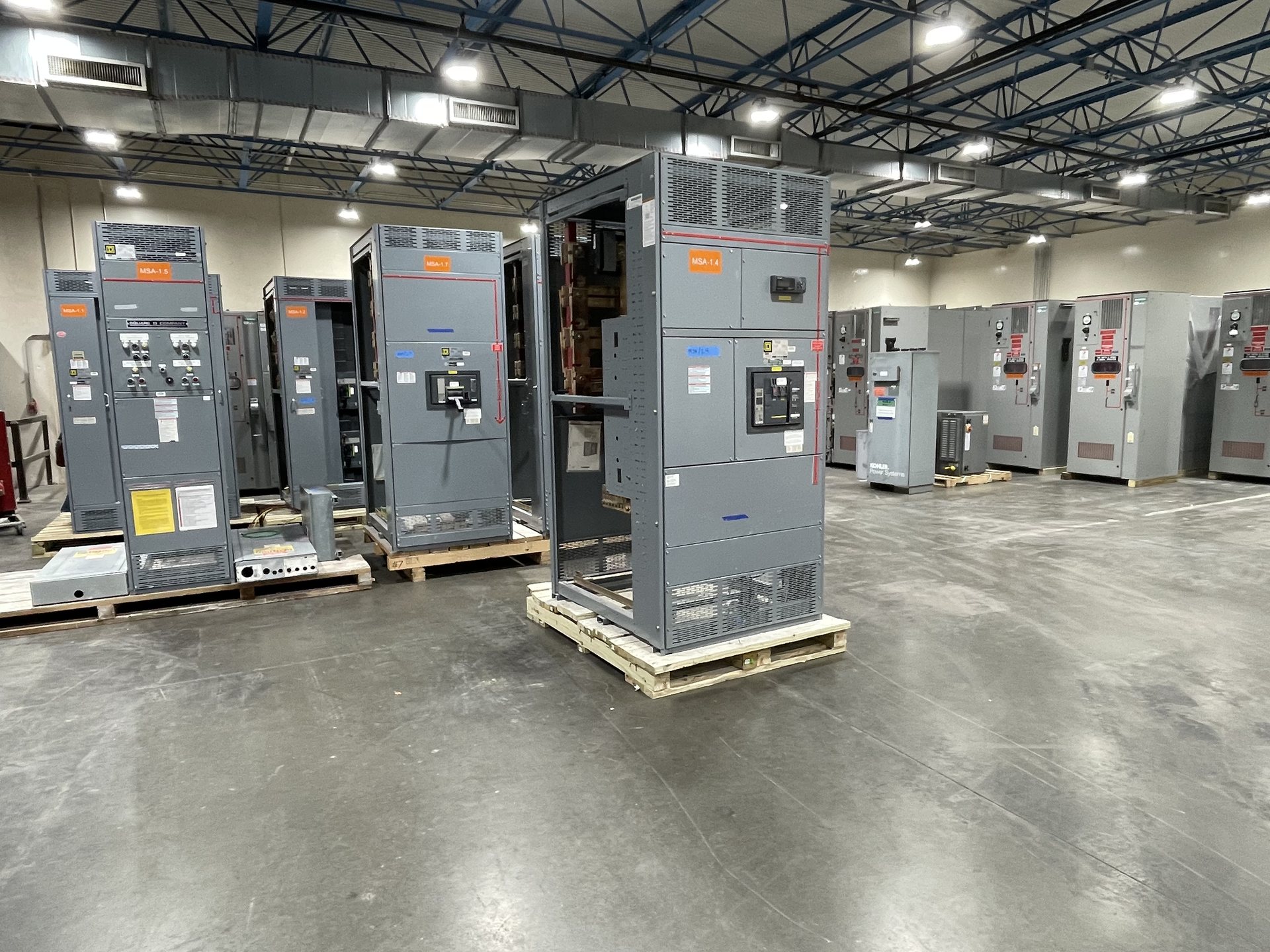
A useful photo set can include a wide context view that excludes address and customer signage, a readable nameplate, the full assembly, representative devices, and loose accessories beside a scale reference. Take images only from safe, accessible positions and do not open energized compartments or remove covers. A broad view helps show arrangement and apparent completeness, while close-ups clarify markings and visible damage. For a lineup with several sections, photograph each section clearly enough to relate it to the inventory. Photos supplement written records; they cannot confirm internal condition or replace qualified inspection.
Describe condition without overclaiming
Use observable terms: intact, visibly damaged, corroded, dusty, missing covers, or unknown. Note whether doors, handles, labels, and visible accessories appear present, but avoid calling equipment operational based on appearance. A decommissioned unit may be complete yet have an unknown service history; a loose breaker may have legible ratings but uncertain fit with a panel. These differences matter when a buyer evaluates surplus equipment. If an item’s status is uncertain, say so plainly. No seller testing is required for review, and electrical condition should not be inferred from photographs or a visual description.
Check completeness and configuration
For larger assemblies, record the number of sections or cabinets and identify visible mains, feeders, or transfer equipment only when markings make them clear. Note missing blanks, doors, breaker units, or accessories if apparent, and list loose parts separately rather than presenting them as installed. With busway, group visible straight sections, elbows, and plug-in units by type when possible. With motor control centers, distinguish buckets that remain in place from loose units. These details help compare a complete configuration with partial or mixed-lot equipment without requiring you to dismantle anything.
Include dimensions and safe access notes
Approximate dimensions help a buyer understand handling and removal needs. Record height, width, and depth for assemblies when these can be obtained safely, and identify whether figures describe one section or a full lineup. Mention visible access constraints, such as a narrow route, low clearance, or equipment positioned among other assets, without attempting to move or disconnect anything. State whether a qualified person has confirmed isolation only if that information is available; do not make an electrical status assumption. Qualified professionals handle disconnects, rigging, lifting, loading, freight, and hauling after an agreed transaction.
Prepare a review packet for buyer assessment
Combine the inventory, photographs, and any available records in a simple packet organized by assembly or lot. Include quantity, marked manufacturer, model or catalog number, voltage class, amperage, phase, dimensions, visible condition, completeness, and safe access notes. Identify breakers and accessories associated with an assembly only when that connection is known. Louisiana Switchgear Buyer reviews used, surplus, and decommissioned equipment, including material from closed facilities, and can make a cash offer when an item is accepted. Assessment comes before an offer, and acceptance is not guaranteed. On an agreed transaction, payment is made upfront; removal and transport are handled by the buyer.
Buyer notes
Send the facts that move the review forward.
Include the nameplate, lineup or device photos, approximate quantity, visible condition and where the equipment is located. We buy equipment; we do not sell replacement gear or represent a test result that has not been provided.
Start with the nameplate
Request a quote
Tell us what you have. We buy switchgear from decommissioned data centers, shut-down power plants and other facilities. Crane, rigging, disconnects, loading, freight and hauling are on us. You do nothing but get paid.