If you have surplus electrical equipment in Donaldsonville, Louisiana, a clear inventory helps a buyer determine what is available before arranging a review. Record identification from visible markings, describe whether assemblies and accessories appear complete, and note any limits on safe access. Louisiana Switchgear Buyer considers used, surplus and decommissioned equipment, including gear from facilities being shut down or repurposed.
Start with an equipment-by-equipment inventory
List each distinct assembly rather than grouping everything as “electrical gear.” Identify whether it is switchgear, a switchboard, motor control center, panelboard, busway, automatic transfer switch, breaker or unit substation. Include the quantity of each type and note whether items form a connected lineup or are separate pieces. If a label is not readable from a safe position, mark the field as unknown instead of guessing. A straightforward inventory gives the buyer a useful first picture of the lot and helps distinguish complete assemblies from individual devices or loose components.
Capture identification exactly as marked
For each assembly or major device, record the manufacturer as shown on its nameplate, along with the model or catalog number. Transcribe voltage class, amperage and phase when those details are legible. Keep the original units and wording; do not infer ratings from nearby equipment or from a similar-looking model. A readable nameplate photo can help resolve transcription questions, but it does not replace a written inventory. These electrical identifiers allow a buyer to review what the equipment is and compare items within a lot without treating unverified gear as tested or operational.
Describe completeness, not just appearance
Note whether doors, covers, sections, drawout devices, control components and visible accessories appear to be present, missing or separated. For busway, identify the quantity of sections and any visibly associated fittings; for a lineup, state how many sections are included. Record loose accessories separately, with a brief description and count where practical. If completeness cannot be established from a safe view, say so. Do not remove covers or handle components to improve the inventory. The distinction between a full assembly, a partial lineup and loose parts can materially affect how a buyer evaluates the equipment.
Document visible condition with care
Use factual observations such as “stored indoors,” “paint worn,” “visible corrosion,” or “several covers absent,” when these are apparent without touching the equipment. Avoid conclusions such as “good,” “ready to run” or “fully functional” unless supported by appropriate records; a visual description is not an operating test. Louisiana Switchgear Buyer does not require seller testing. If the equipment’s history is known, you may include relevant information such as whether it was removed during a facility shutdown, while keeping that separate from current condition. Assessment takes place before an offer, and acceptance is not guaranteed.
Take useful photos from safe positions
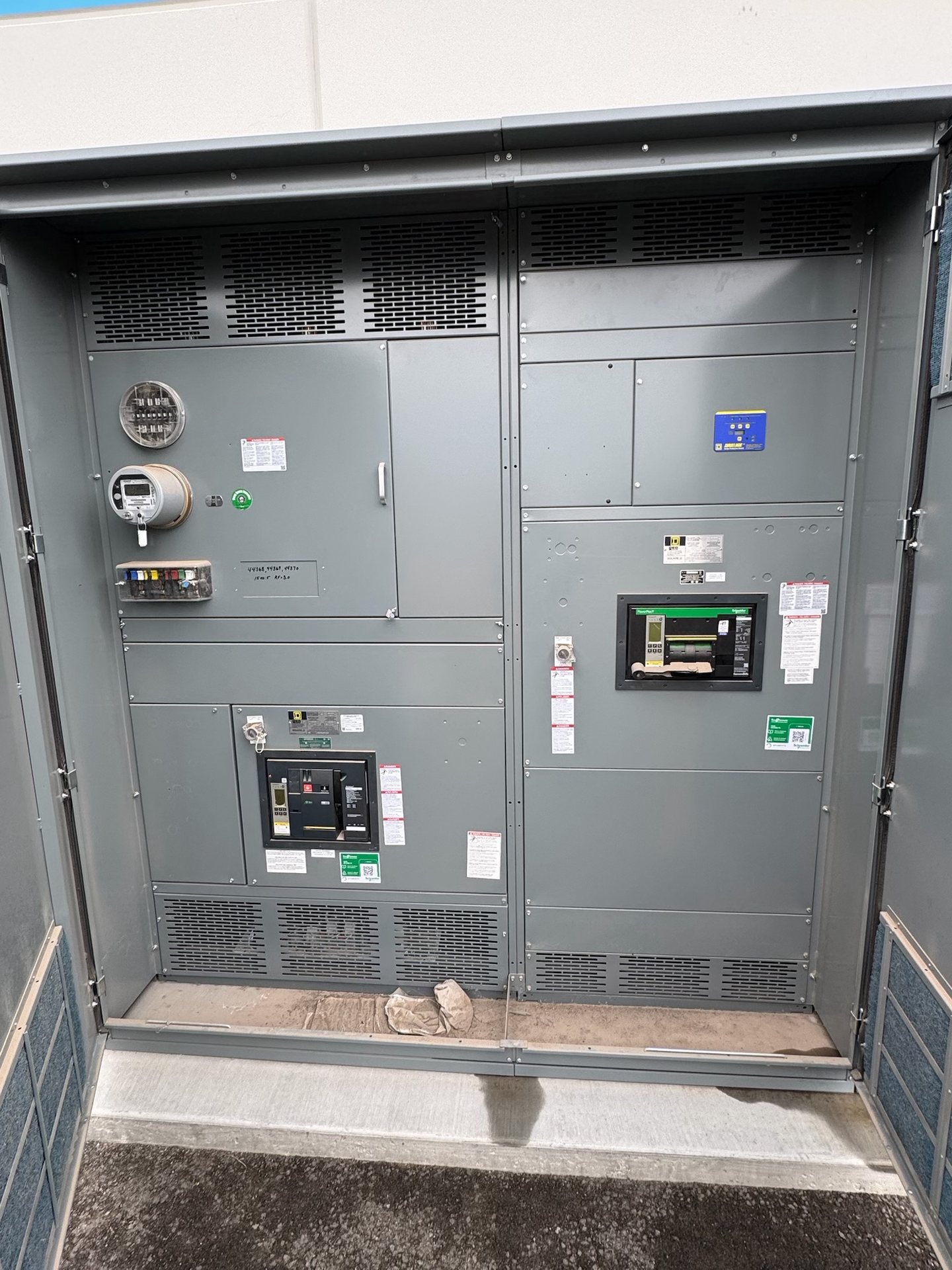
Provide a wide context view of the equipment without address or customer signage, then a full-assembly view that shows the overall arrangement. Add readable nameplate images only where the markings can be photographed without opening energized compartments or entering a restricted area. Representative-device photos can show the type and general arrangement of included devices. Photograph loose accessories beside a scale reference, without handling components that should remain undisturbed. If access is limited, explain that constraint rather than moving equipment or reaching into an enclosure. Qualified professionals must manage any electrical isolation or access requiring specialized work.
Flag dimensions, handling and access limits
Record approximate dimensions for major assemblies when they can be obtained safely, and identify any known restrictions on moving or reaching the equipment. Include clear notes such as “limited aisle access,” “stored above floor level,” or “lifting access requires site coordination,” only when accurate. Do not disconnect, lift, rig or load equipment yourself. Qualified professionals must handle electrical isolation and disconnects, while Louisiana Switchgear Buyer coordinates and pays for qualified disconnects, crane and rigging, loading, freight and hauling on an agreed transaction. These details help determine whether a site review and removal plan are practical.
Send the inventory for buyer review
Submit the equipment list, available photos, known dimensions and safe-access notes together so the buyer can assess the lot before making an offer. Include a contact person who can clarify what is included and coordinate access, but do not share sensitive signage or facility details in photos. The buyer purchases used and surplus equipment across voltage classes and may make a cash offer; payment is upfront on agreed transactions. No seller testing is required. Once the information has been reviewed, the buyer can discuss the next steps, including any necessary qualified site coordination for removal.
Buyer notes
Send the facts that move the review forward.
Include the nameplate, lineup or device photos, approximate quantity, visible condition and where the equipment is located. We buy equipment; we do not sell replacement gear or represent a test result that has not been provided.
Start with the nameplate
Request a quote
Tell us what you have. We buy switchgear from decommissioned data centers, shut-down power plants and other facilities. Crane, rigging, disconnects, loading, freight and hauling are on us. You do nothing but get paid.