When an industrial plant closes, electrical equipment may be considered for resale before every record has been gathered. A careful documentation handoff helps distinguish complete assemblies from loose devices, identify what can be assessed, and make removal planning more orderly. Start with observable facts, preserve uncertainty where records are missing, and keep ownership authorization clear before discussing a sale.
Establish the handoff record
Create one inventory record for each assembly or clearly defined group, rather than relying on a room list or a general description such as “electrical gear.” Note its former area or function when known, the person providing the information, and the date of the record. Identify whether the item is process distribution, an MCC, switchboard, panel, busway, breaker, or utility-area assembly. Record separately what is directly observed and what comes from existing paperwork or staff recollection. This distinction helps a buyer assess the equipment without treating an unverified description as a confirmed rating, configuration, or operating condition.
Separate assemblies from loose components
Answer the first lot question plainly: which items remain complete assemblies? For each lineup or section, record whether doors, covers, installed devices, and associated sections appear present, without opening energized compartments or disturbing equipment. List loose breakers, accessories, relays, or other components as separate items and note any known association with an assembly. Do not combine loose devices with a lineup merely because they were stored nearby. If a part’s fit or application is uncertain, mark that uncertainty. Clear grouping reduces confusion during review, prevents small items from being overlooked, and gives removal planners a more useful picture of the lot.
Capture identifiers and visible ratings
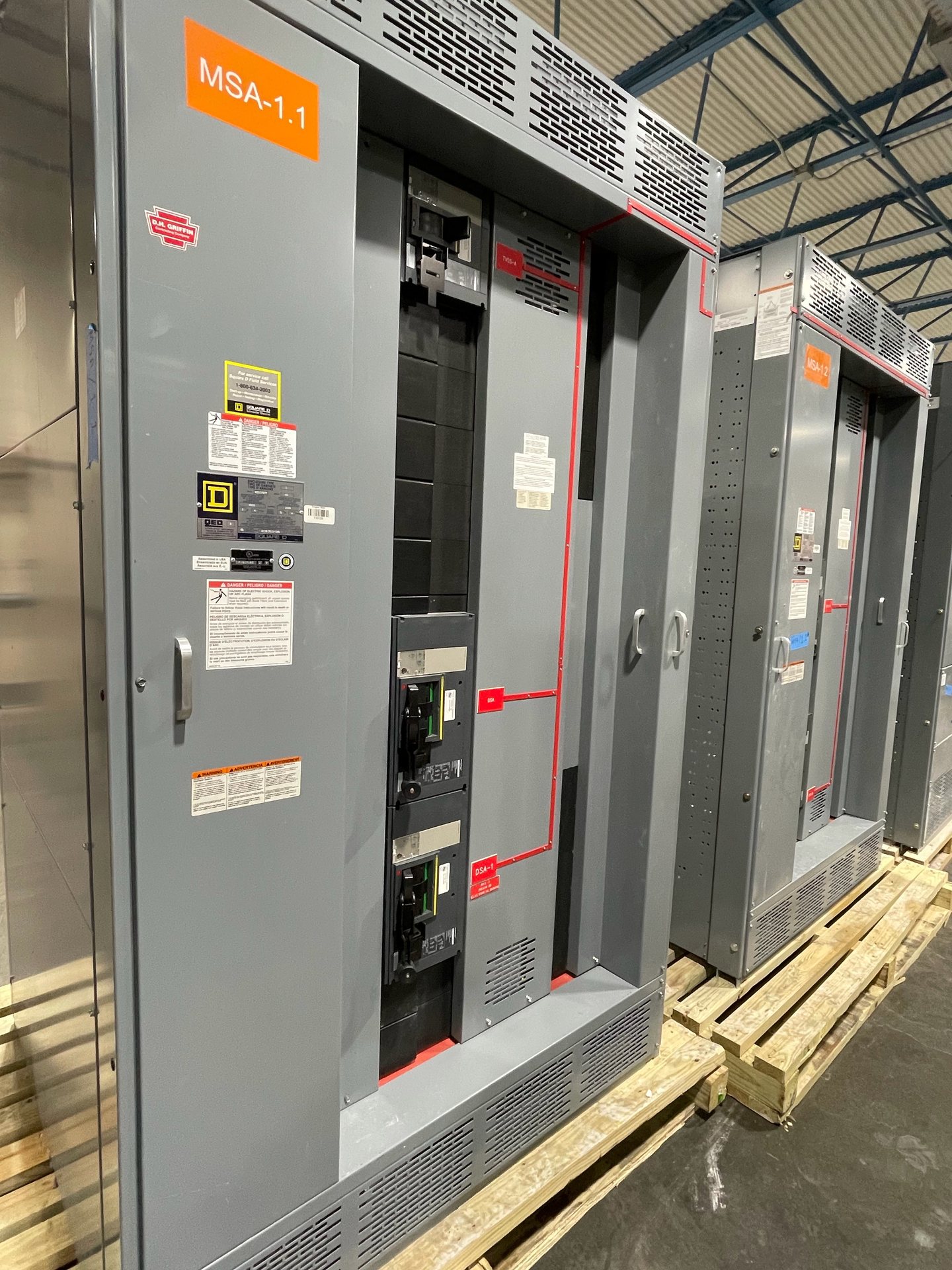
Photograph nameplates and other identifiers that are safely visible from accessible positions. Transcribe manufacturer, model or catalog number, serial number, voltage, current, interrupting rating, and other marked data only when legible; use “not visible” or “unreadable” rather than guessing. Include a wider image showing the equipment context and closer images of markings, while avoiding photographs that require entering restricted areas or approaching exposed electrical hazards. A device list can link individual breakers or units to a section when labels are visible. These records support an initial equipment assessment, but do not establish that equipment is tested, functional, or suitable for reuse.
Pass along drawings and schedules
Include a one-line diagram, section schedule, panel schedule, or device list when available, and identify the document date or revision if shown. Note whether a drawing is believed to match the installed equipment or is simply the latest record located; do not silently reconcile discrepancies. Mark missing pages and equipment that cannot be matched to a schedule. A drawing can clarify relationships among process distribution, switchboards, MCCs, and utility-area assemblies, while nameplates and photographs help verify what is physically present. The buyer can review available records alongside the equipment details, but incomplete documentation should remain clearly identified as incomplete.
Describe dimensions and access facts
Provide approximate overall dimensions for large assemblies when they can be obtained safely, and say how the measurement was taken. Record visible section counts, busway lengths or marked segments, and any known separation between lots. For access, describe practical facts: the route to the equipment, door or aisle constraints, floor level, overhead restrictions, and whether a loading area is known to be available. Avoid assumptions about lifting points, weight, or how an assembly can be dismantled. Qualified professionals determine isolation, disconnection, rigging, and lifting requirements. Louisiana Switchgear Buyer handles and pays for agreed removal, loading, freight, and hauling arrangements.
Mark unknowns and condition limits
Reserve an explicit field for what remains unknown: missing ratings, uncertain section boundaries, unverified device associations, absent drawings, or unclear removal history. State whether observations came from existing records or a visual review, and never describe an item as operational merely because it is installed or appears intact. Seller testing is not required for an initial review. Do not open energized compartments, operate devices, or undertake electrical isolation, lifting, or disconnection to answer inventory questions. Those tasks belong to qualified professionals. Keeping unknowns visible helps avoid rework and lets the equipment assessment focus on the information actually available.
Confirm authorization and coordinate the next step
Before sharing equipment for sale, identify the owner or authorized representative and confirm that the person coordinating the handoff has authority to discuss the assets. Attach relevant ownership or authorization status to the inventory, while keeping sensitive records appropriately controlled. Send the compiled list, photographs, drawings, dimensions, and access notes for assessment; an offer is based on review, and acceptance is not guaranteed. Louisiana Switchgear Buyer purchases used, surplus, and decommissioned equipment across voltage classes, including material from closed plants. On an agreed transaction, payment is made upfront, and qualified disconnects and the physical removal logistics are handled by the buyer.
Buyer notes
Send the facts that move the review forward.
Include the nameplate, lineup or device photos, approximate quantity, visible condition and where the equipment is located. We buy equipment; we do not sell replacement gear or represent a test result that has not been provided.
Start with the nameplate
Request a quote
Tell us what you have. We buy switchgear from decommissioned data centers, shut-down power plants and other facilities. Crane, rigging, disconnects, loading, freight and hauling are on us. You do nothing but get paid.