When a generation facility is retired, electrical equipment may be grouped with its associated devices—or separated during removal and storage. Sorting loose breakers, relays, control components, and accessories from complete assemblies helps establish what is actually available for review. A clear inventory also distinguishes visible identification from unanswered questions, without assuming that any item is complete, serviceable, or suitable for reuse.
Separate assemblies from loose items
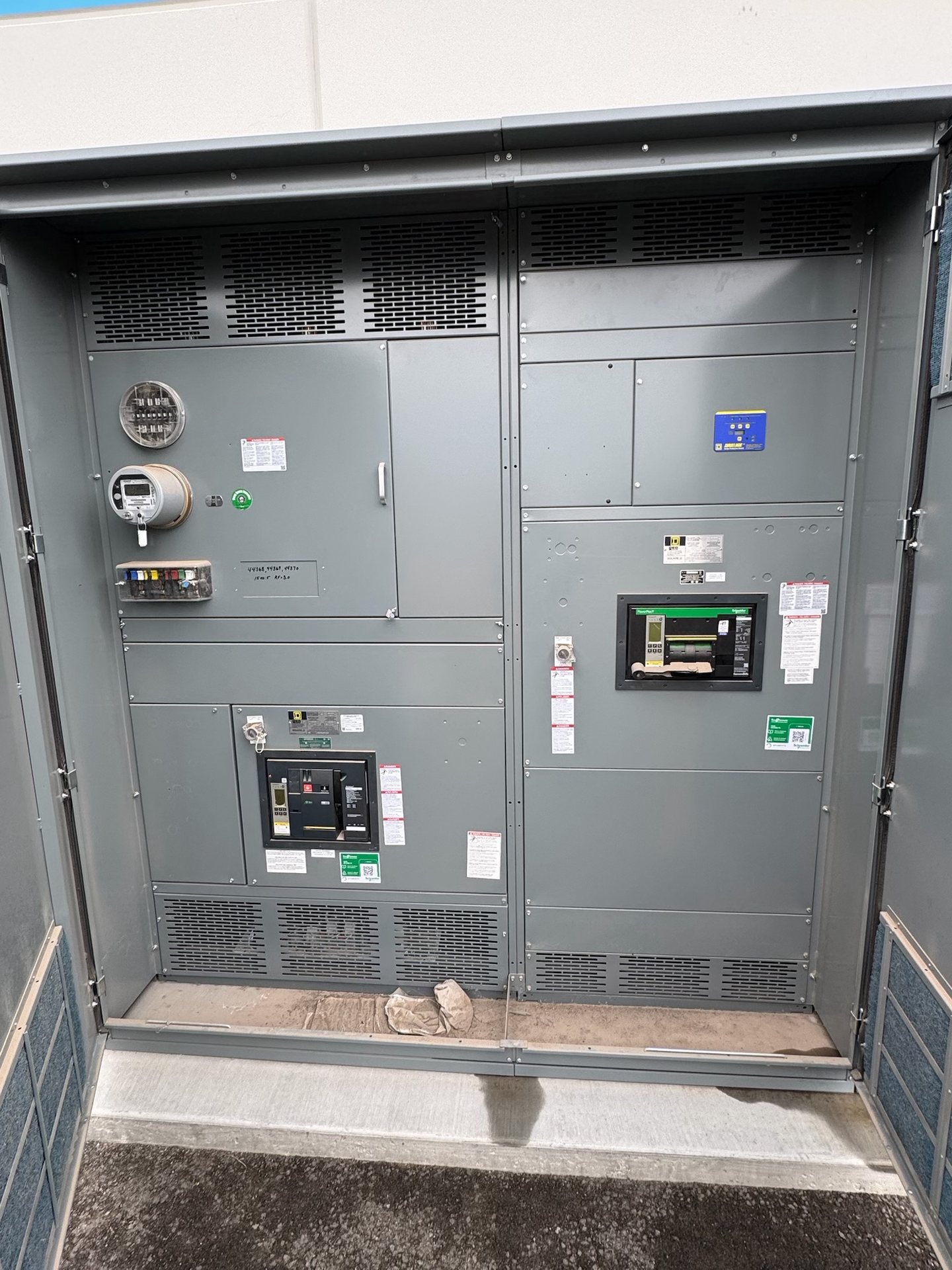
Start the inventory by distinguishing intact equipment from individual devices and parts. A medium-voltage lineup, station-service switchboard, MCC, or auxiliary panel may be a complete assembly, a partial section, or an enclosure with components removed. Record each assembly separately, then list loose breakers, relays, control switches, meters, and other accessories as individual items. Note where a loose item was found only if that association is known; do not assign it to a lineup based on appearance alone. This simple separation makes the lot easier to assess and avoids overstating what is included.
Record visible identifiers and ratings
For each assembly and loose device, transcribe the markings that can be read without opening equipment or disturbing its condition. Useful details may include manufacturer, model or catalog number, serial number, voltage, current, interrupting rating, and device type. Photograph nameplates and rating labels in place, with enough context to show which item each image represents. If a marking is obscured, damaged, or missing, record that fact rather than inferring a value from nearby equipment. Visible identification supports review; it does not establish operating condition or confirm that a device matches a particular assembly.
Describe completeness without guessing
Use concise notes to explain what appears to be present and what is visibly absent. For a lineup or panel, record whether doors, covers, sections, and identifiable devices are included, where these facts can be established safely. For a loose breaker or control device, note whether external accessories are stored with it, but do not claim that internal parts are complete. Mark uncertain associations and missing pieces explicitly. These distinctions help an equipment buyer evaluate the offered lot on its actual contents, rather than relying on a broad label such as “complete switchgear” when the inventory does not support it.
Build a device list that can be checked
Give each assembly and loose item a consistent reference number, then use that reference in the device list and photo filenames. Include a short description, visible identifiers, quantity, and whether the item is mounted, stored beside an assembly, or separately palletized, if known. Record dimensions where they can be obtained without unsafe handling; otherwise identify them as unavailable. A one-line diagram or section schedule, when available, can provide useful context for lineup arrangement and equipment naming. Treat drawings as supporting records, not proof that every shown device remains with the equipment.
Keep unknowns and condition separate
A useful review distinguishes identification, completeness, and condition as separate questions. A readable rating plate may identify a breaker while leaving its internal condition and testing history unknown. A device shown on a schedule may not be present in the stored lot. Note known gaps directly: missing nameplate, uncertain assembly association, unavailable drawing, or unknown testing status. Do not describe equipment as operational merely because it is intact in a photograph or was previously installed. Louisiana Switchgear Buyer assesses the equipment information before making an offer, and acceptance of a particular item or lot is not guaranteed.
Plan access and removal safely
Include practical access information for the equipment location: clearances, door or gate constraints, overhead restrictions, staging space, and any known limits on vehicle access. Identify whether equipment remains installed or has already been removed, without attempting to disconnect, move, or open it for documentation. Electrical isolation, qualified disconnects, lifting, and rigging must be handled by qualified professionals. If a transaction is agreed, Louisiana Switchgear Buyer handles and pays for qualified disconnects, crane and rigging, loading, freight, and hauling. Accurate access notes help plan review and removal without assigning hazardous work to you.
Send a review-ready package
Gather the one-line or section schedule if available, nameplate photographs, the numbered device list, dimensions, access notes, and confirmation of ownership or authorization to sell. State plainly which records are unavailable and which items are loose or of uncertain association. This gives the buyer a grounded basis to review medium-voltage switchgear, station-service gear, breakers, MCCs, auxiliary panels, and control equipment from a retired generation facility. No seller testing is required. After reviewing the information and equipment, Louisiana Switchgear Buyer can make a cash offer if the lot is accepted; agreed transactions are paid upfront.
Buyer notes
Send the facts that move the review forward.
Include the nameplate, lineup or device photos, approximate quantity, visible condition and where the equipment is located. We buy equipment; we do not sell replacement gear or represent a test result that has not been provided.
Start with the nameplate
Request a quote
Tell us what you have. We buy switchgear from decommissioned data centers, shut-down power plants and other facilities. Crane, rigging, disconnects, loading, freight and hauling are on us. You do nothing but get paid.