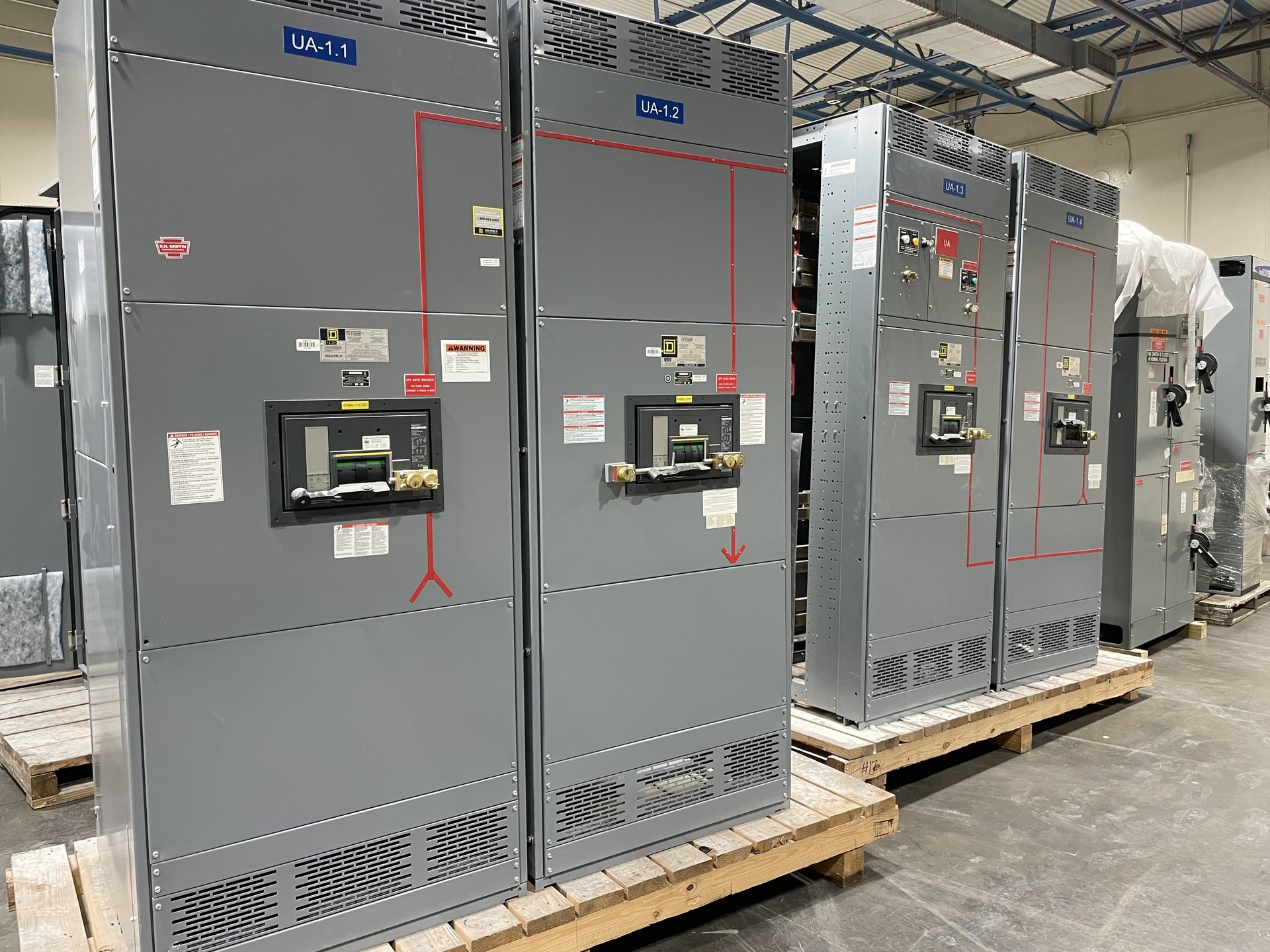
Before requesting an offer for surplus switchgear, assemble the freight facts that help qualified recovery professionals judge how the equipment can be divided, accessed and loaded. Record documented approximate dimensions and weight, section count, shipping splits, and visible lifting-point information. Add loading-surface, access, dock or ground-level conditions, known restrictions, and safe staging details; distinguish confirmed records from estimates.
Inventory each assembly and its shipping splits
List each switchgear lineup, switchboard, motor control center (MCC), unit substation, busway run, transformer-connected assembly, and loose breaker or accessory separately. Note the nameplate or other identifying information you can read without opening equipment. Record how many sections or pieces are present, and whether shipping records show factory or later splits. A continuous lineup may be handled as several sections, while a transformer-connected assembly can present different dimensions and handling needs from a panelboard-sized item. Do not assume a visible joint marks a safe separation point; document what you observe and leave disassembly decisions to qualified professionals.
Separate documented measurements from estimates
Use drawings, packing lists, shipping records, or prior freight paperwork for approximate dimensions and weight when those records are available. Identify the source and date, and label any estimate clearly; do not present a visual guess as a confirmed measurement. Capture length, width, and height for each shipping split rather than giving only an overall lineup figure. This distinction matters because a freight plan depends on the piece actually being moved, not simply the installed arrangement. If records disagree, preserve both figures and flag the discrepancy for review instead of choosing the more convenient number.
Describe visible lifting information carefully
If a drawing, label, or other record identifies lifting points, include that reference with the corresponding section or shipping split. A photograph may help show visible features, but it does not establish a point’s capacity or suitability. Do not attach lifting gear, test a point, remove covers, or attempt to reposition equipment to inspect it. The recovery team and qualified rigging professionals must determine how a unit can be lifted after reviewing the equipment and site conditions. When no lifting information is documented, say so; missing data is more useful than an unsupported assumption.
Record the route, loading surface, and staging
Describe the route from the equipment’s current position to the proposed loading area: indoor or outdoor portions, turns, thresholds, doorways, overhead limits, and any known restricted access. Note whether the loading surface is at dock height or ground level, and describe the surface condition only as you can safely observe it. Include available staging space and any known limits on where a vehicle or lifting equipment may be positioned. These details help professionals assess whether dimensions and weight can be managed along the full route, not just at the final loading point.
Share restrictions before an offer is considered
Flag known building, site, or operating restrictions that could affect access, staging, or the timing of recovery. Examples include restricted entry periods, limited vehicle access, shared travel paths, or a requirement to coordinate with site personnel. Provide only information you are authorized to share, and identify uncertain details as unconfirmed. Do not disconnect, isolate, lift, or move electrical equipment to improve access or gather measurements. Qualified personnel must handle electrical isolation and physical work. A review of equipment information and access conditions supports an informed assessment, but does not guarantee that the equipment will be accepted.
Review the information and agree on the transaction
Once the inventory and freight details are assembled, share them with Louisiana Switchgear Buyer for equipment assessment. Clear section counts, documented approximate dimensions and weights, shipping splits, and access notes can help identify what needs clarification before an offer is made. Include relevant photographs or records when available, without entering hazardous areas or opening energized compartments to obtain them. An assessment precedes any offer, and acceptance is not guaranteed. If you accept an agreed transaction, payment is made upfront. The offer and recovery arrangements should reflect the equipment and conditions actually reviewed.
Coordinate recovery, loading, and transport
After an agreed sale, qualified professionals coordinate the physical recovery based on the equipment, route, and loading conditions. Louisiana Switchgear Buyer handles and pays for qualified disconnects, crane and rigging work, loading, freight, and hauling; the seller should not undertake those tasks. Before recovery, keep the equipment and access route available as agreed, and alert the team if conditions or documented dimensions change. This sequence applies to surplus and decommissioned equipment, including material from shut-down power plants and data centers. Reliable freight information helps coordinate the work without asking the seller to perform electrical or lifting procedures.
Buyer notes
Send the facts that move the review forward.
Include the nameplate, lineup or device photos, approximate quantity, visible condition and where the equipment is located. We buy equipment; we do not sell replacement gear or represent a test result that has not been provided.
Start with the nameplate
Request a quote
Tell us what you have. We buy switchgear from decommissioned data centers, shut-down power plants and other facilities. Crane, rigging, disconnects, loading, freight and hauling are on us. You do nothing but get paid.