Preparing decommissioned data-center electrical equipment for review starts with a clear account of what is included—not an assumption about its condition or value. A structured offer-preparation checklist helps distinguish complete assemblies from loose devices, captures visible ratings and identifiers, and flags unanswered questions. That information supports a more accurate assessment of switchboards, ATS units, busway, PDUs, breakers, and related distribution equipment.
Define the lot before describing it
List each major assembly separately, then note whether it is offered as an individual item or as part of a larger lot. Identify switchboards, automatic transfer switches (ATSs), busway sections, power distribution units (PDUs), breakers, and related distribution assemblies by equipment type and, where visible, section or lineup designation. Avoid grouping unlike items under a broad label such as “data-center electrical.” A precise inventory helps establish the scope of review and prevents accessories or separate equipment from being mistakenly counted as part of a complete assembly.
Separate complete assemblies from loose devices
For each listed item, record whether it appears to be a complete assembly, a partial assembly, or a loose component. Note loose breakers, trip units, bus plugs, control devices, doors, or other accessories separately, and connect them to a parent assembly only when that relationship is clear. Record missing parts or uncertain completeness as questions rather than filling gaps by assumption. This distinction matters because a lineup with associated devices presents a different assessment picture from a collection of unassigned components. Do not remove or handle electrical parts to improve the inventory; have qualified personnel manage any necessary work.
Capture visible identifiers and ratings
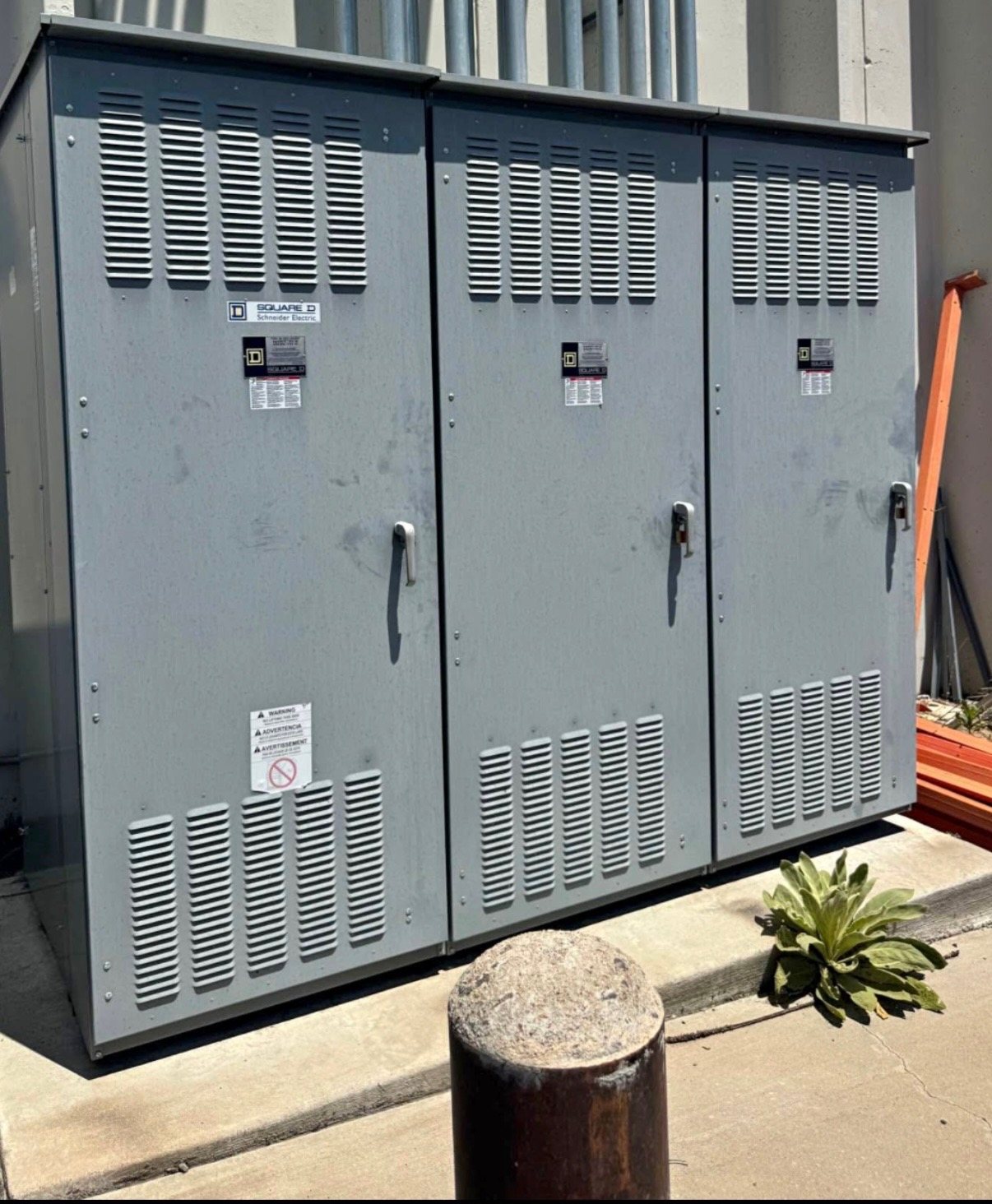
Photograph accessible nameplates and visible labels, and transcribe identifiers when they can be read without opening equipment or approaching exposed electrical hazards. Useful details may include manufacturer, model or catalog number, serial number, voltage, current rating, interrupting rating, frequency, and enclosure or lineup designation. Record the source of each detail—such as a nameplate, drawing, or schedule—and mark illegible or conflicting information as unknown. Do not infer a rating from appearance or neighboring equipment. Visible markings support review but do not establish operating condition, remaining service life, or test status.
Gather drawings and device schedules
Include a one-line diagram, section schedule, or device list if available and authorized for sharing. These records can clarify how sections and devices were identified, what the original distribution arrangement included, and whether the listed lot aligns with documented equipment. Note the document date or revision when shown, and flag records that may not reflect the equipment currently being considered. A schedule is a reference, not proof that every listed item remains present. If no drawings are available, say so; a concise, accurate inventory is more useful than a reconstructed diagram based on assumptions.
Record dimensions and removal access
Provide approximate overall dimensions for major assemblies when they can be obtained safely, along with known shipping or handling constraints. Describe access information that affects planning, such as the route to the equipment, door or corridor restrictions, loading-area arrangements, and any known limits on vehicle or lifting access. Keep observations factual and identify anything that still needs confirmation. Do not disconnect, dismantle, lift, or move equipment to measure it. Qualified professionals must assess electrical isolation, rigging, lifting, and removal. Louisiana Switchgear Buyer handles and pays for qualified disconnects, loading, rigging, freight, and hauling on agreed transactions.
Make condition and unknowns explicit
Separate documented facts from observations and unanswered questions. State whether equipment is decommissioned, whether test records are available, and whether any condition information comes from records rather than direct verification. Do not describe an item as operational or tested unless reliable documentation supports that statement. Seller testing is not required for review. Flag uncertainty about completeness, accessory matching, identification, or records so it can be addressed during assessment. An offer is based on the equipment information and review; submitting a checklist does not guarantee acceptance, and each asset is assessed before an offer is made.
Confirm ownership and prepare the handoff
Before sharing equipment details or arranging a transaction, confirm that you have ownership or authorization to offer the assets and identify any approval steps that must be completed. Assemble the inventory, photographs, drawings, device list, dimensions, and access notes in one organized package, while keeping unknowns visible. Once the equipment is assessed, Louisiana Switchgear Buyer may make a cash offer; on an agreed transaction, payment is made upfront. The buyer purchases used, surplus, and decommissioned electrical equipment across voltage classes, including data-center equipment. Removal and transportation arrangements are handled by the buyer, not by the seller.
Buyer notes
Send the facts that move the review forward.
Include the nameplate, lineup or device photos, approximate quantity, visible condition and where the equipment is located. We buy equipment; we do not sell replacement gear or represent a test result that has not been provided.
Start with the nameplate
Request a quote
Tell us what you have. We buy switchgear from decommissioned data centers, shut-down power plants and other facilities. Crane, rigging, disconnects, loading, freight and hauling are on us. You do nothing but get paid.