Loading constraints shape whether used switchgear can be recovered safely and how a potential transaction should be evaluated. Before requesting an offer, gather the information already available about equipment dimensions, shipping splits, access, and staging. Documented details help identify questions for a site review; missing information is preferable to a guess. Louisiana Switchgear Buyer assesses equipment before making an offer and coordinates removal and transportation for accepted transactions.
Start with the equipment inventory
List each equipment group separately: switchgear lineups, switchboards, motor control centers, unit substations, busway, transformer-connected assemblies, and loose breakers or accessories. Include identification labels and approximate quantities where visible without opening energized compartments or disturbing equipment. Note whether equipment is assembled, already split into sections, or accompanied by separate components. A clear inventory helps distinguish a large assembly from parts that may have different handling or loading needs. Do not assume that pieces are complete or interchangeable; describe what is present and leave condition and value assessment to the buyer.
Use documented dimensions and weights
Approximate dimensions and weights can help screen loading options, but only report figures supported by records, labels, drawings, or prior documentation. Identify what each measurement covers: a single section, a complete lineup, a shipping split, or an accessory. If dimensions or weight are unknown, mark them as unknown rather than estimating by appearance. Record the source and any uncertainty, especially when the figures may exclude crating, skids, attached transformers, or projecting components. These details are planning inputs, not permission to move equipment or a substitute for a qualified professional’s lifting assessment.
Describe section count and shipping splits
For multi-section equipment, note the section count and any documented shipping splits. If drawings or labels identify the division points, share that information; do not dismantle equipment to find them. Explain whether loose parts, bus connections, or accessories are stored separately when that is known. A lineup that was originally shipped in several sections may present different loading considerations from one intact assembly, but the actual configuration must be confirmed during review. Accurate descriptions help prevent assumptions about piece size, handling sequence, or the space needed for loading.
Record visible lifting information carefully
If equipment markings or available documentation visibly identify lifting points, preserve that information and share its source. Do not infer lifting points from brackets, holes, rails, or other features, and do not attach lifting gear or test a point. Qualified professionals determine suitable handling methods after reviewing the equipment and site conditions. The same caution applies to weight distribution and balance: a stated total weight does not establish how a load should be picked. When no reliable lifting information is available, say so. The recovery team can identify what further review is needed.
Explain loading surface and access
Describe the loading area using observable, useful facts: whether access is at a dock or ground level, the surface type if known, and the route available to reach the loading position. Note obstacles, restricted clearances, slopes, soft or uneven areas, overhead limits, or other known constraints without trying to measure or clear them yourself. Include photographs or site drawings only when they can be shared safely and accurately. Access conditions can affect equipment selection and logistics planning, but a written description cannot confirm that a route or surface is suitable for a particular load.
Share restrictions and staging details
Identify known limits that may affect scheduling or access, such as restricted entry periods, security procedures, building rules, or areas that cannot be used for staging. State whether a safe staging area is known and where it is, without moving equipment to create one. If the equipment is in a decommissioned data center or shut-down power plant, include relevant access and staging information rather than assuming the site has a particular loading setup. Qualified personnel coordinate isolation, disconnects, lifting, loading, and hauling. The seller should not undertake electrical work or rigging.
Prepare for review, not self-removal
Send the inventory, documented measurements, section details, and known loading constraints for assessment. Louisiana Switchgear Buyer purchases used, surplus, and decommissioned equipment across voltage classes, including the listed equipment types, but an offer depends on review and is not guaranteed. Seller testing is not required. For an agreed transaction, the buyer handles and pays for qualified disconnects, crane and rigging, loading, freight, and hauling, with physical work left to qualified professionals. Keep equipment in place while access and logistics are reviewed; accurate information supports planning without asking you to perform hazardous work.
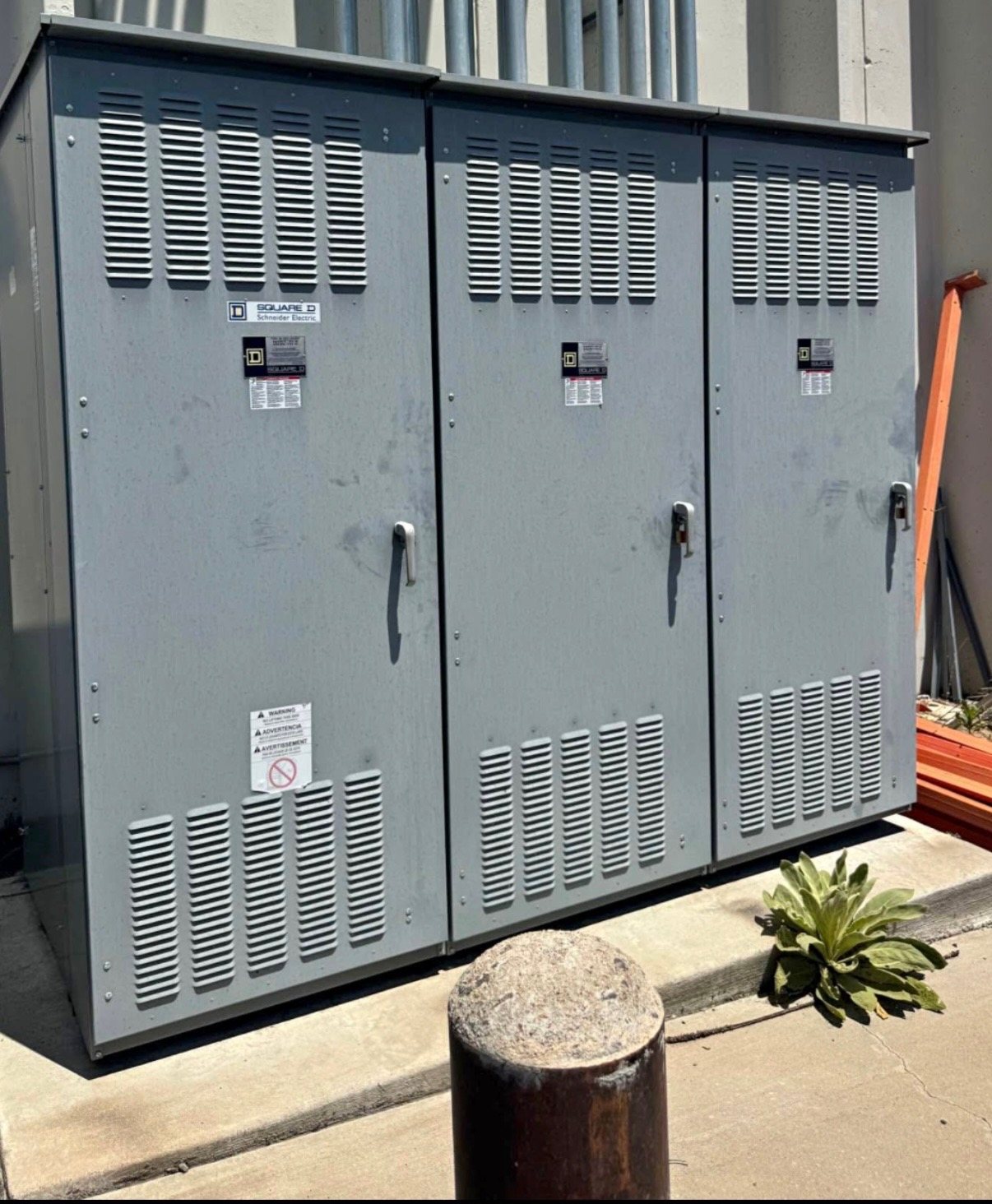
Buyer notes
Send the facts that move the review forward.
Include the nameplate, lineup or device photos, approximate quantity, visible condition and where the equipment is located. We buy equipment; we do not sell replacement gear or represent a test result that has not been provided.
Start with the nameplate
Request a quote
Tell us what you have. We buy switchgear from decommissioned data centers, shut-down power plants and other facilities. Crane, rigging, disconnects, loading, freight and hauling are on us. You do nothing but get paid.