A recovery plan for used switchgear starts with a clear boundary: qualified professionals disconnect and isolate electrical equipment, while the buyer coordinates removal and transport after reviewing the asset and access. Useful records help distinguish a compact lineup from a multi-section assembly, identify shipping splits, and flag constraints before anyone schedules lifting or loading. Share only information you can document safely.
Separate electrical isolation from equipment recovery
A seller’s first planning task is to identify who is responsible for disconnecting and isolating the equipment. That work belongs to qualified electrical professionals familiar with the installation and its condition; it is not part of a seller’s packing or removal duties. Louisiana Switchgear Buyer reviews the equipment and access information, then coordinates and pays for qualified disconnects and physical recovery on an agreed transaction. Keep the scope clear in internal discussions: electrical isolation precedes handling, and the buyer handles removal, rigging, loading, freight, and hauling. No seller testing is required.
Describe the assembly, not just its nameplate category
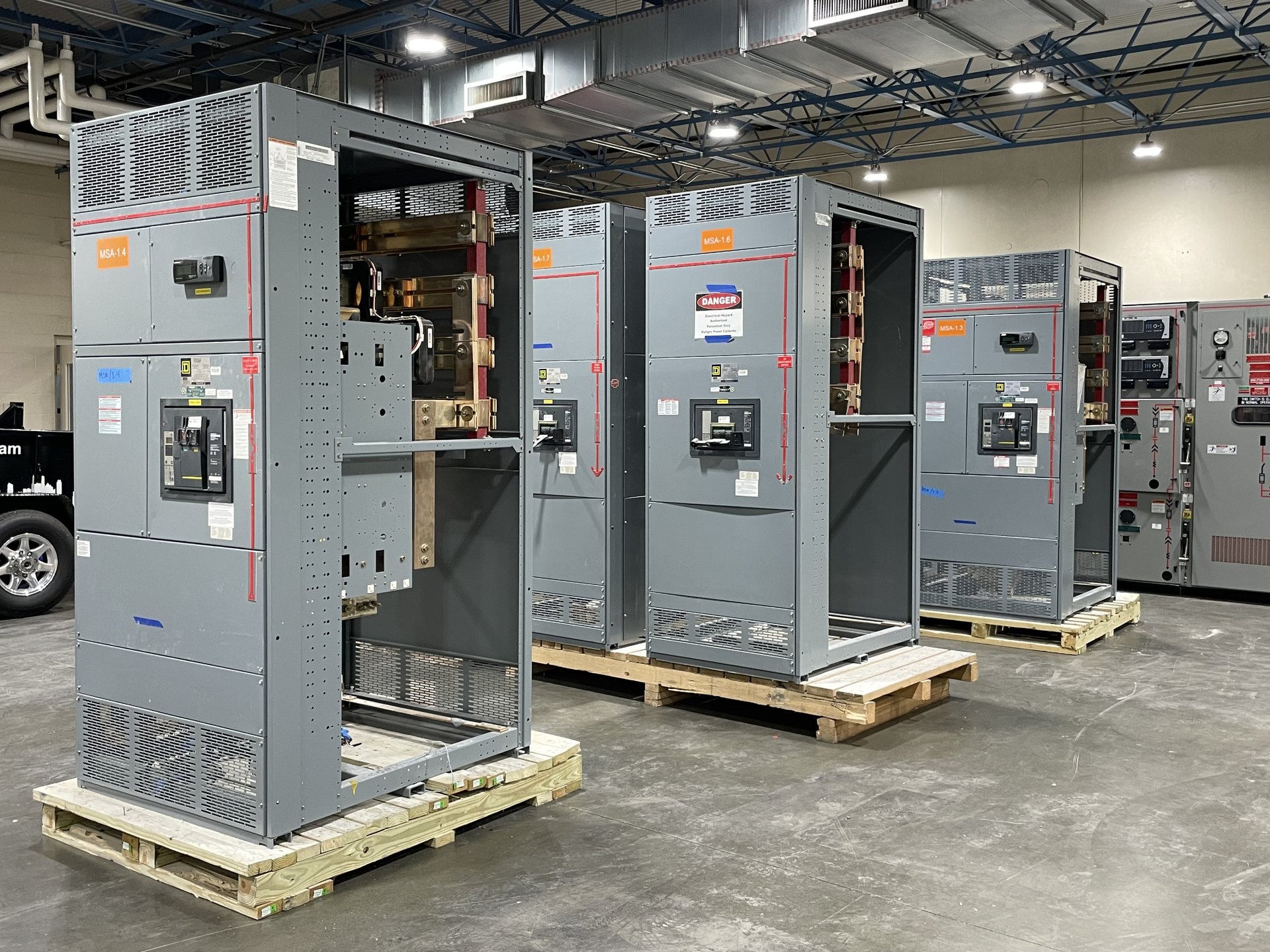
A switchboard, MCC, unit substation, or switchgear lineup can have very different recovery requirements despite sharing a broad equipment label. Note the visible configuration, approximate section count, and any known shipping splits. Record whether busway, transformer-connected assemblies, loose breakers, or accessories are included, and distinguish attached equipment from separate items. A single lineup may ship as several sections; loose breakers may need separate inventory and packing coordination. Do not open energized compartments or enter restricted electrical areas to improve the description. Existing records and safely visible information are more useful than assumptions.
Use dimensions and weights only when documented
Approximate dimensions and weight can help assess transport and lifting needs, but only share figures that are documented or clearly identified as estimates from reliable records. A drawing, equipment schedule, or prior shipping document may describe a lineup more accurately than visual judgment. Avoid deriving weight from appearance or treating a cabinet footprint as the dimensions of the complete shipment. If figures are unavailable, say so; the review can proceed using other information and qualified professionals can determine handling requirements. Never move equipment or climb, reach, or enter hazardous areas to gather measurements.
Record lifting information without making assumptions
Lifting points matter when they are visibly documented in equipment drawings, labels, or existing handling instructions. Provide the source and note whether the information applies to the complete assembly or to individual sections. A lifting mark on one cabinet should not be presumed to cover an attached transformer or a split lineup. Do not select rigging, attach lifting gear, or test a lifting point yourself. Qualified rigging personnel determine the appropriate method after reviewing the equipment and site conditions. When no reliable lifting information exists, identify that gap plainly rather than offering a guess.
Explain the route from equipment to loading area
Access details help professionals plan recovery without asking the seller to perform the work. Describe the loading surface and route as known: for example, whether equipment is at ground level or served by a dock, and whether the path includes known restrictions. Note door or corridor limits only when documented or safely observable. Mention overhead, turning, or surface concerns identified by site personnel. A dock may simplify some loading arrangements, while ground-level equipment can require a different plan; neither condition by itself establishes that removal is feasible. The recovery team reviews access before coordinating work.
Flag restrictions and staging conditions early
Share known restrictions that could affect qualified disconnects, lifting, or vehicle access, such as controlled entry, restricted working hours, site escort requirements, or limits on staging space. Identify a safe staging area only if the site has designated one; do not create a staging plan by moving equipment or materials. For decommissioned facilities, distinguish equipment that is already isolated from equipment whose electrical status has not been confirmed. That distinction supports coordination but does not replace qualified verification. If site access or permissions are unresolved, state that before recovery arrangements are made.
Build a useful review package before an offer
A practical review package can combine equipment identification, section count, documented shipping splits, included accessories, available dimensions or weight, visible lifting documentation, and access notes. Add photographs only when they can be taken from a safe, authorized location without opening equipment or approaching hazards. This helps compare a compact MCC with a transformer-connected assembly or a loose-breaker lot without treating them as identical recoveries. The buyer assesses the equipment before making a cash offer; acceptance is not guaranteed. On an agreed transaction, the buyer pays upfront and handles qualified disconnects and removal logistics.
Buyer notes
Send the facts that move the review forward.
Include the nameplate, lineup or device photos, approximate quantity, visible condition and where the equipment is located. We buy equipment; we do not sell replacement gear or represent a test result that has not been provided.
Start with the nameplate
Request a quote
Tell us what you have. We buy switchgear from decommissioned data centers, shut-down power plants and other facilities. Crane, rigging, disconnects, loading, freight and hauling are on us. You do nothing but get paid.