Rigging-point information helps determine how used switchgear can be recovered, separated and loaded without making assumptions about its construction. Before an offer, Louisiana Switchgear Buyer reviews the equipment, available identification, completeness and site access. You can share documented dimensions, weight, section splits and visible lifting-point markings if available. Qualified professionals coordinate any inspection, isolation, disconnection, rigging and removal; you do not need to prepare the equipment or perform physical work.
Start with equipment identity and completeness
Describe what is being considered for recovery: switchgear, switchboards, MCCs, unit substations, busway, transformer-connected assemblies, loose breakers or accessories. Include manufacturer and catalog or nameplate information when it can be read safely from an accessible location, along with voltage and other ratings shown on existing records. Note whether the equipment is assembled, partly dismantled, or separated into sections, and identify components believed to be missing. Completeness matters because a lineup with its breakers, doors and accessories presents a different recovery scope from a group of empty sections. Do not open energized compartments or approach equipment to obtain details.
Use rigging-point information only when documented
If existing drawings, handling instructions or other records identify lifting points, provide those documents or describe what they show. A visible marking may also be noted from a safe position, but it should not be treated as confirmation of capacity, condition or suitability for a lift. Do not remove covers or climb on equipment to look for hidden points, and do not attach lifting gear. Qualified professionals must review the actual assembly and determine an appropriate method. When no lifting-point information is available, say so; recovery planning can account for that uncertainty through professional review rather than relying on a guess.
Record dimensions, weight and shipping splits carefully
Share approximate dimensions or weight only when they come from documentation or another reliable recorded source, and label them as approximate. For multi-section lineups, note the section count and any documented shipping splits, including whether the splits match the current arrangement or reflect an earlier configuration. A connected transformer or busway may affect the overall assembly and should be identified as part of the scope. Avoid estimating weight from appearance or assuming that adjacent sections can be separated. These details help frame handling and transport review, but do not replace on-site assessment by qualified professionals before physical work begins.
Explain the route from equipment to loading area
Describe access in practical terms: the route equipment would need to travel, the loading surface, available staging area and whether loading is at a dock or ground level. Include known restrictions such as low clearances, narrow passages, steps, overhead obstructions or limited vehicle access when those are already known. You do not need to measure or inspect hazardous areas yourself. A brief description or existing site information can help identify questions for the recovery team. Access conditions can change what equipment and handling coordination are needed, so include the route from the equipment location through the intended loading area, not just the final exit.
Flag restrictions and safe staging information
Tell us about known limits on access, working hours, building coordination, site entry or the timing of a planned decommissioning, without assuming that a specific removal arrangement has been approved. If equipment is staged in a designated area or records identify a safe staging location, include that information. Do not move equipment to improve access or prepare a staging area around electrical gear. Any isolation, disconnection, lifting and movement must be handled by qualified professionals. Sharing constraints early helps the parties assess whether the proposed scope and logistics can be coordinated, including where loading can take place and what site contacts or approvals may need discussion.
Include loose breakers and related accessories
List loose breakers, control components, doors, busway sections and other accessories separately from the main lineup, noting quantities only when they can be established safely. Identify whether items are associated with a particular section or are stored separately, and mention any missing parts already known from inventory records. Keep descriptions factual: a breaker should not be called operational or tested unless reliable documentation supports that statement. Louisiana Switchgear Buyer does not require seller testing. Clear separation between installed equipment and loose material helps establish what is included in the potential transaction and informs packing, loading and transport planning.
Send information for review, then coordinate removal
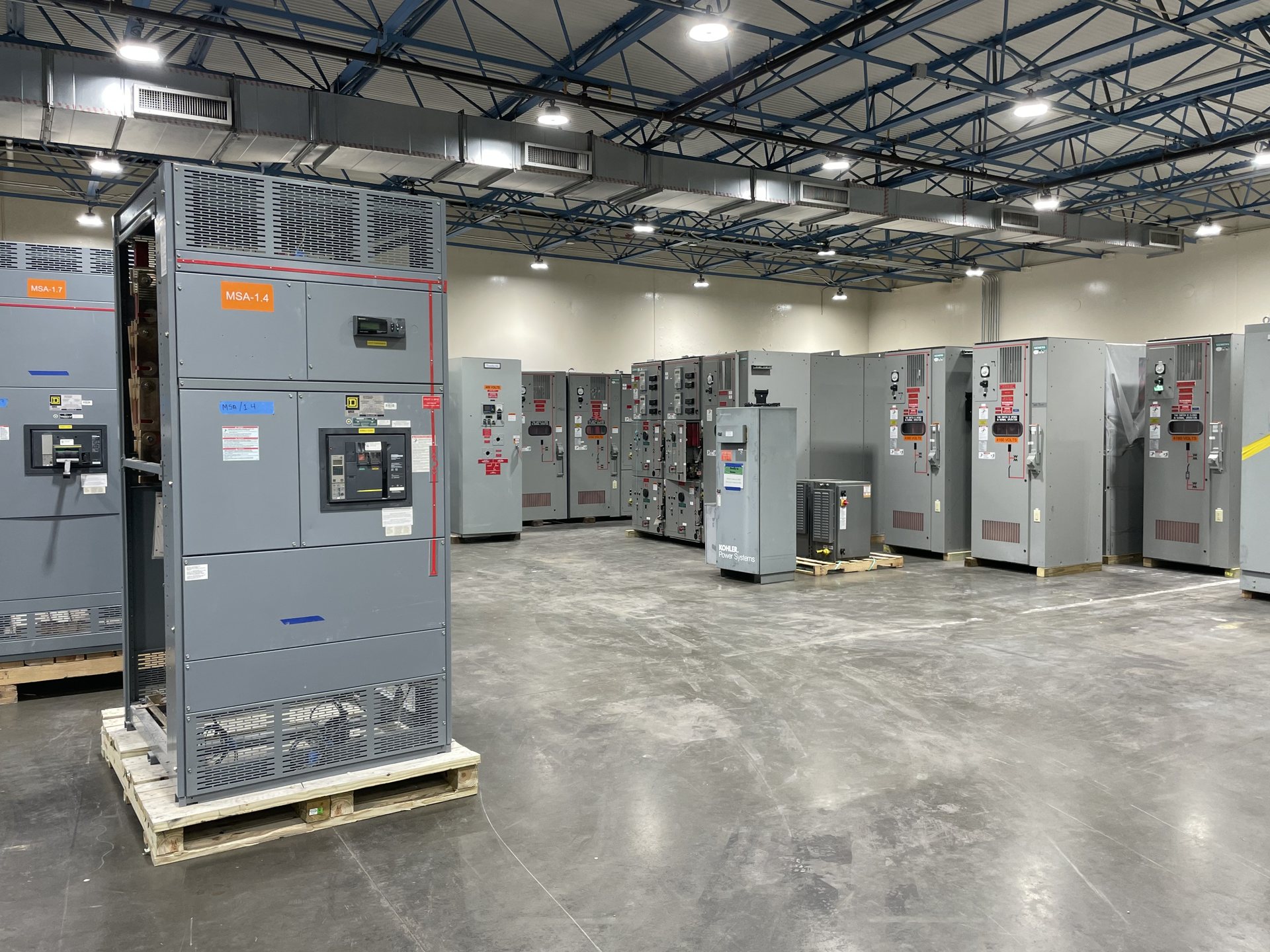
Provide available equipment records, photographs already taken from safe locations, and a concise summary of completeness, documented rigging points, shipping splits, access and known restrictions. Louisiana Switchgear Buyer assesses the equipment and transaction details before making an offer; acceptance is not guaranteed. If a transaction is agreed, payment is made upfront, and we handle and pay for qualified disconnects, crane and rigging, loading, freight and hauling. You do not need to arrange lifting or electrical work yourself. The next step is a review of the available information, followed by coordination with qualified professionals if the equipment is accepted for recovery.
Buyer notes
Send the facts that move the review forward.
Include the nameplate, lineup or device photos, approximate quantity, visible condition and where the equipment is located. We buy equipment; we do not sell replacement gear or represent a test result that has not been provided.
Start with the nameplate
Request a quote
Tell us what you have. We buy switchgear from decommissioned data centers, shut-down power plants and other facilities. Crane, rigging, disconnects, loading, freight and hauling are on us. You do nothing but get paid.