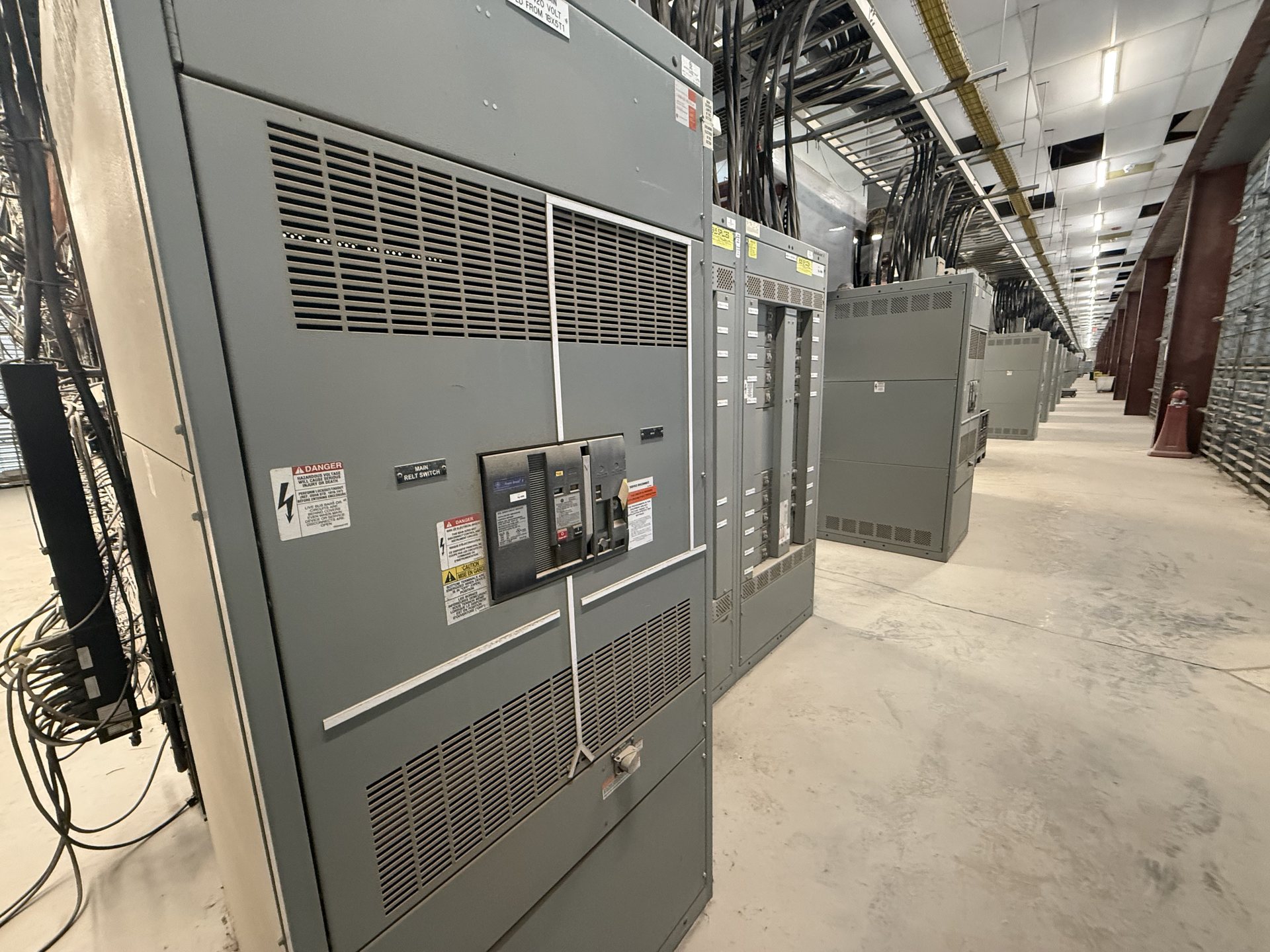
When a data center is decommissioned, electrical equipment can be difficult to evaluate from a room inventory alone. Condition notes help distinguish complete assemblies from loose devices, clarify what is visibly identified, and flag questions that still need review. A careful record of switchboards, ATS units, busway, PDUs, breakers, and related distribution equipment gives a buyer a more useful basis for assessment and an offer.
Separate assemblies from loose components
Start the inventory by identifying each apparent complete assembly, then list detached or spare devices separately. A switchboard section, ATS, busway run, or PDU may be offered as an assembly, while breakers, control parts, or accessories may be loose. Note whether items are mounted, grouped together, or stored apart without assuming that proximity means they belong together. If a device’s association with a particular assembly is uncertain, record that uncertainty. This distinction helps clarify what is included in a potential lot and avoids treating a partial assembly as complete based on appearance alone.
Record condition as observations, not conclusions
Use concise, visible observations rather than unsupported labels such as operational, serviceable, or tested. For example, note whether an enclosure appears intact, whether doors or covers are present, or whether visible labels can be read. Identify apparent damage, missing parts, corrosion, or signs of prior removal when they can be seen safely. Do not open energized compartments or handle electrical equipment to improve the record. Condition notes are not a substitute for testing, and sellers are not required to test equipment for a review. The buyer assesses the equipment before deciding whether to make an offer.
Capture identifiers and ratings carefully
Photograph nameplates and other visible markings where they can be recorded without approaching hazards or disturbing equipment. Include manufacturer, catalog or model identifiers, serial information, voltage, current, interrupting ratings, and other marked data when legible. Preserve the distinction between a marking that is readable and one that is incomplete or obscured; do not fill gaps from memory or infer ratings from neighboring gear. A device list can connect each identifier to an item or assembly number. Clear identifiers help establish what equipment is being considered, but they do not establish operating condition or confirm that every listed component is present.
Use schedules and one-lines as reference records
If available, include the one-line diagram, section schedule, equipment schedule, or other records that describe the distribution layout. These documents can help a reviewer understand how sections and devices were designated, especially when multiple assemblies look similar. Treat drawings as reference material rather than proof that the installed equipment still matches them. Mark known discrepancies and indicate when a document’s date or relationship to the equipment is uncertain. Pairing records with current photographs and a device list is more useful than sending a diagram without context, while keeping assumptions about past configuration out of the condition description.
Describe dimensions and access without staging work
Approximate dimensions and available access information help assess handling and transportation requirements. Record the measured or documented height, width, and depth where those figures are available, and say whether they are estimates. Describe relevant access constraints from a safe observation point, such as a narrow passage, overhead limitation, or restricted loading area, without asking site staff to move equipment or prepare a lift. Qualified professionals must handle isolation, disconnection, rigging, and lifting. Louisiana Switchgear Buyer handles and pays for qualified disconnects, crane and rigging, loading, freight, and hauling on agreed transactions.
Clarify lot boundaries and authorization
State which equipment is included in the proposed lot and identify any excluded items or shared components. Confirm ownership or authorization status for the equipment before arranging a sale; decommissioning alone does not establish who can approve its transfer. If records, keys, accessories, or loose breakers are controlled separately, note that distinction. Where lot boundaries remain unresolved, describe the open question rather than making a definitive claim. A clear scope helps prevent confusion during assessment and removal planning, particularly when several distribution assemblies and stored components are being reviewed together.
Flag unknowns and prepare for assessment
Close the notes with a short list of what remains unknown: unreadable nameplates, uncertain completeness, missing schedules, unclear device associations, or condition that cannot be observed safely. Include an itemized list, photos, dimensions, access notes, and available records in one package so the review can be tied to specific equipment. Louisiana Switchgear Buyer purchases used, surplus, and decommissioned data-center electrical equipment across voltage classes and can make a cash offer after assessment; acceptance is not guaranteed. If terms are agreed, payment is made upfront, and the buyer coordinates and pays for removal and transport.
Buyer notes
Send the facts that move the review forward.
Include the nameplate, lineup or device photos, approximate quantity, visible condition and where the equipment is located. We buy equipment; we do not sell replacement gear or represent a test result that has not been provided.
Start with the nameplate
Request a quote
Tell us what you have. We buy switchgear from decommissioned data centers, shut-down power plants and other facilities. Crane, rigging, disconnects, loading, freight and hauling are on us. You do nothing but get paid.