If you are considering selling 601–1,200 A, 120/240 V switchgear, begin with the nameplate and a clear inventory rather than an assumed application. Record exact ratings, phase, frequency, section count, enclosure, dimensions, device list, visible condition and completeness. Those details help distinguish a larger distribution assembly from equipment that merely shares a nominal voltage marking and support an informed review.
Capture the complete nameplate context
Photograph accessible nameplates and record the exact manufacturer, catalog or type designation, and every marked rating. Include voltage, amperage, phase, frequency and any listed service or system configuration. A 120/240 V marking alone does not establish whether the equipment is single-phase, how many poles are present, or how it was applied. Avoid interpreting an incomplete or faded label as a confirmed rating; note what is legible and identify what is uncertain. Take photographs only from safe, accessible positions. Do not open energized compartments or handle electrical equipment to obtain information.
Separate bus, breaker and interrupting ratings
For equipment in the 601–1,200 A range, distinguish the main bus rating from the frame rating of each breaker and from any continuous-current marking. These values describe different parts or characteristics and should not be combined into one assumed capacity. Record interrupting ratings separately from amperage ratings; interrupting capacity is not the same as the device’s current rating. The device schedule, labels and nameplates can help explain the assembly, but gaps between them should be reported rather than resolved by guesswork. Accurate distinctions make review more useful and prevent a single prominent number from misrepresenting the equipment.
Describe the assembly and its dimensions
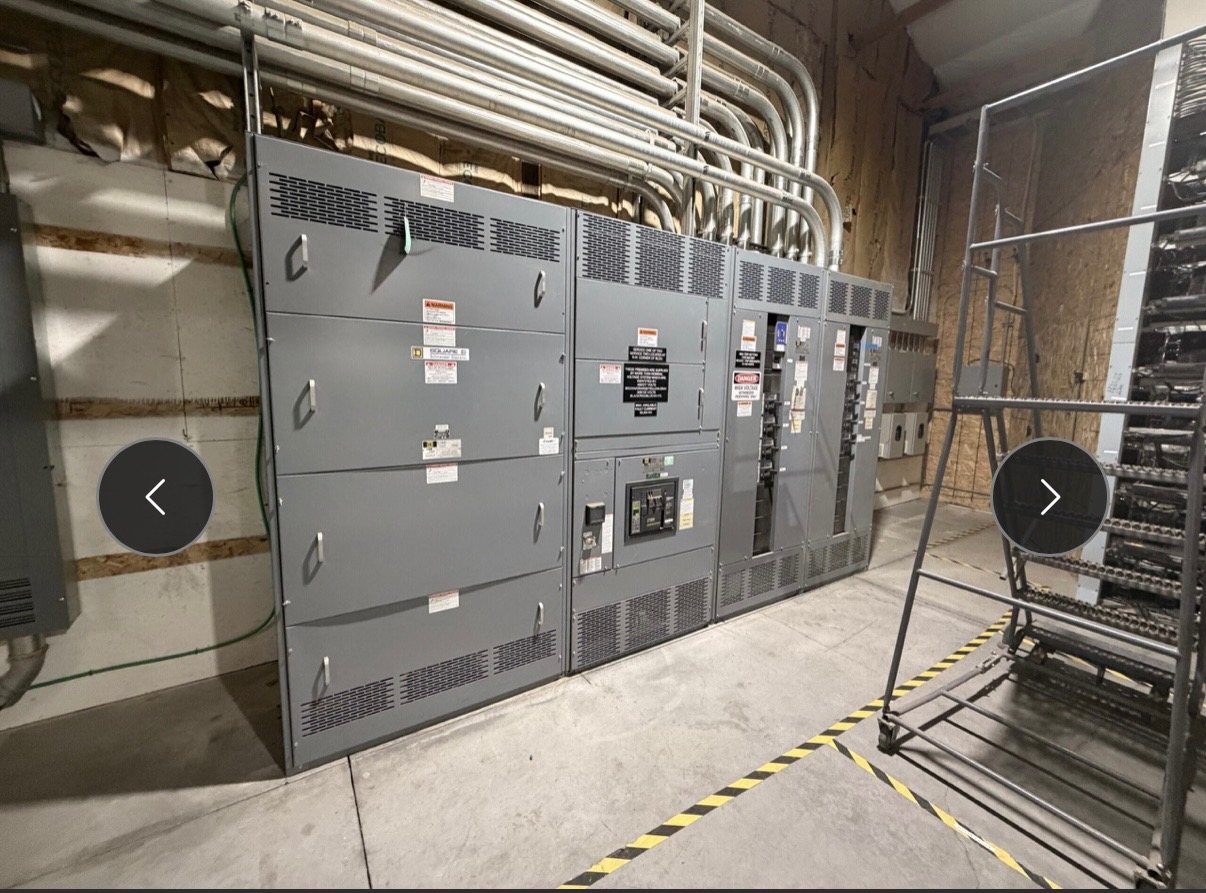
Count the sections and note whether the equipment is a switchboard, switchgear lineup, or related distribution assembly, using its markings where available. Record enclosure type, approximate overall dimensions, and the number and arrangement of visible sections. Include attached busway or associated equipment as separate items, with their own ratings and identifying information when accessible. Note missing doors, covers, trim, barriers or devices without attempting repairs or removal. Dimensions and section count matter for evaluating a larger assembly and planning professional handling. Do not measure by entering hazardous areas or moving components; report estimates and their source.
Inventory devices and visible condition
List breakers and other installed devices by visible manufacturer, catalog designation, frame or trip information, pole count and marked ratings where readable. Identify spares, empty spaces and apparently missing components as observations, not conclusions about design or operation. Describe visible corrosion, water exposure, impact, heat discoloration, damaged enclosures or incomplete sections, without diagnosing causes. State whether documentation, loose parts or associated accessories are included. No seller testing is required for an initial review, and a photograph or label does not prove that equipment is functional. Leave inspection and any electrical assessment to qualified professionals.
Send a review-ready record
Organize the information into a simple list: exact marked ratings, manufacturer and catalog, section count, enclosure, dimensions, device list, visible condition and completeness. Pair it with clear photographs of exterior labels, lineup views and identifiable devices taken without opening or approaching unsafe equipment. Flag uncertain readings and distinguish 120/240 V markings from any assumed system use. Mention whether the assembly is installed, stored, or decommissioned, and whether related busway or equipment is part of the proposed sale. Louisiana Switchgear Buyer assesses the information and equipment before making an offer; submission does not guarantee acceptance.
Consider the sale and recovery plan
Once the equipment is reviewed, discuss the proposed items, condition, access and scope before deciding whether to proceed. A cash offer may be made for an agreed transaction, with payment upfront under the agreed terms. If accepted, removal is handled by the buyer: qualified professionals manage required disconnection, isolation, rigging, lifting, loading, freight and hauling, with those recovery costs paid by the buyer. Do not disconnect, dismantle, lift or prepare electrical gear yourself. Work involving electricity or heavy equipment belongs to qualified personnel. Confirm what is included in the transaction and how the assembly will be accessed.
Coordinate safe removal of larger gear
A 601–1,200 A assembly may involve multiple sections, substantial dimensions and connected busway, so the inventory should help establish what must be recovered as one transaction. Share known access constraints and identify any associated equipment that is included, without attempting to clear, disconnect or move it. Qualified professionals determine safe isolation and the appropriate lifting and transport approach. If the equipment came from a decommissioned data center or shut-down power plant, it is within the types of surplus equipment considered, subject to assessment. Keep labels and available records with the inventory, and leave all removal work to the recovery team.
Buyer notes
Send the facts that move the review forward.
Include the nameplate, lineup or device photos, approximate quantity, visible condition and where the equipment is located. We buy equipment; we do not sell replacement gear or represent a test result that has not been provided.
Start with the nameplate
Request a quote
Tell us what you have. We buy switchgear from decommissioned data centers, shut-down power plants and other facilities. Crane, rigging, disconnects, loading, freight and hauling are on us. You do nothing but get paid.