If you are documenting 601–1,200 A, 27.6 kV switchgear for possible sale, capture what the equipment actually says and how its sections are arranged. At this rating and voltage, a single label may describe only one component, not the complete lineup. Clear records help Louisiana Switchgear Buyer assess the equipment before making an offer; acceptance is not guaranteed, and seller testing is not required.
Start with the equipment’s exact markings
Transcribe the nameplate information as printed, including units, punctuation, suffixes, and any separate ratings. Record the manufacturer and catalog or model designation, along with serial numbers where legible. For a 27.6 kV lineup, distinguish the marked equipment voltage from the voltage of the system where it was used or is intended to be used. Do not infer one from the other. If a plate is obscured, damaged, or missing, note that fact rather than reconstructing a value. These details give an assessor a sound basis for identifying the equipment without treating an estimate as a verified rating.
Separate bus, breaker, and interrupting ratings
A stated 601–1,200 A value needs context. It could refer to the main bus, a breaker frame, or another component, and those ratings are not interchangeable. List each rating beside the component it identifies, using the device label or equipment documentation where available. Keep continuous-current information separate from interrupting ratings, which describe a different characteristic. If the rating’s location or meaning is unclear, mark it as unconfirmed and provide a clear image of the relevant label. Accurate distinctions help avoid evaluating an entire lineup from a breaker marking—or assuming a breaker has the same rating as its bus.
Describe phase, frequency, and configuration
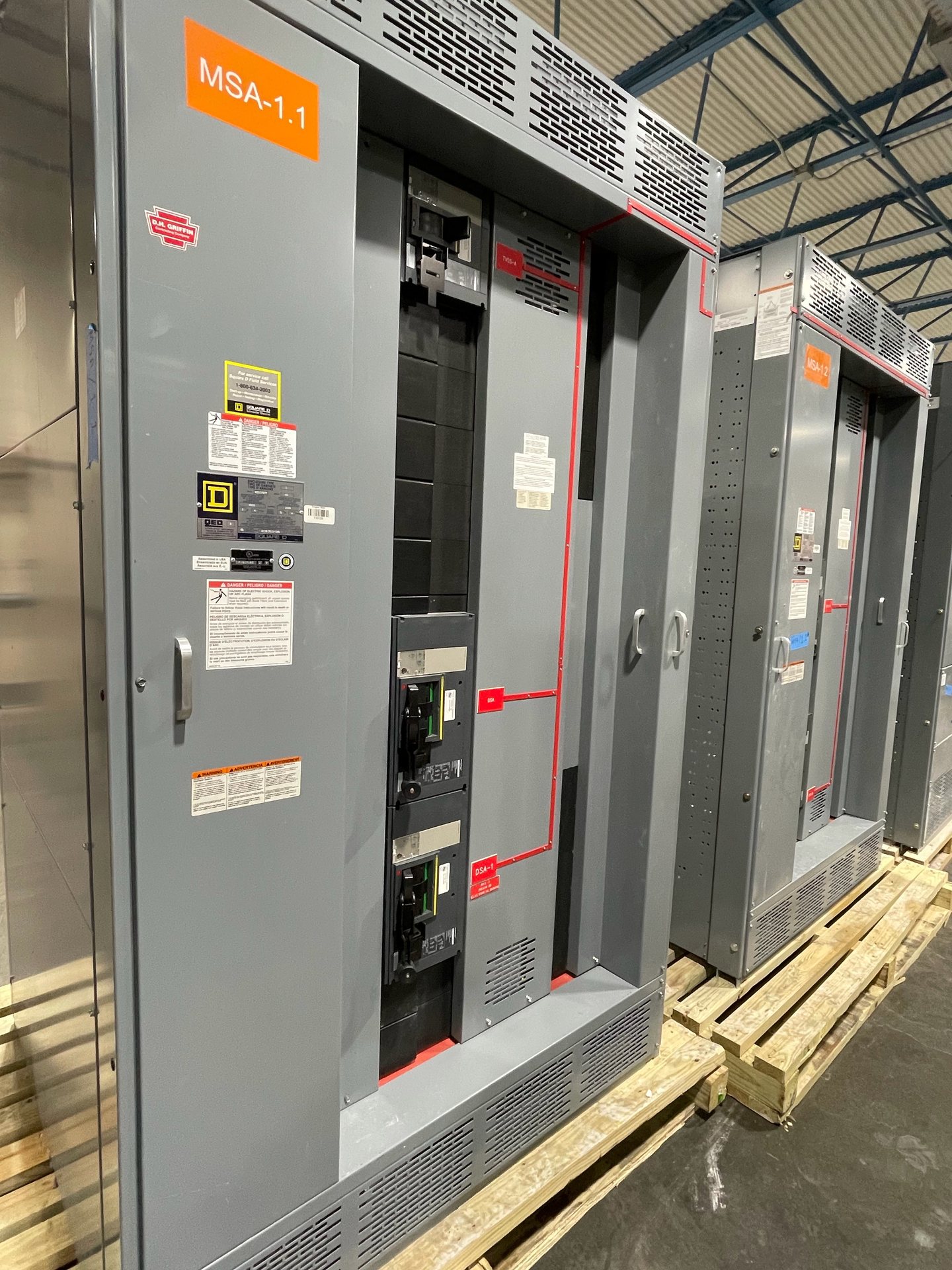
Record the marked phase and frequency independently of nominal voltage. A 27.6 kV marking alone does not establish either field, nor does it confirm how the gear was connected in service. Describe the lineup’s configuration in practical terms: section count, apparent lineup arrangement, and which sections are identified as incoming, main, tie, or feeder, if those identifiers are present. Avoid assigning a function based only on position or appearance. Where labels are uncertain, report what is visible and leave the interpretation open. This context helps an assessor compare sections and understand what is included without assuming a standard arrangement.
Build a section-by-section device list
Prepare a device list that connects each breaker or other device to its section and position. Capture visible manufacturer, catalog information, marked current and voltage ratings, and any readable interrupting rating. Note empty spaces, spare compartments, control components, and accessories only when you can identify them from available records or safe visual observation. Do not open energized compartments or remove covers to obtain details. A lineup can include devices with different ratings, so a general statement such as “all breakers are 1,200 A” is useful only if each device marking supports it. Flag unreadable or missing details plainly.
Document enclosure, dimensions, and condition
Record the enclosure type or description and measure overall dimensions only when this can be done safely without approaching electrical hazards or interfering with equipment. State whether dimensions cover the full lineup or an individual section. Describe visible condition objectively: for example, note apparent corrosion, dents, missing external covers, labels, or components. Do not characterize the equipment as operational, tested, or ready for service unless that status is supported by reliable records. Photographs of exterior labels, lineup arrangement, and visible condition can supplement written notes. Keep people clear of electrical hazards and leave any inspection requiring access or isolation to qualified professionals.
Account for completeness and decommissioning
List what is included and what is known to be absent: sections, breakers, bus connections, control equipment, and associated items. Identify records available with the equipment, such as drawings, bills of material, or maintenance documents, without implying they verify present condition. If the switchgear is being removed as part of a facility shutdown or decommissioning, note whether the lineup is complete and whether any sections have already been separated. Do not dismantle or disconnect equipment to improve a listing. Qualified professionals must handle electrical isolation and removal; Louisiana Switchgear Buyer handles and pays for qualified disconnects, loading, rigging, and transportation on an agreed transaction.
Prepare information for review and removal planning
Send the recorded ratings, manufacturer and catalog details, section count, device list, enclosure description, dimensions, visible-condition notes, completeness information, and available photographs or documents for assessment. Include known access or loading constraints that may affect removal, but do not attempt lifting, rigging, or electrical work yourself. Louisiana Switchgear Buyer purchases used, surplus, and decommissioned equipment, including switchgear from shut-down power plants and data centers, and can make a cash offer after review. No seller testing is required. If an offer is accepted and terms are agreed, payment is made upfront; handling, loading, freight, and hauling are arranged and paid for by the buyer.
Buyer notes
Send the facts that move the review forward.
Include the nameplate, lineup or device photos, approximate quantity, visible condition and where the equipment is located. We buy equipment; we do not sell replacement gear or represent a test result that has not been provided.
Start with the nameplate
Request a quote
Tell us what you have. We buy switchgear from decommissioned data centers, shut-down power plants and other facilities. Crane, rigging, disconnects, loading, freight and hauling are on us. You do nothing but get paid.