A small 208Y/120 V assembly can be difficult to assess from a single ampere marking. Under 100 A may describe one breaker or feeder rather than the main bus, and interrupting capacity is a separate rating. For a useful review, record the equipment as marked, show how its sections fit together, and identify what is present or missing without opening energized compartments.
Start with the nameplate, not an assumed system
Photograph each accessible nameplate and copy its wording exactly, including voltage, phase, frequency, amperage, manufacturer, catalog or type number, and any listed ratings. A 208Y/120 V marking identifies a nominal voltage class; it does not establish every detail of the system in which the equipment was used. Note whether the marking belongs to the complete assembly, a section, or an individual device when that is clear from the label. Do not infer missing information from building service, cable size, or appearance. If a label is unreadable or unavailable, report that plainly for review.
Separate bus, breaker, and protection ratings
For equipment described as under 100 A, identify which component carries that value. The main bus rating, feeder-breaker rating, branch-device rating, and frame size can differ, so avoid treating one number as the rating of the whole assembly. Record continuous current ratings separately from interrupting ratings; interrupting capacity concerns a device’s ability to interrupt fault current and is not interchangeable with its ampere rating. Photograph device labels only where safely accessible. A qualified professional must handle any access that involves electrical hazards. If ratings cannot be read, list them as unknown rather than estimating.
Record configuration and section count
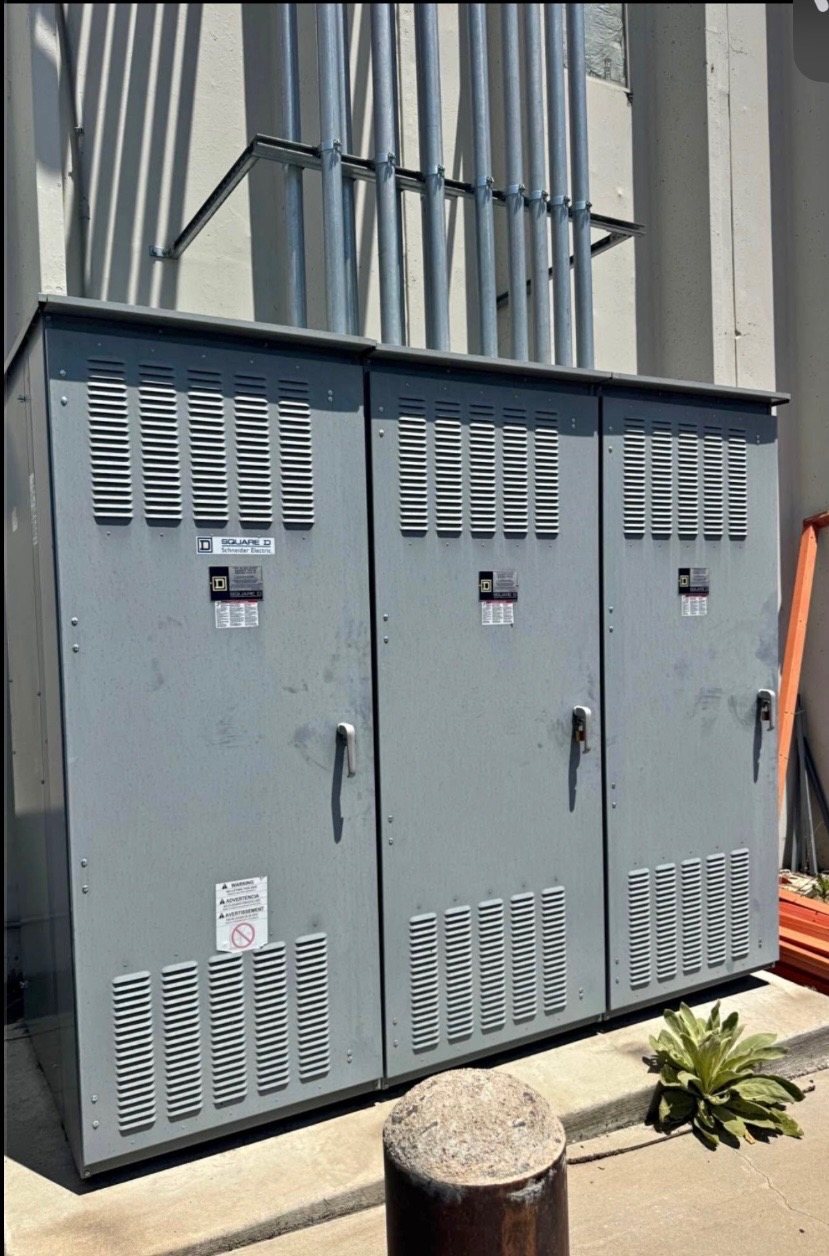
Describe the assembly’s arrangement: number of sections, apparent lineup order, and whether it includes a main device, feeder devices, branch circuits, or control components. For a small distribution assembly, a device list can clarify whether the visible breakers appear to be the complete complement or only part of it. Capture catalog numbers and marked ratings where legible, but do not remove deadfronts, covers, or devices to find labels. Note empty spaces, visibly absent parts, or disconnected sections from an exterior view. These details help distinguish a complete assembly from a partial lineup without making assumptions about performance.
Show condition and completeness honestly
Provide clear exterior photographs of each side that can be viewed safely, along with close-ups of labels and visible damage. Report corrosion, dents, missing doors, broken handles, loose or detached components, and signs of water exposure if observed. State whether trim, covers, barriers, keys, accessories, and documentation are present, absent, or unknown. Do not describe the switchgear as operational or tested unless reliable records support that statement; seller testing is not required for an initial review. Visible condition and completeness help inform an assessment, but neither photographs nor a description guarantee acceptance.
Include dimensions and enclosure details
Measure overall width, height, and depth only where those dimensions can be obtained without entering a hazard area or disturbing equipment. Note the enclosure style and any readable environmental or construction markings, without interpreting a label beyond its wording. Include approximate section dimensions when a continuous measurement is impractical, and identify whether dimensions include projecting handles or other features. These details matter for assessing handling, loading, and transport, especially when a compact assembly has limited access around it. If measurement would require moving, disconnecting, or reaching behind equipment, leave that work to qualified personnel and report the constraint.
Explain site access and safe removal constraints
Tell us where the equipment is situated within the facility and describe practical access factors: doorway or corridor limitations, stairs, overhead clearance, loading-area distance, and whether lifting equipment may be needed. Share photographs of the route and surrounding space only from safe locations. Do not disconnect conductors, operate devices, or prepare a lift. Electrical isolation, disconnection, rigging, lifting, and loading must be handled by qualified professionals. Louisiana Switchgear Buyer coordinates and pays for qualified disconnects, crane and rigging needs, loading, freight, and hauling on agreed transactions, so access information helps plan a responsible review.
Send the record for an offer review
Submit the rating photographs, exact marked information, manufacturer and catalog details, section count, enclosure, dimensions, device list, visible condition, completeness, and access notes together. Include available drawings or maintenance records if convenient, but do not delay a review to create documents that are not on hand. We assess the equipment before making an offer; acceptance is not guaranteed. If a transaction is agreed, payment is made upfront under the agreed terms, and removal logistics are handled by our team. No seller testing is required, and equipment from decommissioned facilities is eligible for consideration.
Buyer notes
Send the facts that move the review forward.
Include the nameplate, lineup or device photos, approximate quantity, visible condition and where the equipment is located. We buy equipment; we do not sell replacement gear or represent a test result that has not been provided.
Start with the nameplate
Request a quote
Tell us what you have. We buy switchgear from decommissioned data centers, shut-down power plants and other facilities. Crane, rigging, disconnects, loading, freight and hauling are on us. You do nothing but get paid.