A completeness review helps a buyer understand what is included in an industrial closure equipment lot before making an offer. Use existing records and safe exterior photographs to distinguish assembled equipment from loose devices, capture visible identifiers, and flag gaps rather than filling them with assumptions. Clear documentation of process distribution, MCCs, switchboards, panels, busway, breakers, and utility-area assemblies makes the review more useful.
Define the lot and its boundaries
Start with a practical list of the equipment being considered and where each item sits within the closure area. Identify process distribution sections, motor control centers, switchboards, panelboards, busway runs, breakers, and utility-area assemblies by room, line, or other facility reference already used in records. Note whether the proposed lot includes connected sections, associated devices, or only selected assets. A marked floor plan or existing asset register can clarify boundaries without requiring anyone to approach equipment. For the buyer, a clear lot definition helps prevent confusion between included assemblies, nearby equipment, and items retained by the facility.
Separate complete assemblies from loose items
For each listed asset, record whether it appears to be a complete assembly, a section of a larger assembly, or a loose device or accessory. Use existing inventories, section schedules, and exterior photographs taken from safe positions; do not open electrical compartments to check contents. Describe loose breakers, relays, drawers, control components, or other items separately, including their known association with a lineup when records establish it. If that association is uncertain, say so. This distinction helps a buyer assess what can be reviewed as a defined assembly and what requires separate identification, without assuming missing parts or completeness.
Capture visible identifiers and ratings
Transcribe manufacturer, catalog or model references, serial numbers, and electrical ratings only when they are legible on nameplates or other safely visible markings. Useful details may include voltage, current, interrupting rating, frequency, and enclosure or lineup identifiers, where shown. Pair each transcription with the asset or section reference so labels are not assigned to the wrong equipment. A photograph can support the record, but avoid entering restricted or hazardous areas for a closer view. Unreadable, obscured, or absent markings should be recorded as unknown rather than inferred from a neighboring section or a facility drawing.
Gather records that establish arrangement
Provide a one-line diagram, section schedule, equipment list, or revision record when available, and identify the document date or revision if shown. These records can help the buyer understand how distribution sections relate, which devices are listed, and whether the proposed lot follows a known equipment grouping. They are reference material, not proof that every item remains in place or matches the drawing. Note apparent differences only from existing records or safe exterior views, and leave technical verification to qualified personnel. A concise record set is more useful than an unlabelled bundle of drawings whose relevance to the closure lot is unclear.
Use exterior photographs with context
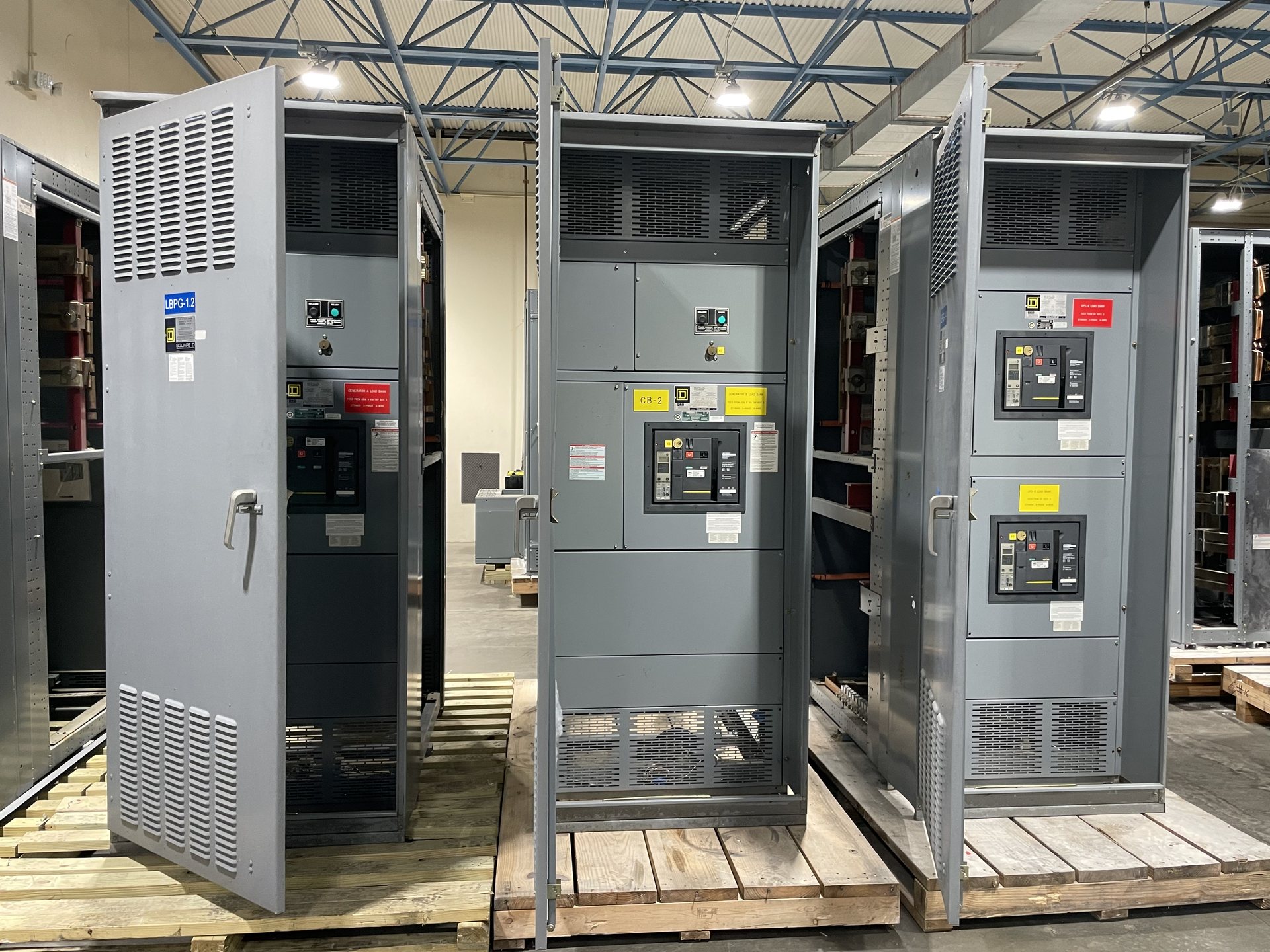
Photograph equipment only from locations where facility rules and safe access permit, without touching, opening, or approaching energized equipment. Take broad views that show lineup relationships, then exterior views of visible nameplates and identifiers where safely accessible. Include a simple caption with the asset reference, viewpoint, and any limitation, such as a label being partly obscured. Dimensions can come from existing drawings or prior records; do not climb, move barriers, or place measuring tools near electrical equipment to obtain them. Contextual images help a buyer compare the listed assets with the records while keeping unknown areas explicitly unknown.
Record loose devices, dimensions, and access notes
List loose devices and accessories separately, using existing tags, labels, or inventory descriptions. Record dimensions from reliable drawings or prior measurements, noting the source and whether they describe an individual section, a full lineup, or a shipping footprint. Provide practical access information already known, such as the documented route to the equipment area, door or aisle constraints, and any scheduled site restrictions. Do not estimate lifting capacity or plan disconnection from photographs. These details help a buyer assess handling and removal needs; qualified professionals must determine isolation, disconnection, rigging, and loading requirements.
State uncertainties and authorization clearly
Close the inventory with a short list of unresolved points: missing nameplates, uncertain device associations, unavailable schedules, discrepancies between records and visible equipment, or unknown assembly completeness. Also identify who can confirm ownership or authorization to sell and provide the relevant status or documentation when available. Avoid describing equipment as operational, tested, or complete unless supported by appropriate records; seller testing is not required for buyer review. The buyer assesses the information and equipment before making an offer, and acceptance is not guaranteed. For an agreed transaction, the buyer handles and pays for qualified disconnects, rigging, loading, freight, and hauling.
Buyer notes
Send the facts that move the review forward.
Include the nameplate, lineup or device photos, approximate quantity, visible condition and where the equipment is located. We buy equipment; we do not sell replacement gear or represent a test result that has not been provided.
Start with the nameplate
Request a quote
Tell us what you have. We buy switchgear from decommissioned data centers, shut-down power plants and other facilities. Crane, rigging, disconnects, loading, freight and hauling are on us. You do nothing but get paid.