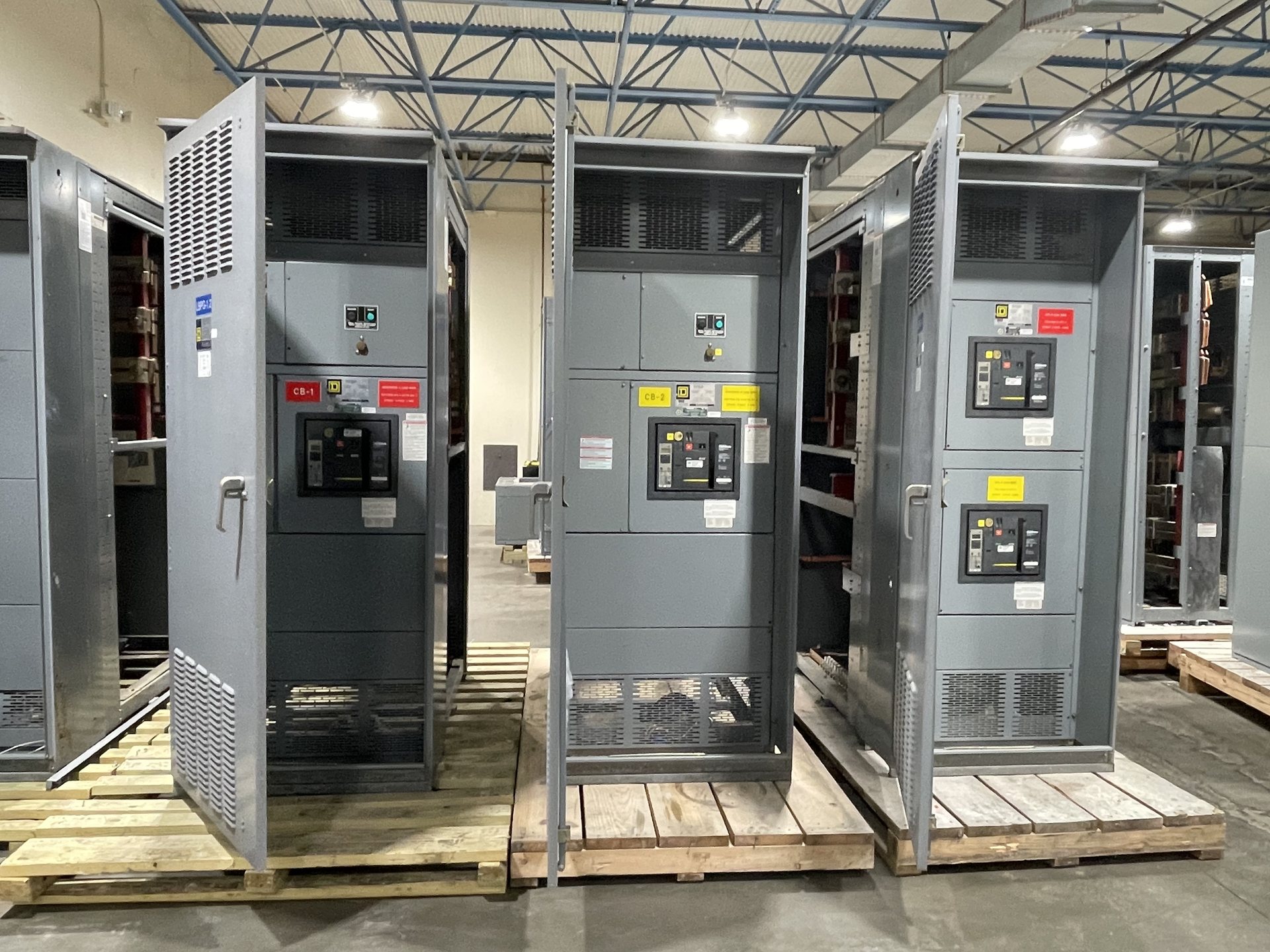
A useful switchboard review starts with a clear account of the assembly, not a claim that it is ready to operate. Identify the main and feeder sections, visible ratings, included devices, and any loose components. Louisiana Switchgear Buyer assesses surplus and decommissioned switchboards before making an offer; acceptance is not guaranteed. A structured checklist helps establish what is present and what remains uncertain.
Define the lot and count its sections
List each switchboard assembly and the number of sections or frames included. Note whether the lot is one connected lineup, several separate assemblies, or a mixture of complete sections and loose equipment. Record approximate section dimensions if known, and distinguish measured dimensions from estimates. Include attached transition sections, end pieces, or separate enclosures only when they are part of the offered lot. If a lineup has been divided for removal, identify the shipping splits and indicate which sections belong together. This prevents a review from treating an incomplete lineup as a complete assembly.
Map the main, feeders, and bus
Describe the apparent arrangement from the main section outward: identify the main device, feeder positions, metering section, and any other visibly distinct compartments. Counts are useful even when device details are unclear; for example, note the number of feeder positions and how many appear occupied. Record visible bus or conductor information from labels or documentation, but do not infer material or rating from appearance alone. Mention bus connections, barriers, or accessories that are included separately. If a configuration cannot be confirmed from records or safe exterior views, mark it unknown rather than filling the gap with a guess.
Transcribe ratings and markings carefully
Capture the voltage class, phase, frequency, continuous current or bus rating, and enclosure style wherever markings show them. Photograph nameplates legibly and transcribe the wording without converting units or interpreting abbreviated codes unless you can verify them. Include interrupting or withstand markings when present, noting which device or assembly the marking belongs to. A lineup may contain devices with different ratings, so avoid presenting one breaker label as the rating for every feeder. Missing, obscured, or unreadable data is useful information too. The buyer can assess documented details alongside the physical configuration.
Inventory devices, accessories, and loose parts
Make a device and accessory list by section or position: mains, feeder breakers, metering equipment, control components, and visible fittings. Record manufacturer and model only when readable; do not assume similar-looking devices are interchangeable. Separate installed items from loose parts, and describe quantities and any apparent association with a particular section. Note doors, covers, hardware, bus links, or other pieces that are absent or stored apart. An incomplete accessory set does not automatically rule out review, but clear accounting helps determine whether the lot is a full assembly, a partial lineup, or equipment offered with components.
Report condition without claiming operation
Describe observable condition in neutral terms: enclosure dents, corrosion, missing doors, damaged fittings, contamination, or visible signs of prior removal. Distinguish a visual observation from a conclusion about electrical condition. Do not state that the switchboard is operational, serviceable, or tested unless reliable records establish that status; the buyer does not require seller testing. Never open energized compartments or touch electrical equipment to obtain information. If a qualified professional has already documented condition, share the available report and its date. Otherwise, identify unknowns plainly so the assessment can account for them.
Build a safe, useful photo set
Provide an overall view of the full assembly, then clear nameplate images and representative device-face views. Add exterior views of doors, compartments, fittings, and any loose parts included in the lot. A safe scale reference can help communicate dimensions, but do not enter restricted areas, remove covers, or approach exposed electrical components for a photograph. Use existing safe vantage points and have qualified personnel determine what can be photographed. Pair images with section labels or a simple position list so reviewers can match each view to your inventory. Photos supplement records; they do not establish that equipment has been tested.
Clarify access and coordinate recovery
Tell the buyer where the equipment is stored, whether it is indoors or outdoors, how it is arranged, and any known access constraints for removal. Mention loading-area limitations, approximate route or doorway restrictions, and whether sections are already separated, if known. Do not disconnect, lift, or prepare electrical equipment yourself. Qualified professionals must handle isolation and disconnects; Louisiana Switchgear Buyer coordinates and pays for qualified disconnects, rigging, crane work, loading, freight, and hauling on agreed transactions. The buyer reviews the information before making a cash offer, pays upfront when a transaction is agreed, and may decline after assessment.
Buyer notes
Send the facts that move the review forward.
Include the nameplate, lineup or device photos, approximate quantity, visible condition and where the equipment is located. We buy equipment; we do not sell replacement gear or represent a test result that has not been provided.
Start with the nameplate
Request a quote
Tell us what you have. We buy switchgear from decommissioned data centers, shut-down power plants and other facilities. Crane, rigging, disconnects, loading, freight and hauling are on us. You do nothing but get paid.