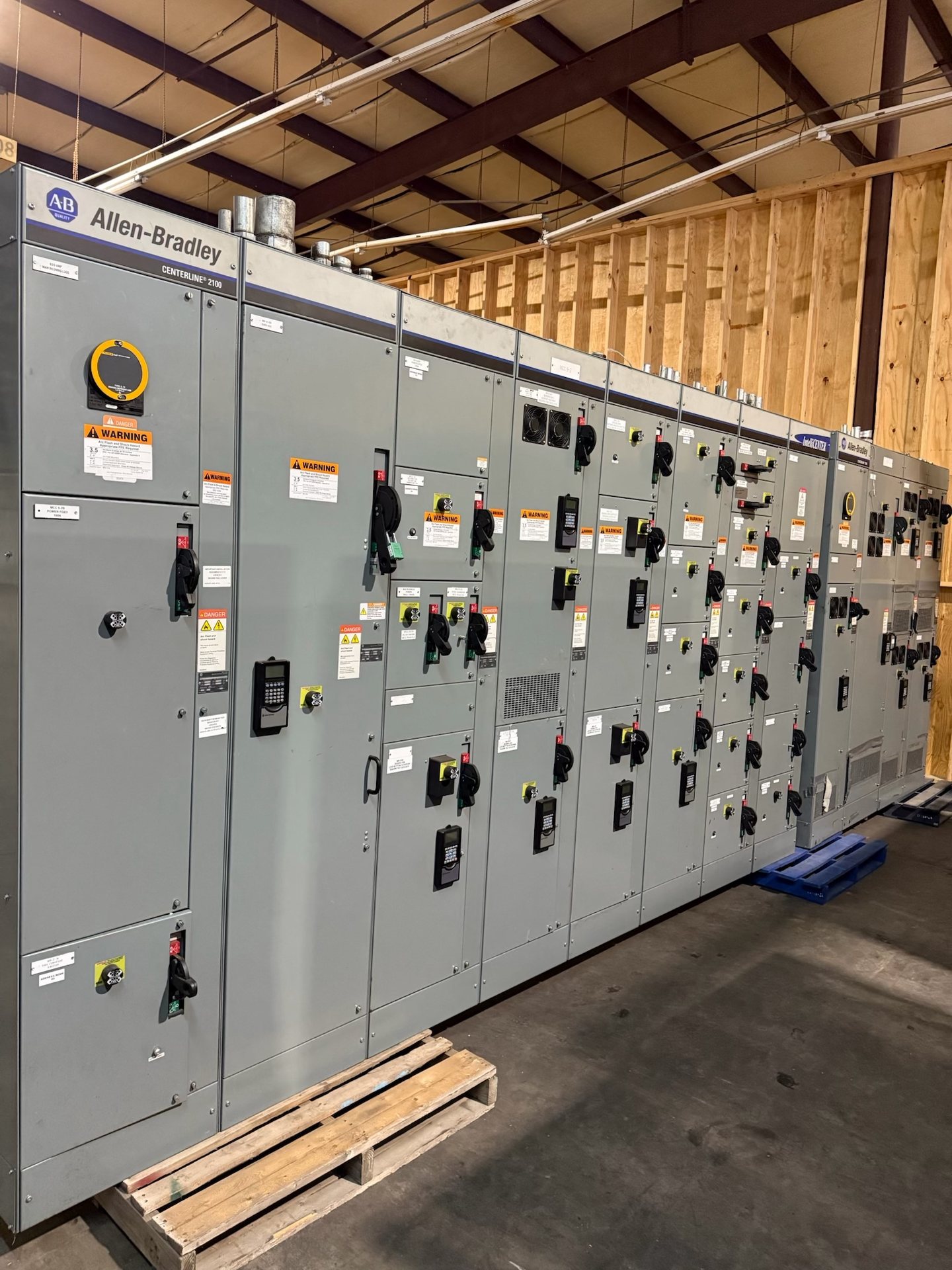
Selling a surplus motor control center is easier to evaluate when its section map shows how the lineup is arranged and what belongs with it. You do not need to test the equipment or settle every unknown before making an inquiry. Provide the records and safe, clear photographs available; Louisiana Switchgear Buyer can assess the lot and make an offer if it fits.
Start with a lineup-level map
Describe the MCC as a complete assembly, a group of sections, or a mixed lot of sections and loose components. List the number of sections and, where available, each section’s width, height, depth, and shipping split. A simple lineup sketch or existing section schedule can help connect the records to the physical arrangement. Mark the main section, feeder sections, and any sections whose purpose is uncertain. Do not assume that a drawing reflects the present configuration; note whether it is an original schedule, an updated record, or an informal map made for the sale.
Count devices without opening compartments
For each section, record visible starter buckets, contactors, drives, feeder devices, and other installed units. Include bucket sizes or frame sizes when shown on labels or existing documentation, and distinguish removable units from fixed-mounted devices if known. A rough count is useful when exact identification is unavailable. Note empty spaces, blanks, missing doors, or loose devices separately rather than treating them as installed equipment. Do not open energized compartments or remove covers to obtain details. If a device cannot be identified from an exterior label, photograph its visible face and list the identification as unknown.
Capture ratings and markings as shown
Transcribe the lineup’s voltage class, phase, frequency, and bus or continuous-current rating from nameplates or records where visible. Include interrupting or withstand markings only when they are stated on the equipment or documentation; do not infer ratings from appearance or from one device’s label. Record enclosure style and any legible manufacturer or model information. If ratings differ between sections or devices, identify which label belongs to which part of the map. Unreadable, absent, or conflicting markings are worth reporting plainly. The review can account for those gaps, but a clear distinction between known and unknown information helps avoid mistaken assumptions.
Include bus, conductors, and accessories
Describe bus or conductor details only to the extent visible in safe exterior views or specified in records. Note whether the lot includes connecting pieces, bus links, neutral or ground components, control wiring accessories, door hardware, barriers, or other loose parts. Keep loose items grouped by section when their association is known, and label uncertain associations as such. List shipping splits, removed buckets, and detached components so the buyer can understand whether they belong to the MCC. Do not disassemble the lineup to improve the inventory. Existing bills of material, drawings, and photographs can help explain completeness without requiring hands-on inspection.
Photograph the evidence safely
Useful images include a full exterior view of the lineup, readable nameplates, representative device faces, doors and visible compartments, fittings, and any loose parts included in the sale. Take photographs from safe, accessible positions and do not enter restricted areas, remove covers, or approach exposed electrical hazards. A scale reference can help communicate dimensions, but use an object placed safely outside the equipment; do not climb or reach over the lineup. If the assembly is divided into shipping sections, photograph each section and identify it consistently with your map. Share existing documentation alongside the images, noting which records may be outdated.
Flag condition and uncertainty honestly
State whether the MCC is surplus, decommissioned, incomplete, or of unknown status, and describe visible issues such as corrosion, damaged doors, missing buckets, or disconnected accessories. Do not represent the equipment as operational or tested unless you have reliable supporting information. Seller testing is not required for review. Explain any known changes to the lineup, including devices removed or sections added, and call out mismatches between labels, schedules, and photographs. Assessment takes place before an offer, and an offer is not guaranteed. Clear uncertainty is more useful than a guess about condition, compatibility, or completeness.
Coordinate removal and transaction details
After reviewing the available information, the buyer can discuss the lot and make a cash offer if the equipment is a fit. Acceptance is not automatic; confirm which sections, devices, and loose parts are included before agreeing to a transaction. On agreed transactions, payment is made upfront. Louisiana Switchgear Buyer coordinates and pays for qualified disconnects, crane and rigging work, loading, freight, and hauling. You do not need to perform electrical work or arrange lifting. Keep the section map, inventory, and agreed lot description aligned so the recovery team can identify the equipment included and plan its removal with qualified professionals.
Buyer notes
Send the facts that move the review forward.
Include the nameplate, lineup or device photos, approximate quantity, visible condition and where the equipment is located. We buy equipment; we do not sell replacement gear or represent a test result that has not been provided.
Start with the nameplate
Request a quote
Tell us what you have. We buy switchgear from decommissioned data centers, shut-down power plants and other facilities. Crane, rigging, disconnects, loading, freight and hauling are on us. You do nothing but get paid.