Surplus switchgear is easier to evaluate when its configuration is described as an assembly, not just a collection of breakers. A useful review connects the lineup arrangement to its ratings, physical dimensions, included devices, and loose components. Whether you are clearing a complete electrical room lineup or a partial section, record what can be identified safely and show how the pieces relate. Louisiana Switchgear Buyer reviews the information before making an offer; acceptance is not guaranteed.
Start with the lineup as it stands
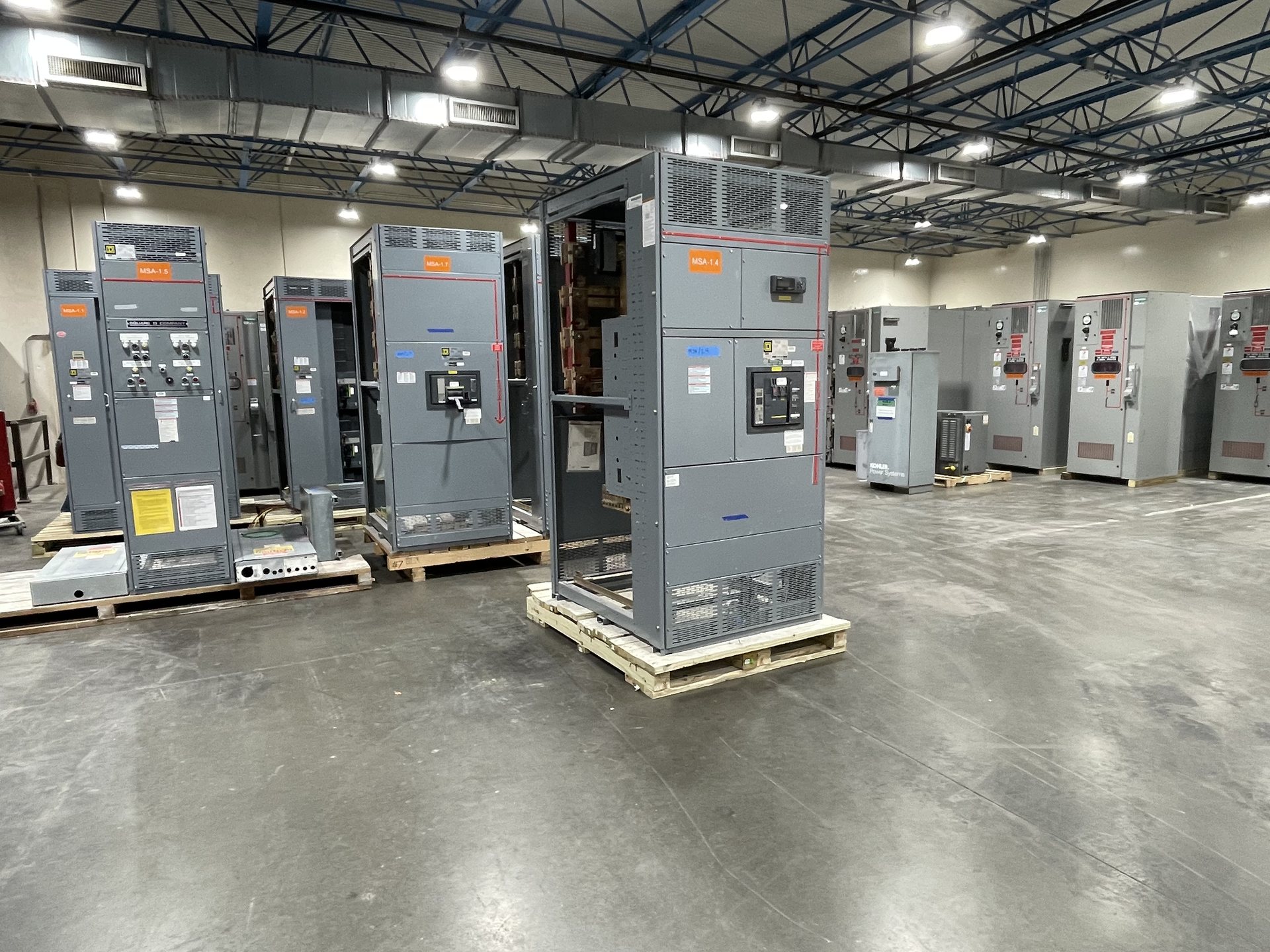
Describe whether the equipment is a complete lineup, several connected sections, a single section, or an assortment of removed devices and parts. Give the section count and, if available, the overall length, height, and depth. Note whether sections remain joined or have been separated for storage or shipment. This distinction matters: a continuous assembly may include shared bus and coordinated controls, while separated sections can require a closer accounting of connections and missing fittings. Do not move or open equipment to collect details. If dimensions or layout are uncertain, say so and provide exterior photographs from safe viewing positions.
Map mains, feeders, and device positions
A simple lineup description can clarify the arrangement without requiring electrical drawings. Identify the apparent main section and feeder sections, the number of visible breaker or switch positions, and any sections that appear dedicated to metering, transfer, or other functions. Distinguish installed devices from empty spaces and note whether devices are fixed-mounted or drawout only when that is clearly visible or documented. A lineup with a main and several feeder compartments is not equivalent to a group of standalone breakers; the relationship among sections affects what is being reviewed. Share existing schedules or drawings if available, but do not treat an old schedule as proof of present completeness.
Record ratings exactly as marked
Photograph nameplates and legible rating labels, then transcribe the information when practical. Useful fields include voltage class, continuous current or bus rating, interrupting or withstand marking, phase, frequency, and enclosure style. Keep each value tied to the relevant section or device; ratings can vary within a lineup, especially in mixed or expanded assemblies. Do not infer an interrupting rating from a breaker’s appearance or assume every section shares the same rating. If a label is obscured, damaged, or missing, identify that limitation rather than guessing. The buyer uses available markings and context in its assessment, and an unreadable rating may leave an important question unresolved.
Explain bus and conductor details carefully
Note visible bus or conductor information only when it can be observed without opening compartments or approaching hazards. Existing records may identify bus material, rating, configuration, or whether a neutral bus is included. Exterior views may also show busway interfaces, end connections, or shipping joints, but they do not establish the condition of concealed conductors. If the lineup was modified, extended, or divided, describe what is known and identify which sections were part of the same assembly. Avoid removing covers or attempting electrical checks for the review. Qualified professionals must handle isolation and any work involving electrical equipment; Louisiana Switchgear Buyer does not require seller testing.
Make device and accessory counts useful
List the visible or documented devices by type and position where possible: for example, a main breaker, feeder breakers, switches, or protective relays. Include accessories and loose items separately, such as control components, trip units, racking handles, keys, or connection hardware, but do not claim a part is present unless you can identify it. A complete set of matching devices differs from a lineup with empty compartments or unrelated spares. Photographs of representative device faces help connect labels and handles to the stated count. Keep loose parts grouped and photographed as found; the review can account for them without asking you to dismantle or manipulate equipment.
Clarify condition and completeness without testing
Describe observable facts rather than conclusions about operation. You can report whether doors and exterior panels appear present, whether sections are visibly separated, or whether loose parts are stored with the assembly. Mention known history such as decommissioning or prior removal if you have reliable information, and distinguish that history from verified condition. Do not energize, operate, or open equipment to investigate. No seller testing is required, and an untested asset should not be represented as tested or operational. Review considers configuration, ratings, completeness, condition information, and other available details before an offer; providing a clear account does not guarantee acceptance.
Use photographs to resolve configuration questions
Take a broad view showing the full assembly or all sections together, then close views of nameplates and representative device faces. Include exterior views of doors, compartments, fittings, visible interfaces, and loose parts. A safe scale reference can help communicate section dimensions, provided it can be placed without touching equipment or entering a restricted area. Photograph from a stable, safe position and do not remove covers, enter energized spaces, or climb on the lineup. If sections are stored apart, label the images in your notes so the buyer can tell which views belong together. Existing drawings and inventories can supplement photos, not replace them.
Plan the handoff around qualified removal
When the equipment is ready for review, provide its location within the property, access constraints, approximate section dimensions, and whether it is indoors or outdoors. Note known lifting or loading limits and any shipping splits, without moving sections to make them easier to handle. On an agreed transaction, Louisiana Switchgear Buyer handles and pays for qualified disconnects, crane and rigging, loading, freight, and hauling. Electrical isolation and lifting must remain with qualified professionals; you do not need to perform that work. After assessing the information and equipment, the buyer may make a cash offer. Payment is upfront on agreed transactions, with acceptance subject to review.
Buyer notes
Send the facts that move the review forward.
Include the nameplate, lineup or device photos, approximate quantity, visible condition and where the equipment is located. We buy equipment; we do not sell replacement gear or represent a test result that has not been provided.
Start with the nameplate
Request a quote
Tell us what you have. We buy switchgear from decommissioned data centers, shut-down power plants and other facilities. Crane, rigging, disconnects, loading, freight and hauling are on us. You do nothing but get paid.