Section weights shape how used switchgear can be reviewed, separated, loaded and transported. A useful recovery request describes the equipment as it exists, including shipping splits and any documented dimensions or weights, while making clear what remains unknown. Share access and staging information too; qualified professionals can assess the physical work and coordinate removal after reviewing the equipment and site conditions.
Define the complete lot before estimating weight
List the equipment you want considered, rather than treating the largest lineup as the whole lot. Include switchgear, switchboards, motor control centers, unit substations, busway, transformer-connected assemblies, loose breakers and accessories when they are part of the available equipment. Identify what is included with each assembly and what is separate. A transformer or bus section may be connected to a larger lineup, while spare breakers may be stored elsewhere. Clear lot boundaries help distinguish complete sections from loose components and reduce confusion when reviewing weights, handling needs and potential recovery arrangements.
Describe sections and shipping splits
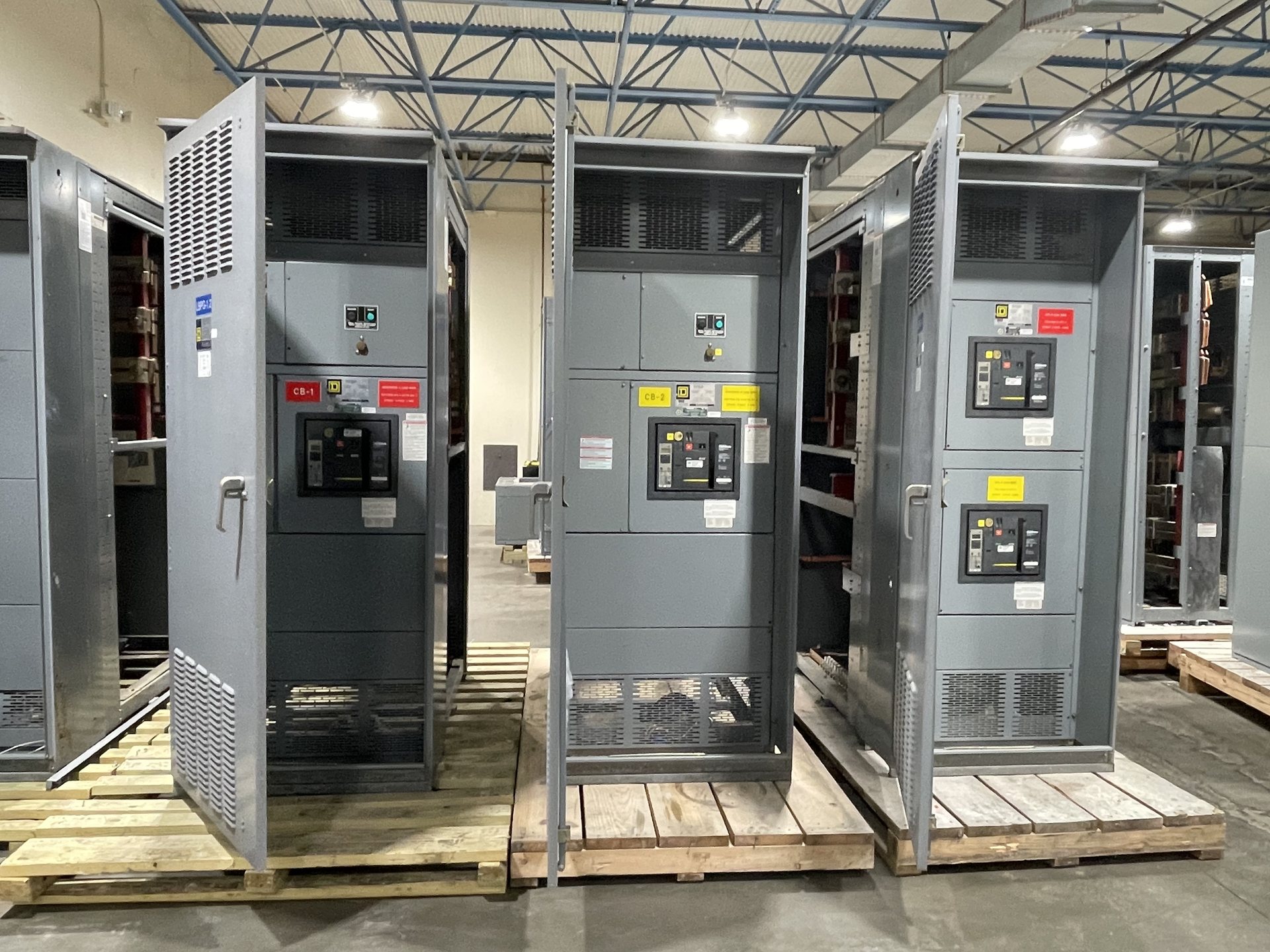
Record how many sections or transportable pieces are present and how the equipment is divided, if that information is known. Note whether a lineup is continuous, already separated, or arranged in distinct shipping splits. Use labels or section identifiers visible in existing records or on the equipment, without opening compartments or disturbing anything. A count is more useful when it explains what the count represents: for example, separate lineup sections versus loose accessories. If the configuration is uncertain, say so. Do not assume that a cabinet-sized appearance means a particular weight or that adjacent sections can be moved as one piece.
Use documented weights and dimensions only
Provide approximate weights or dimensions only when they are supported by records, nameplates, shipping documents, drawings, or other existing documentation. Identify the source and indicate whether a figure applies to one section, a full assembly, or a loose item. If a number is estimated but not documented, label it clearly as an estimate rather than presenting it as fact. Do not derive a lifting weight from appearance or attempt to weigh equipment through improvised methods. Missing figures are useful information too: they let reviewers identify an uncertainty for qualified professionals to assess during planning.
Separate known lifting information from assumptions
If lifting points are visibly documented in existing drawings or equipment records, share that information and identify the relevant section. Do not infer lifting locations from holes, brackets, covers, or other features, and do not inspect or alter equipment to find them. A documented lifting point is not, by itself, confirmation of a safe lift plan; condition, configuration, weight and access still require professional review. If no lifting information is available, state that plainly. This distinction prevents a preliminary equipment description from being mistaken for instructions to connect rigging or move a load.
Describe access, loading surface and restrictions
Explain how qualified removal personnel could approach the equipment: loading dock or ground-level conditions, the route to the loading area, available working space, and the surface where loading would occur. Mention known restrictions such as limited access, overhead or doorway constraints, scheduled site controls, or other obstacles you already know about. Keep the description factual and avoid estimating capacity or declaring a route suitable for heavy loads. Photos or plans may help convey layout when they can be shared safely. Access details matter because documented section weights alone do not establish whether equipment can be handled or loaded at a particular location.
Share staging details without moving equipment
Describe where the equipment is currently located and whether there is a known, safe staging area that professionals may review. Note if sections are indoors, outdoors, on a dock, or in another existing position, and whether loose breakers or accessories are stored separately. Do not reposition, disconnect, lift, open energized compartments, or prepare a route yourself. Electrical isolation, disconnection, rigging, lifting and loading must be handled by qualified professionals. Louisiana Switchgear Buyer coordinates and pays for qualified disconnects, crane and rigging, loading, freight and hauling on agreed transactions; the seller’s role is to share information, not perform the removal.
Expect review before an offer and recovery plan
Send the lot description with any documented weights, dimensions, section counts, shipping splits, visible lifting information, access notes and known restrictions. Flag every unknown instead of filling gaps with assumptions. The equipment is assessed before an offer, and acceptance is not guaranteed; no seller testing is required. If a transaction is agreed, recovery planning can account for the equipment and access review, with qualified professionals coordinating the physical work. This approach applies to surplus and decommissioned equipment, including switchgear from data centers or shut-down power plants. Clear records help establish what is being offered and what must be resolved before removal.
Buyer notes
Send the facts that move the review forward.
Include the nameplate, lineup or device photos, approximate quantity, visible condition and where the equipment is located. We buy equipment; we do not sell replacement gear or represent a test result that has not been provided.
Start with the nameplate
Request a quote
Tell us what you have. We buy switchgear from decommissioned data centers, shut-down power plants and other facilities. Crane, rigging, disconnects, loading, freight and hauling are on us. You do nothing but get paid.