When documenting electrical equipment from a retired power plant, describe how each item related to generation, station service, or supporting processes without assuming its original duty from location alone. Redundancy and process context can help distinguish similar-looking gear, but visible identifiers and assembly boundaries are more useful for review. A clear inventory lets Louisiana Switchgear Buyer assess medium-voltage equipment, breakers, MCCs, auxiliary panels, and control equipment before deciding whether to make an offer.
Define the lot by physical assemblies
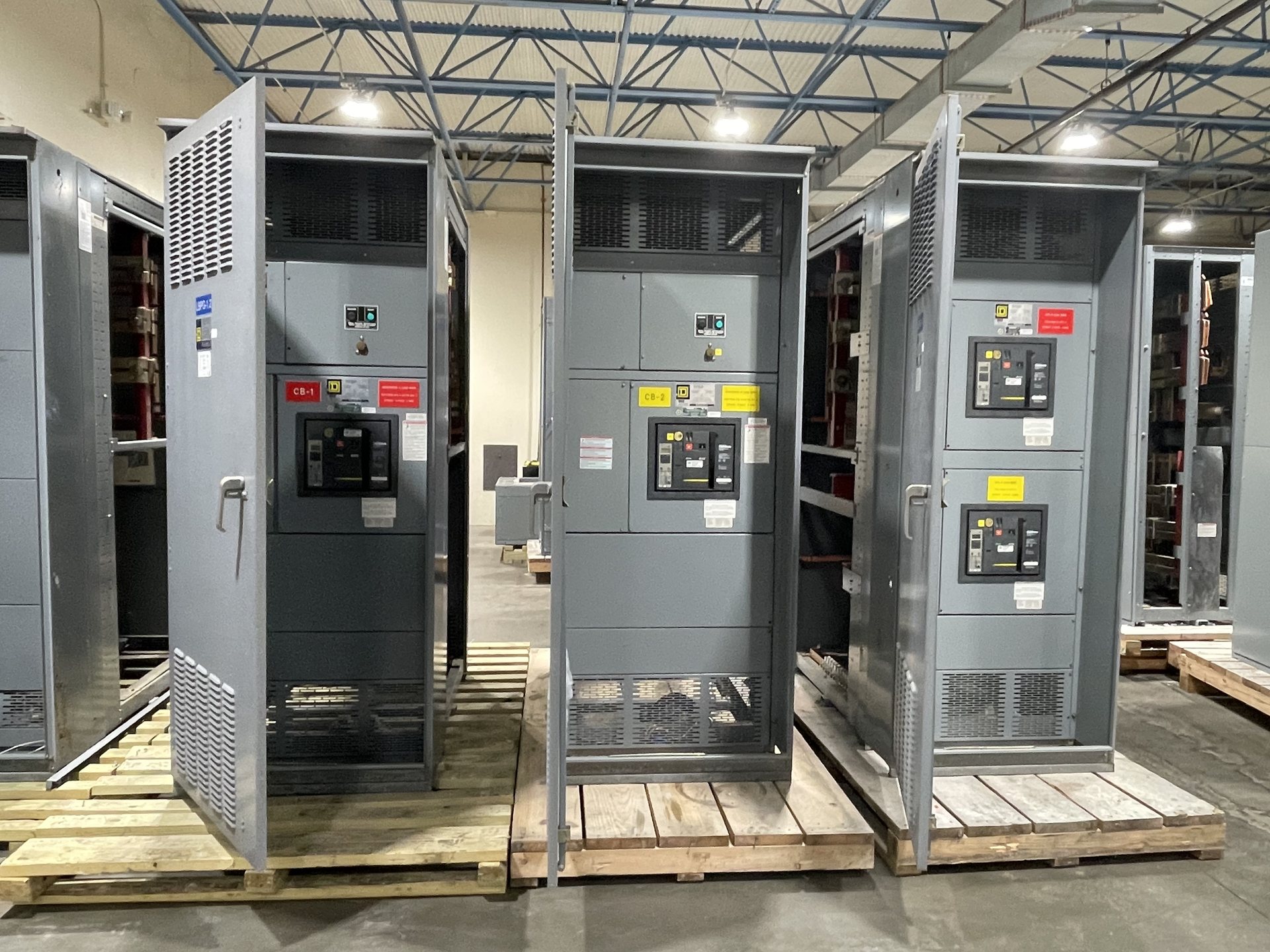
Start with what is physically present, not a broad label such as “plant switchgear.” List each lineup, section, freestanding assembly, MCC, panel, breaker, and control cabinet separately where practical. Note which sections remain connected as an assembly and which have already been separated. Identify loose devices, relays, control components, or accessories as loose items rather than implying they are installed. If a group is being offered together, state which pieces are included and which are excluded. Clear boundaries reduce confusion when equipment from different process areas or electrical systems is staged in the same teardown.
Add redundancy or process context carefully
Context can make an inventory more useful when a retired facility had parallel trains, standby supply, or separate process areas. If records or labels identify equipment as serving a particular train, bus, station-service function, or auxiliary process, report that wording and its source. Distinguish a documented designation from an interpretation based on proximity or matching appearance. Avoid calling gear “redundant,” “standby,” or “essential” unless the available documentation supports that description. This distinction matters because similar equipment may have different configurations, operating roles, or associated devices even when it appears together in a teardown area.
Record visible identifiers and ratings
Capture nameplate information as legibly as possible: manufacturer, model or type, serial number, voltage, current, interrupting rating, frequency, and other marked ratings when present. Photograph each nameplate straight on, with enough surrounding detail to show which assembly it belongs to. Record breaker identifiers and ratings separately when breakers are loose or removable, and note any visible accessories. Do not infer a rating from a neighboring section or a matching device. If a marking is obscured, damaged, or unreadable, record that limitation as unknown rather than filling in a likely value.
Use records to explain lineup relationships
Include a one-line diagram or section schedule when available, especially if it helps show bus divisions, ties, feeder relationships, or separate station-service sections. A document is useful as context, not as proof that every component shown remains in the lot. Mark discrepancies between the drawing and the equipment actually present, such as missing sections or changed labels. A device list can link breakers or controls to particular sections. If records are incomplete, say so and identify what they cover. This allows review to account for process relationships without treating an old drawing as a current equipment inventory.
Separate known details from unresolved questions
For each item or group, state what is known, what is visibly marked, and what remains unknown. Unknowns may include internal configuration, whether a loose device belongs to a particular section, missing accessories, or whether documentation matches the surviving assembly. Do not describe equipment as tested or operational unless that status is independently established and relevant records are available. Seller testing is not required for review. Photographs and accurate notes can support an assessment, but they do not settle every question; Louisiana Switchgear Buyer reviews the equipment before deciding whether to make an offer, and acceptance is not guaranteed.
Provide dimensions and safe access information
Approximate dimensions and weights, if known from records, help establish handling requirements. Describe the equipment’s location in general terms, access route constraints, loading area, and any known limits affecting removal. Do not move, open, disconnect, or inspect electrical equipment to gather information. Work involving electrical isolation, lifting, rigging, or loading must be handled by qualified professionals. Louisiana Switchgear Buyer coordinates and pays for qualified disconnects, crane and rigging, loading, freight, and hauling on agreed transactions. Useful access notes help plan that work without asking you to perform hazardous tasks.
Confirm ownership and authorization
Before submitting a lot for review, identify who owns the equipment and who is authorized to approve its sale and removal. This is particularly important when plant assets are being cleared through a shutdown, decommissioning, or contractor-led process. State any known restrictions on access, timing coordination, or included materials, and identify the contact responsible for confirming them. Do not assume that equipment is available for sale merely because it is retired or staged for teardown. Clear authorization information helps keep the equipment description aligned with what can actually be transferred and recovered.
Coordinate review and recovery as one process
Send the inventory with photographs, nameplate images, available one-lines or schedules, device lists, dimensions, access notes, and ownership or authorization status. Group materials by assembly and explain any redundancy or process context that is supported by records. After assessment, Louisiana Switchgear Buyer may make a cash offer; if terms are agreed, payment is made upfront and removal logistics are coordinated. There is no requirement for you to test the equipment. The buyer handles and pays for the agreed qualified disconnects, lifting, loading, freight, and hauling, keeping recovery responsibilities distinct from your documentation role.
Buyer notes
Send the facts that move the review forward.
Include the nameplate, lineup or device photos, approximate quantity, visible condition and where the equipment is located. We buy equipment; we do not sell replacement gear or represent a test result that has not been provided.
Start with the nameplate
Request a quote
Tell us what you have. We buy switchgear from decommissioned data centers, shut-down power plants and other facilities. Crane, rigging, disconnects, loading, freight and hauling are on us. You do nothing but get paid.